
What is ACTH 1-39? The Scientific Luxury of Neural Care
ACTH 1-39, or Adrenocorticotropic Hormone (the full-length 39-amino acid chain), is a naturally occurring peptide produced by the anterior pituitary gland. In the world of “scientific luxury,” it is the gold standard for signaling the body’s internal resilience systems.
While many research compounds focus on a single pathway, ACTH 1-39 is a multi-modal elite performer. It acts as a primary messenger that orchestrates the release of corticosteroids from the adrenal cortex while simultaneously engaging direct central nervous system (CNS) pathways.
Product Structure & Classification:
- Classification: Adrenocorticotropic Hormone Fragment / Melanocortin Agonist.
- Physical Contents: High-purity lyophilized ACTH 1-39 peptide.
- Primary Function: Neuroimmune modulation and HPA axis regulation.
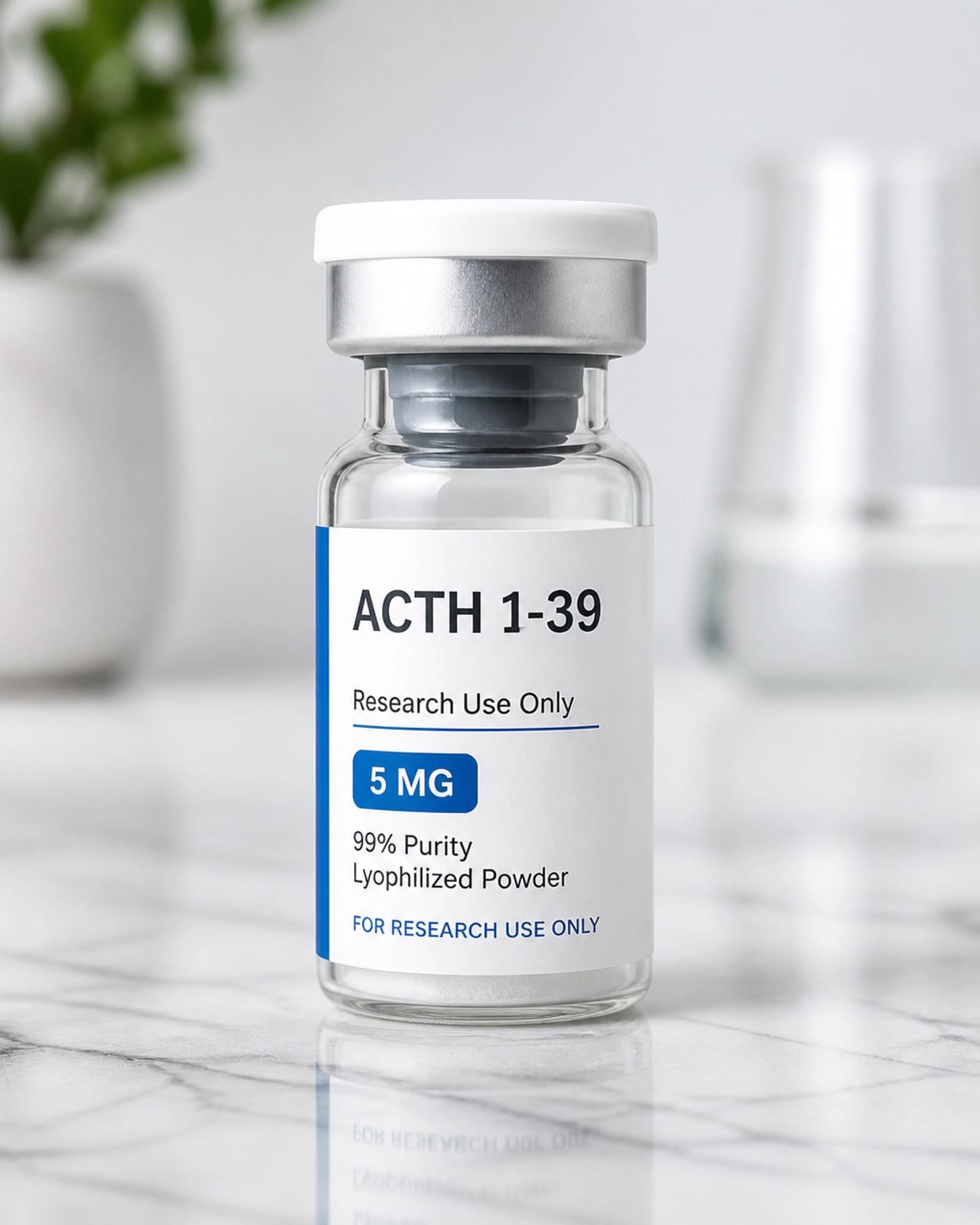
The Dual-Action Shield: Why ACTH 1-39 is Different
The reason researchers gravitate toward ACTH 1-39 benefits over simple synthetic steroids is its unique “Dual-Action” mechanism. It doesn’t just flood the system with one signal; it creates a balanced, bio-harmonious response.
-
The Steroid-Dependent Pathway:
By stimulating the adrenal cortex, ACTH 1-39 triggers the release of glucocorticoids like cortisol. These are the body’s natural “fire extinguishers” for inflammation. They move through the blood-brain barrier to dampen systemic inflammation that can otherwise migrate into the CNS. -
The Steroid-Independent Pathway (The MC4R Edge):
This is where it gets revolutionary. ACTH 1-39 can act directly on the brain’s Melanocortin Receptors (specifically MC4R). Research suggests this pathway allows the peptide to downregulate pro-convulsant signals like CRH (Corticotropin-Releasing Hormone) in the limbic system.
By targeting the MC4R, ACTH 1-39 provides a layer of protection that synthetic steroids simply cannot match. It’s the difference between a blunt instrument and a precision-guided surgical tool.