
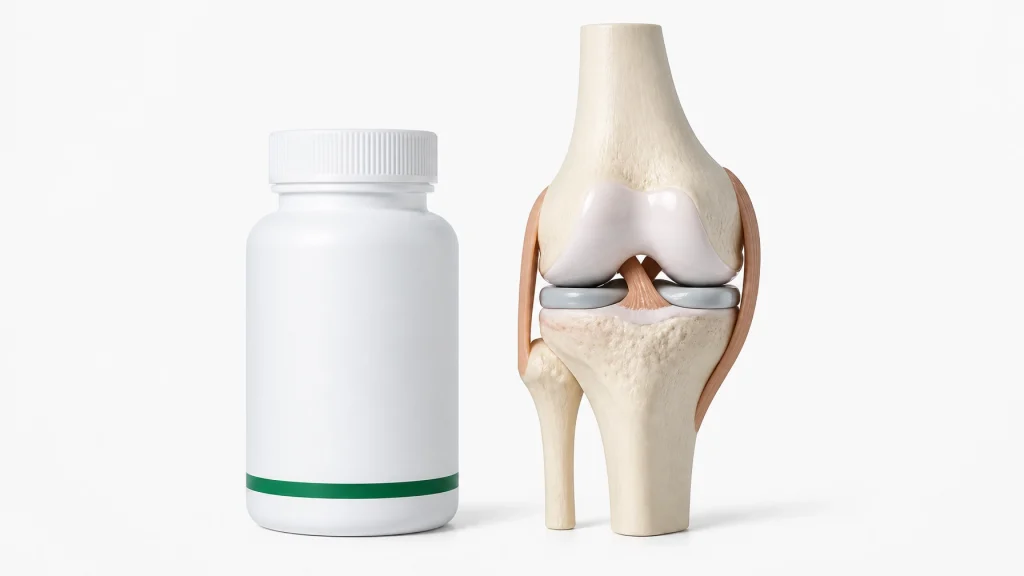
Why joint cartilage wears down
The problem: less cushioning, more friction
Healthy cartilage acts like a smooth protective coating. It helps bones glide across one another with minimal friction and absorbs some of the force created when you walk, run, climb stairs or lift weights.
Over time, cartilage may become thinner or less resilient. Contributing factors can include:
- Previous injuries
- Repetitive occupational or sporting loads
- Age-related tissue changes
- Excess body weight
- Muscle weakness or poor movement control
- Inflammatory joint conditions
Cartilage also has limited blood supply compared with many other tissues. That means repair can be slower. Once the surface becomes irritated or damaged, the joint may feel stiff, tender or less stable.
Think of cartilage as the rubber seal inside a mechanical joint. If the seal becomes worn, the surrounding parts must work harder. The answer is not always to stop moving. In fact, evidence supports appropriately prescribed exercise as a safe and useful part of managing osteoarthritis and joint symptoms.
The solution: support the whole joint system
A practical joint-health strategy should address more than discomfort. It should consider:
- Cartilage and bone tissue
- Collagen and connective-tissue structure
- Muscles surrounding the joint
- Movement quality and gradual loading
- Professional assessment when symptoms persist
The goal is not to promise instant regeneration. The goal is to create a more informed, structured approach to mobility, recovery and long-term support.
What is Sigumir?
Explore the Sigumir research and bone-health information
The foundational chapter describes Sigumir as a natural extract containing short-chain peptides associated with cartilage and bone tissue. In simple terms, these peptides are presented as signalling components that may help communicate with tissue involved in structural maintenance.
Imagine a construction site. Ordinary nutrients are like bricks, timber and tools. A tissue-specific peptide is described as more like a message from the site manager: it helps direct attention towards a particular repair process.
According to the chapter, Sigumir is intended to support:
- Cartilage tissue
- Bone tissue
- Joint structure and resilience
- Age-related connective-tissue maintenance
- Recovery following physical stress or injury
The chapter also describes Sigumir as supporting the normal activity of cartilage cells, including the production of structural proteins such as collagen and proteoglycans. These proteins help cartilage retain its strength, hydration and shock-absorbing qualities.
However, it is important to separate research interest from proven clinical treatment. The available evidence for named bioregulator products may not match the level of evidence required for an approved therapy. You should therefore treat Sigumir as a product for informed research consideration, not as a confirmed cure for osteoarthritis or damaged cartilage.

