
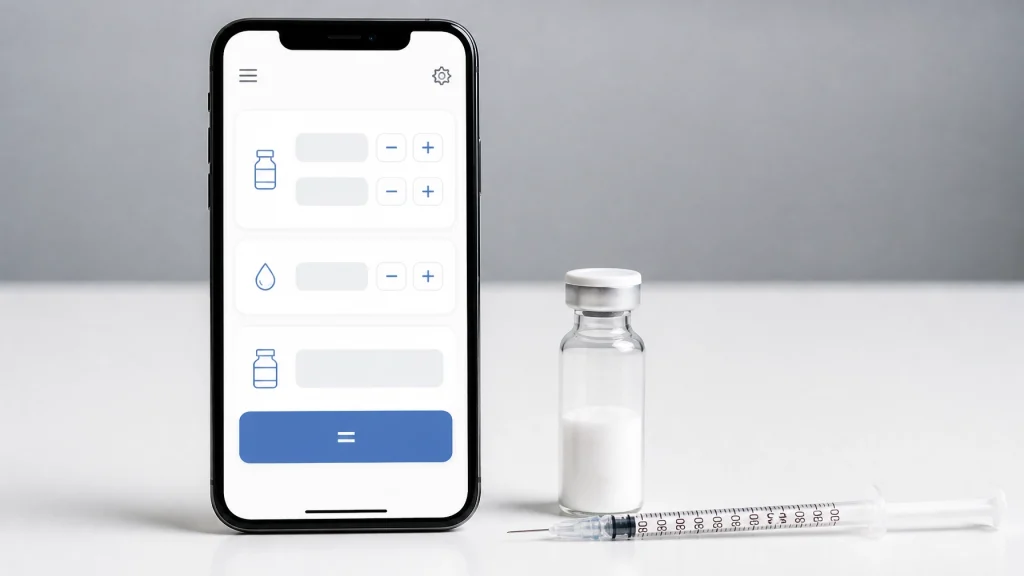
The Milligram (mg) – Your Foundation
Before you touch a single button on the calculator, you must understand your building blocks. In construction, you don’t swap centimeters for meters and expect the roof to fit. In biochemistry, the milligram (mg) is your foundation.
Why Milligrams Are Crucial
Most vials arrive as lyophilized (freeze-dried) powder. This powder represents the Total Peptide Mass. It is a fixed quantity. Whether you add 1mL of water or 10mL of water, the amount of peptide in that vial remains the same.
Focus on this: The milligram (mg) is the weight of the active ingredient. The microgram (mcg) is the dose you will likely be administering.
- 1 mg = 1,000 mcg
Imagine a standard magnesium supplement. You might take a 400mg capsule. That is a massive amount compared to peptides, where a dose might be as small as 250mcg (0.25mg). Because the scale is so small, a tiny error in math can lead to a 10x overdose. This is why the “Vial Size” field is the most important entry you will make.
Step 1: Inputting Vial Size (Total Peptide Mass)
The first box in the WLAustralia Reconstitution Calculator asks for the total amount of peptide in the vial.
Practical Steps for Success:
- Read the Label: Look at the physical vial. It will typically say something like “5mg” or “2mg.”
- Verify the COA: If you are a truly responsible researcher, you will check the Certificate of Analysis (COA) for that batch to ensure the mass is accurate.
- Enter the Number: Simply type the number (e.g., “5”) into the “Vial Size (mg)” field.
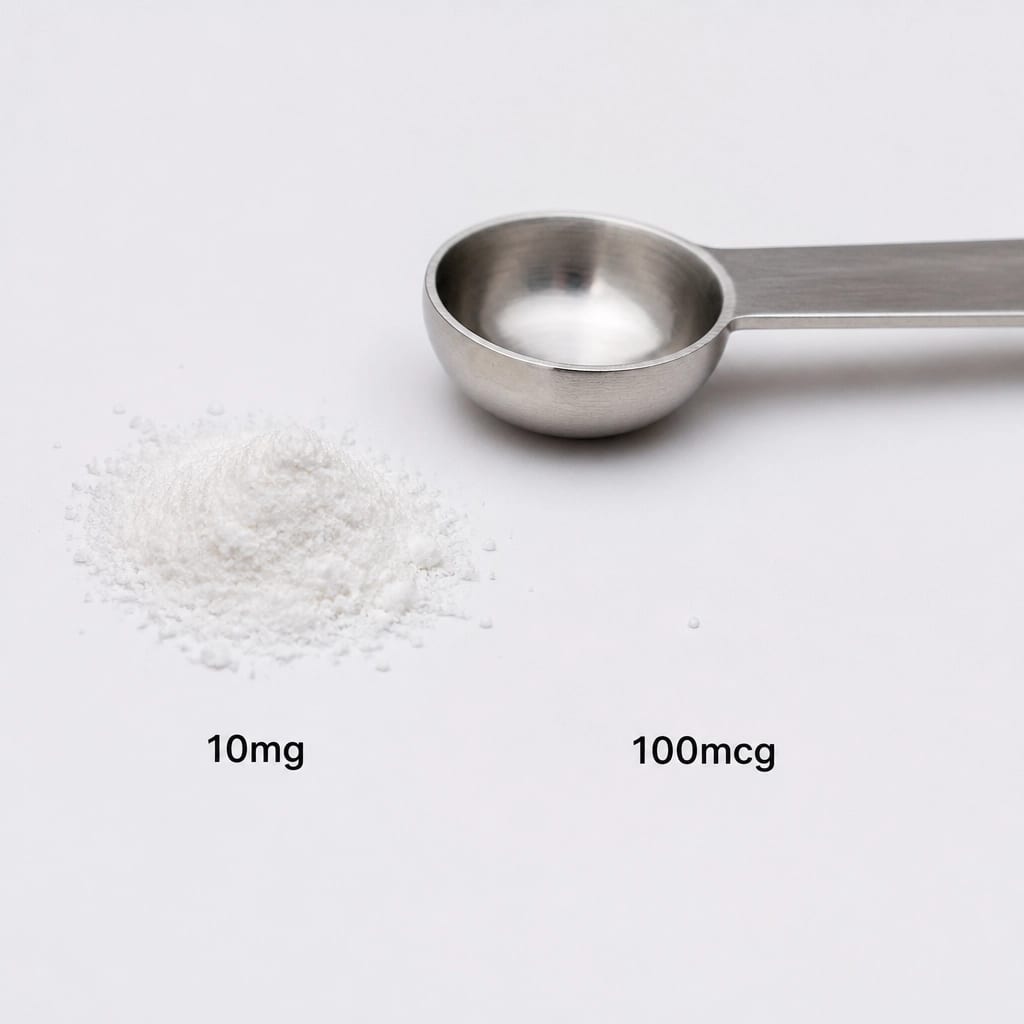
Common Pitfall to Avoid: Never guess based on the physical volume of the powder. Two different peptides can both weigh 5mg, but one might look like a mountain of fluff while the other looks like a tiny grain of salt. Trust the label, not your eyes.
