
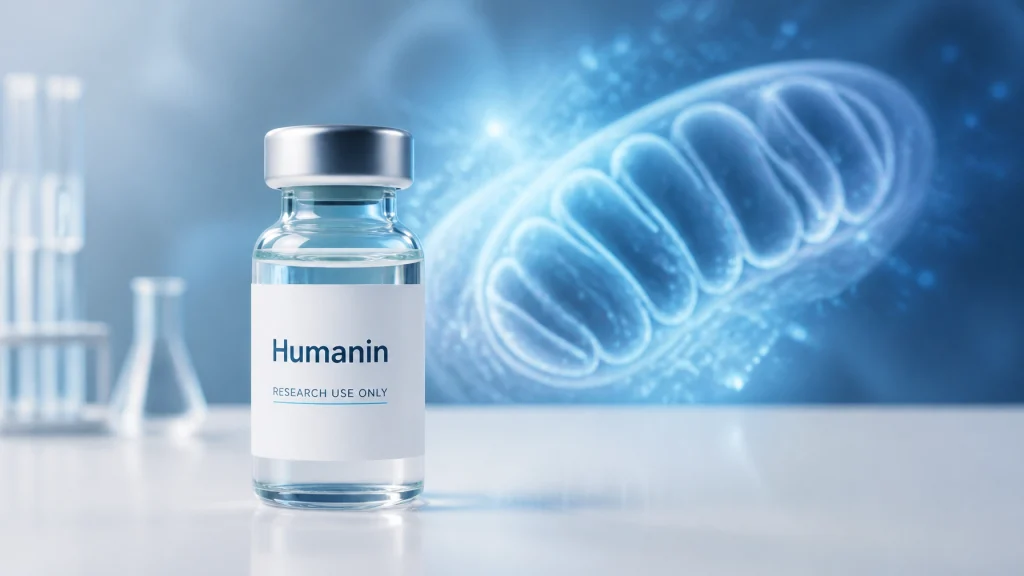
What is Humanin? The Insider’s View
Humanin is a 24-amino acid peptide that is actually encoded within the mitochondrial genome. Most of our DNA is in the nucleus, but the mitochondria have their own “blueprints.” When researchers first discovered Humanin in the early 2000s, they found it in the brains of patients who were remarkably resilient to Alzheimer’s-related damage.
It was as if the cells were producing their own internal “rescue flare” to stop themselves from dying.
In the world of “Scientific Luxury,” Humanin is the bespoke security system for your DNA. It’s classified as a cytoprotector: a molecule designed to protect cells from apoptosis (programmed cell death).
The Biological “Problem-Solution” Framework
- The Problem: As we age, our mitochondrial function declines. Oxidative stress builds up, and our cells become more prone to “shutting down” prematurely. This leads to neurodegeneration, metabolic sluggishness, and the general breakdown we call “aging.”
- The Solution: Humanin acts as a triple-threat agonist of sorts for cellular survival. It signals through multiple pathways to keep cells functional, even when the environment gets toxic.
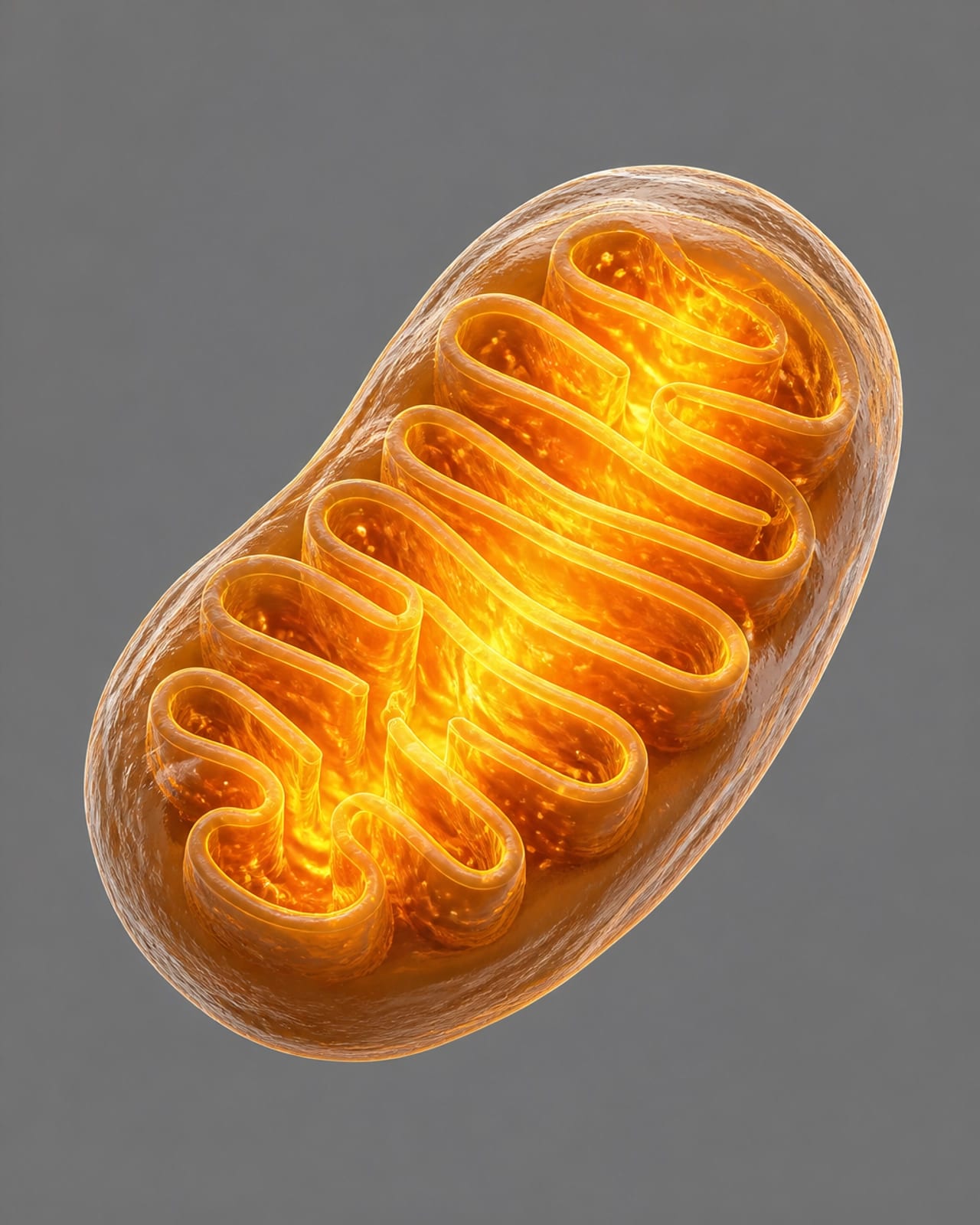
Technical Breakdown: The Mechanism of Action
To really appreciate Humanin, you have to look at the “dense medical jargon” of its pathways. It’s not just a passive shield; it’s an active player in the JAK2/STAT3 and PI3K/Akt signaling cascades.
1. The GP130 Complex
Humanin binds to a heterotrimeric receptor complex consisting of CNTFR-α, gp130, and WSX-1. Engaging this receptor sends a massive pro-survival signal through the cell. Think of it as a software update that patches the vulnerabilities in your cellular “operating system.”
2. The Bax Inhibitor
This is where it gets revolutionary. Humanin directly interacts with the pro-apoptotic protein Bax. Usually, when a cell is under too much stress, Bax moves to the mitochondria and “blows them up,” triggering cell death. Humanin essentially tackles Bax and prevents it from reaching the mitochondria. No explosion, no cell death.
3. IGFBP-3 Interaction
Humanin also binds to IGFBP-3 (Insulin-like Growth Factor Binding Protein-3). This interaction is a key interface between the mitochondrial signals and the IGF-1 system: something we talk about extensively in our Muscle Growth research. By modulating these pathways, Humanin influences how our bodies handle growth and metabolic repair.
