
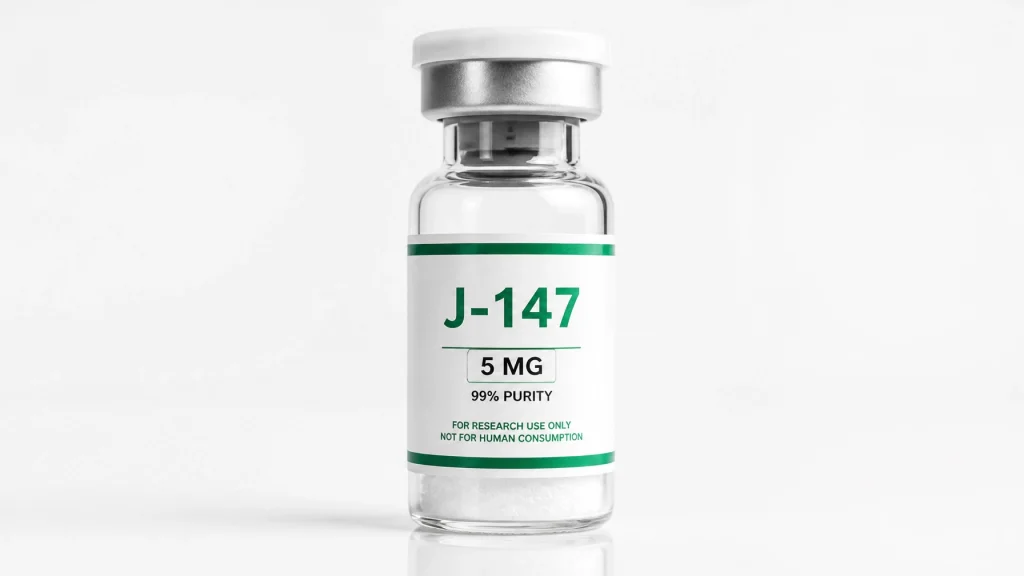
You will learn that the landscape of cognitive enhancement is shifting. For decades, the focus was on temporary “spark plugs” for the brain, stimulants that provided a quick burst of energy but did little for long-term structural health. Today, research is pivoting toward neuroprotection and synaptic preservation. Consider this: your brain is an incredibly complex biological computer, and just like any hardware, it requires both a stable power supply and regular maintenance of its delicate wiring.
J-147 is emerging as a cornerstone of this new strategy. Developed as a synthetic derivative of the active components in curcumin, J-147 was specifically engineered to bypass the common limitations of natural compounds, such as poor bioavailability and rapid breakdown. In this guide, you will explore how this compound acts as both a protective shield and a structural renovator for the aging brain.
The Problem: Cognitive “Fraying”
As we age, or when the brain is under chronic stress, a process called neurodegeneration begins to occur. Imagine the electrical wiring in an old house. Over time, the insulation on the wires (the myelin and synaptic proteins) starts to crack. The connections become loose, and eventually, the lights begin to flicker. This is what you experience as “brain fog,” short-term memory lapses, and decreased mental stamina.
Conventional solutions often focus on the “light bulb” (the symptom), but J-147 focuses on the electrical grid. By identifying the root causes of cellular aging, this compound offers a tiered approach to restoring cognitive resilience.
