
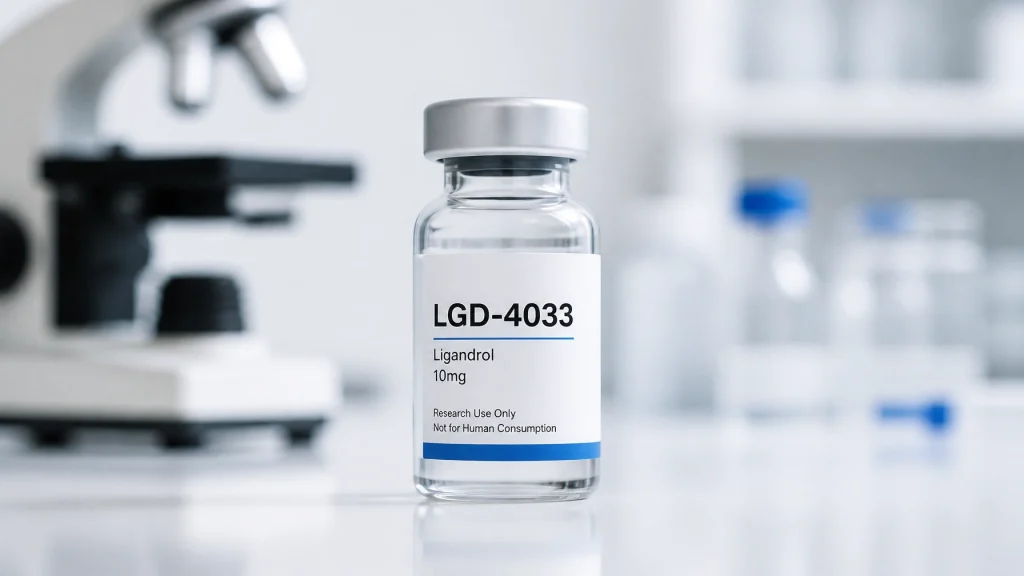
What is LGD-4033?
LGD-4033 is a non-steroidal, oral Selective Androgen Receptor Modulator (SARM). Unlike traditional compounds that blast every androgen receptor in the body, LGD-4033 is designed for high-affinity, tissue-specific interaction. It was originally developed by Ligand Pharmaceuticals and is currently being investigated for its ability to treat conditions like sarcopenia (age-related muscle loss) and hip fracture recovery.
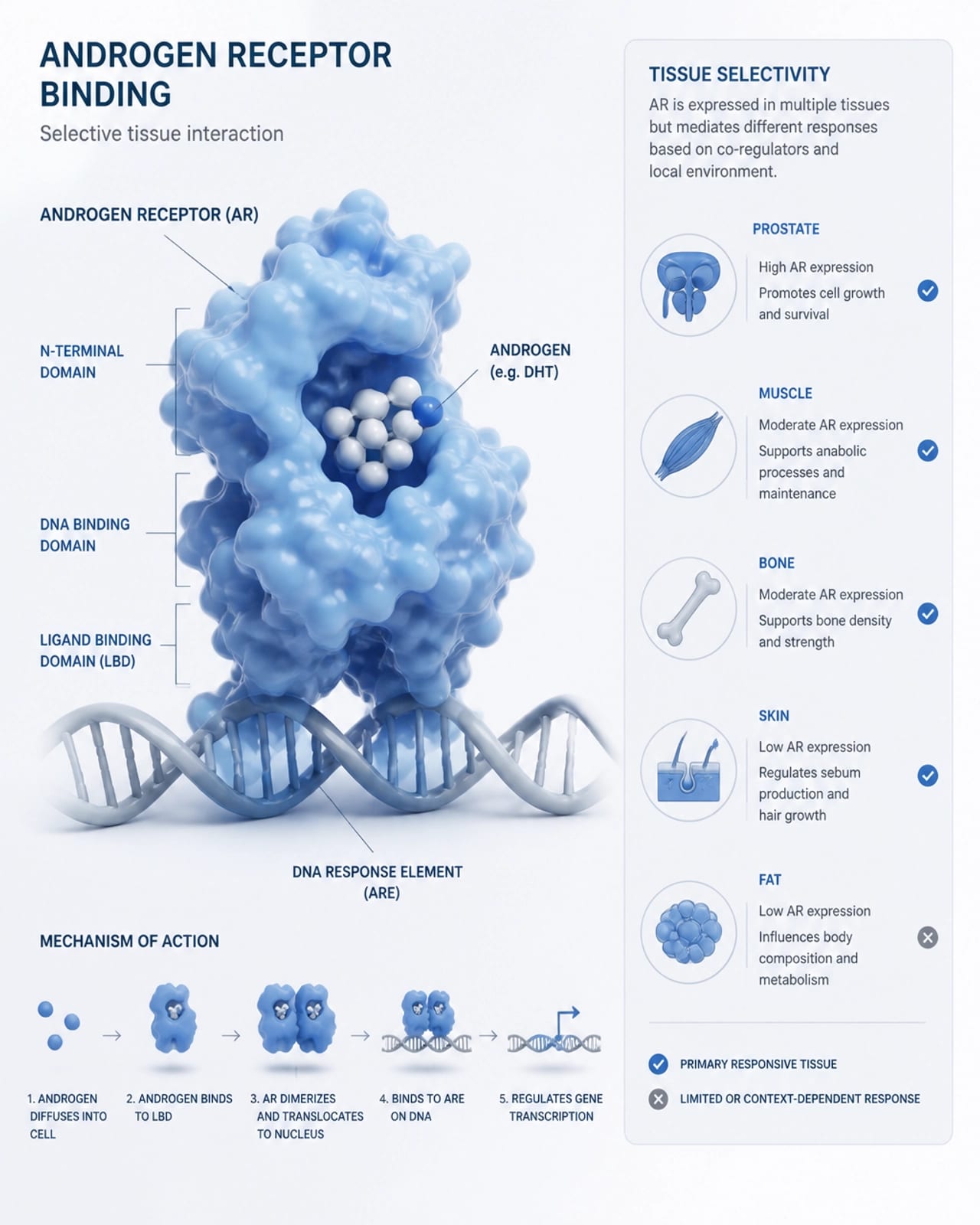
For researchers at WLA, understanding the “Selective” part of SARM is key. It targets the androgen receptors in the muscle and bone with high precision, while exhibiting significantly weaker activity in the prostate and sebaceous glands. This “Scientific Luxury” of precision makes it a prime candidate for experiments where androgenic side effects must be minimized.
The Mechanism: How It Revolutionizes Anabolism
The magic of LGD-4033 lies in its role as a potent androgen receptor agonist. In the world of cellular biology, think of the androgen receptor as a high-security lock. While older compounds act like a master key that opens every door in the building (including the ones you want to stay closed), LGD-4033 is more like a specialized key card programmed specifically for the “Muscle Synthesis” and “Bone Strengthening” wings of the facility.
1. Lean Muscle Synthesis
In clinical models, LGD-4033 has shown a dose-dependent increase in Lean Body Mass (LBM). Data from Phase 1 human trials (21 days) indicated significant increases in LBM even at low dosages, with researchers noting a distinct lack of fat mass gain during the study period. This makes it a fascinating subject for those studying metabolic efficiency and physical transformation.
2. Bone Mineral Density & Structural Integrity
Beyond the mirror, LGD-4033 is a powerhouse for skeletal health. Preclinical data suggests it stimulates periosteal bone formation and increases bone mineral density (BMD). For research focusing on longevity and osteoporosis, LGD-4033 offers a dual-action benefit: it helps build the muscle that protects the skeleton and strengthens the bone matrix itself.
