
The Foundation: What is Liraglutide?
Think of your metabolism as a high-performance car engine. In a perfectly tuned engine, the fuel-to-air ratio is exact. In a body struggling with metabolic syndrome, the “throttle” is stuck open, leading to constant hunger and inefficient fuel burning.
Liraglutide is a GLP-1 Receptor Agonist (GLP-1 RA).
- GLP-1 (Glucagon-Like Peptide-1): A hormone naturally produced in your gut that tells your brain you are full.
- Agonist: A substance that mimics the action of a natural hormone.
Consider Liraglutide as a “bio-thermostat.” When your internal temperature (hunger) gets too high, Liraglutide kicks in to cool the system down, bringing your appetite back to a manageable baseline.
How It Functions: The “Fullness Switch”

Liraglutide works through a three-pronged strategy to reclaim your metabolic health:
- Gastric Emptying (The Speed Limit): It slows down the rate at which food leaves your stomach. Imagine a zipper that only opens halfway; the food stays in the “holding bay” longer, making you feel physically full for hours after a meal.
- Central Nervous System (The Traffic Controller): It crosses into the hypothalamus: the brain’s hunger headquarters. Here, it activates POMC neurons (the “stop eating” signals) and inhibits NPY neurons (the “keep eating” signals).
- Insulin Modulation (The Energy Manager): It tells your pancreas to release insulin only when blood sugar is high, preventing the “sugar crashes” that lead to late-night binging.
Focus on this: Liraglutide doesn’t just “burn fat” directly; it fixes the communication breakdown between your gut and your brain, allowing your body to naturally return to a state of caloric deficit without the agony of constant hunger.
Liraglutide vs. Semaglutide: Choosing Your Tool
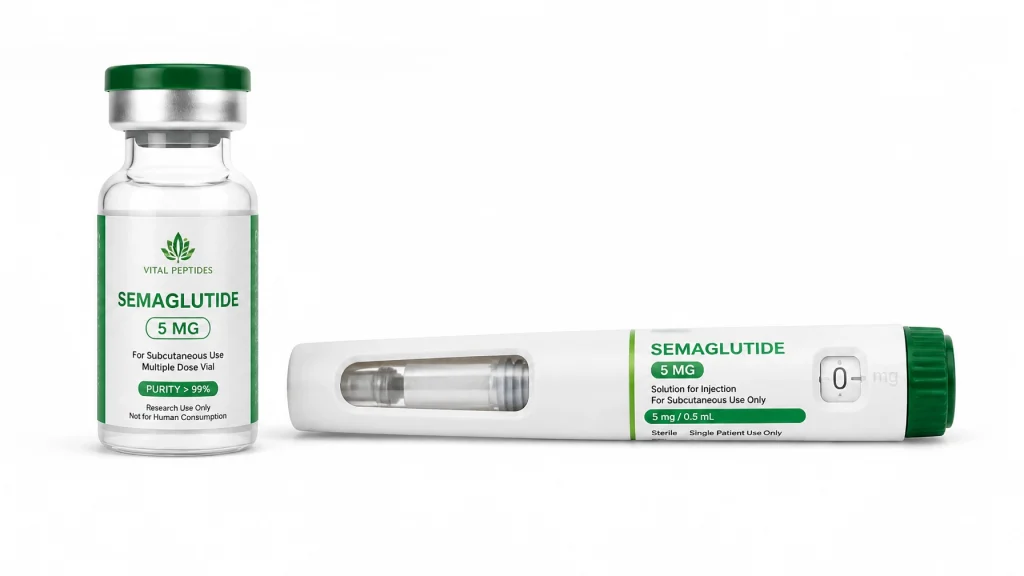
You may have heard of Semaglutide (often referred to by brand names like Ozempic). While both are in the GLP-1 family, they are used differently depending on your lifestyle and sensitivity.
| Feature | Liraglutide | Semaglutide |
|---|---|---|
| Frequency | Daily Administration | Weekly Administration |
| Half-Life | Short (approx. 13 hours) | Long (approx. 7 days) |
| Control | High (Can stop/start quickly) | Low (Stays in system longer) |
| Weight Loss | Modest/Steady (~5-8%) | Significant (~15-17%) |
| Side Effect Management | Easier to adjust daily | Requires “riding out” the week |
Consider this: Liraglutide is like a manual transmission car. It requires more frequent attention (daily use), but it gives you much finer control. If you experience nausea, you can adjust your next day’s dose immediately. Semaglutide is like cruise control; it’s more convenient, but if the “ride” gets bumpy, you’re stuck with it for the full week.
[INSERT VIDEO PLACEHOLDER: Comparison of Daily vs. Weekly GLP-1 Agonists]
