What is LL-37? The Scientific Classification
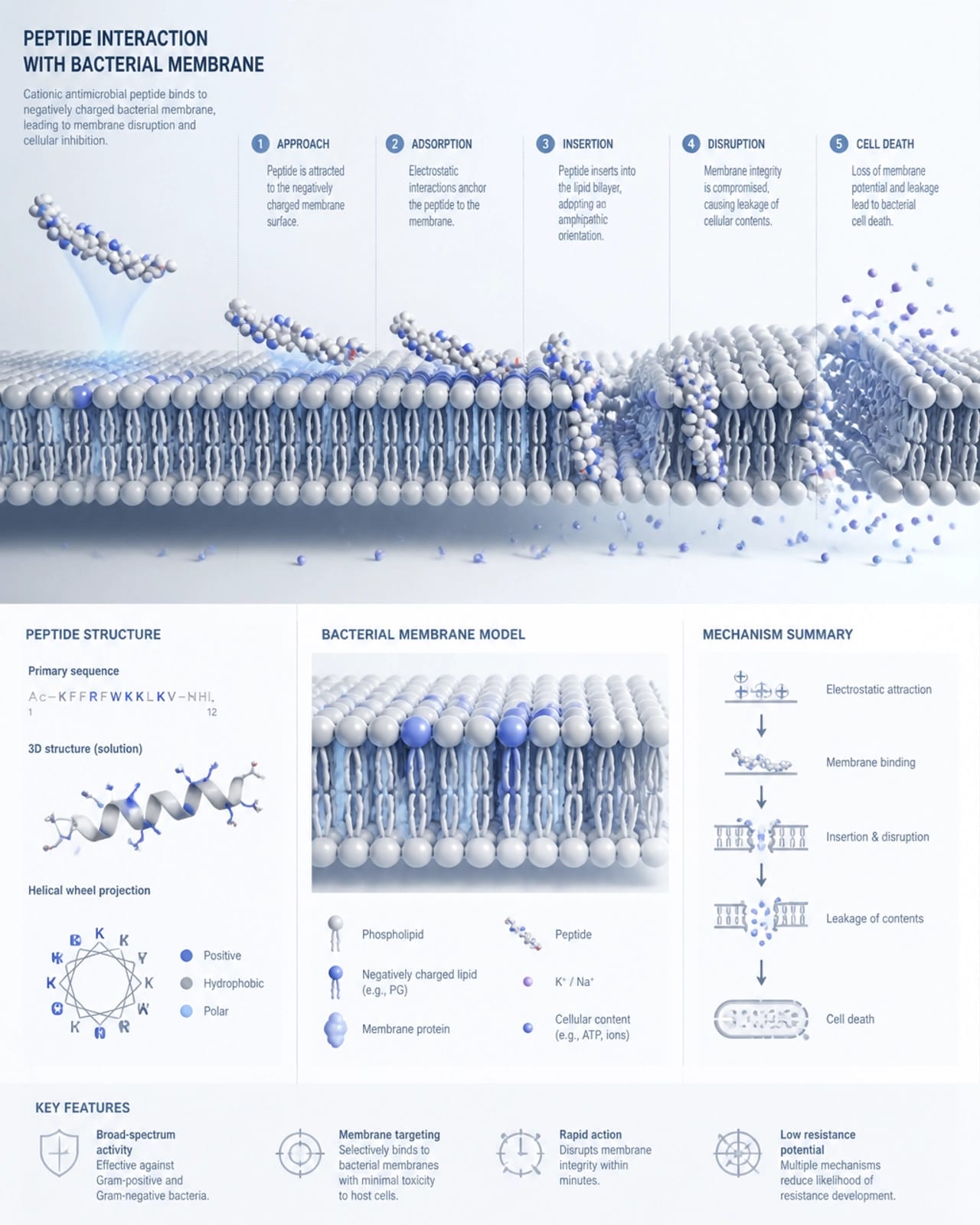
LL-37 is a 37-amino-acid peptide derived from the C-terminus of the hCAP18 protein. In the biological sense, it is an essential component of our first-line defense. Produced by epithelial cells and various immune cells like neutrophils, LL-37 is more than just a passive barrier; it is an active, “smart” molecule designed to Combat pathogens while simultaneously signaling for tissue repair.
At Weight Loss Australia (WLA), we classify LL-37 within our Immune and Life Extension category. Its structural complexity: a linear, amphipathic alpha-helix: allows it to interact with both water and fats, a key feature that enables its legendary membrane-disrupting capabilities.
Mechanism 1: Broad-Spectrum Antimicrobial Action
The most “Scientific Luxury” feature of LL-37 is its ability to physically dismantle bacterial threats. Unlike traditional antibiotics that often target specific metabolic pathways (to which bacteria can develop resistance), LL-37 employs a physical mechanism.
Disrupting the Biofilm
Research indicates that LL-37 is exceptionally potent against both Gram-positive and Gram-negative bacteria. It targets the bacterial cell membrane, forming pores that lead to rapid cytoplasmic leakage: essentially “popping” the bacterial cell.
But the real magic happens at the biofilm level. Biofilms are like fortresses built by bacteria (such as Staphylococcus aureus or Pseudomonas aeruginosa) that make them nearly invincible to standard treatments. LL-37 has been shown to:
- Inhibit the initial attachment of bacteria to surfaces.
- Down-regulate quorum sensing systems (the “radio communication” bacteria use to build their forts).
- Upregulate “twitching motility,” forcing bacteria to keep moving rather than settling into a biofilm.