
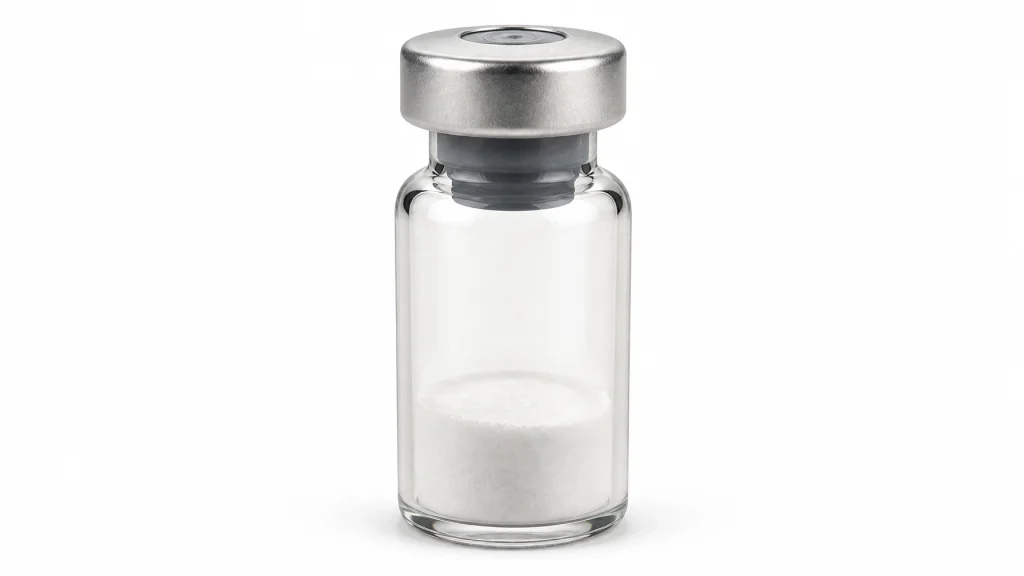
Understanding the “Puck”: What is Lyophilized Powder?
When you receive a vial, you won’t see a liquid. Instead, you’ll see a solid, white “cake” or “puck” at the bottom. This is lyophilized powder.
The Analogy: Imagine a fresh strawberry. If you leave it on the counter, it rots in days. But if you freeze-dry it, you remove the water while keeping the structure and nutrients intact for years. Lyophilization is “freeze-drying” for peptides. By removing the moisture, we put the peptide into a state of suspended animation.
The Problem: While the powder is stable, it is not invincible. The chemical bonds holding those amino acids together are like the teeth of a delicate zipper. If you apply too much heat, light, or physical force, you “jam the zipper,” rendering the peptide useless.
Temperature Control: The Three Safety Zones
Temperature is the primary driver of peptide degradation. In Australia’s harsh climate, a vial left in a mailbox or a hot car can lose potency in hours. You must treat your storage like a tiered security system.
| Storage Zone | Temperature | Purpose | Shelf Life |
|---|---|---|---|
| Deep Freeze | -20°C to -80°C | Long-term “Vault” storage | 2–5 Years |
| Standard Fridge | 2°C to 8°C | Active research vials | 1–3 Months |
| Room Temp | 20°C to 25°C | Short-term handling/transit | Days to Weeks |
Focus on the “Goldilocks Zone”
For most researchers, the refrigerator (2–8°C) is the sweet spot. It keeps the “molecular engine” cool enough to prevent breakdown without the risks associated with frequent freeze-thaw cycles.
Instructional Note: Avoid storing your vials in the refrigerator door. The constant opening and closing cause “temperature spikes.” Instead, place them in a dedicated container toward the back of the fridge where the environment is most stable.

