
Why Precision is the Gold Standard
When you receive a vial of lyophilized (freeze-dried) powder, you aren’t just looking at a product; you’re looking at a concentrated biological tool. Peptides like our Ret 10mg bundle or the higher-strength 50mg Ret vials require exact reconstitution to ensure your research data remains consistent.
A tiny error in math can lead to a 10x difference in concentration. That’s the difference between a controlled metabolic study and an unpredictable variable. By using a dedicated reconstitution calculator peptide tool, you eliminate human error and ensure that every “unit” on your syringe matches your intended dosage exactly.
Decoding the Units: MG, MCG, ML, and Units
Before we dive into the calculator, let’s get our vocabulary straight. Mixing these up is the most common hurdle for new researchers.
- Milligrams (mg): This is usually the total weight of the peptide in your vial (e.g., 5mg, 10mg, or 30mg).
- Micrograms (mcg): This is the unit used for actual dosing. 1mg = 1,000mcg. If your research protocol calls for 250mcg, that is 0.25mg.
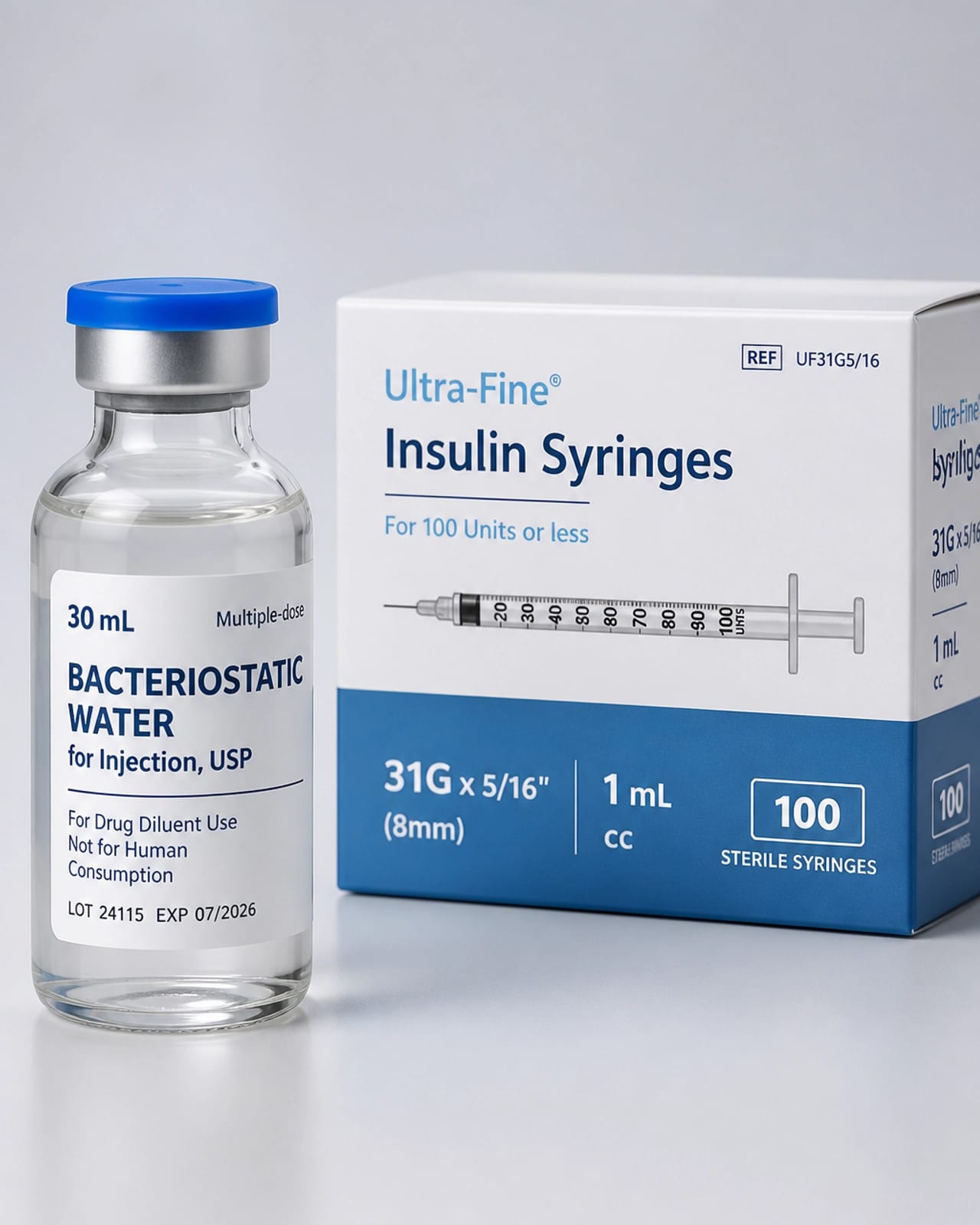
- Milliliters (mL): This is the volume of liquid (the solvent). Usually, we use bac water for peptides. 1mL is roughly equal to 1cc.
- Units: This is what you see on an insulin syringe. Most standard U-100 insulin syringes are 1mL total and contain 100 units. Therefore, 1 unit = 0.01mL.
Understanding that 10 units on a syringe is NOT 10mg of peptide is the first step toward becoming a pro. The “units” simply represent the volume of liquid, not the mass of the compound.
