
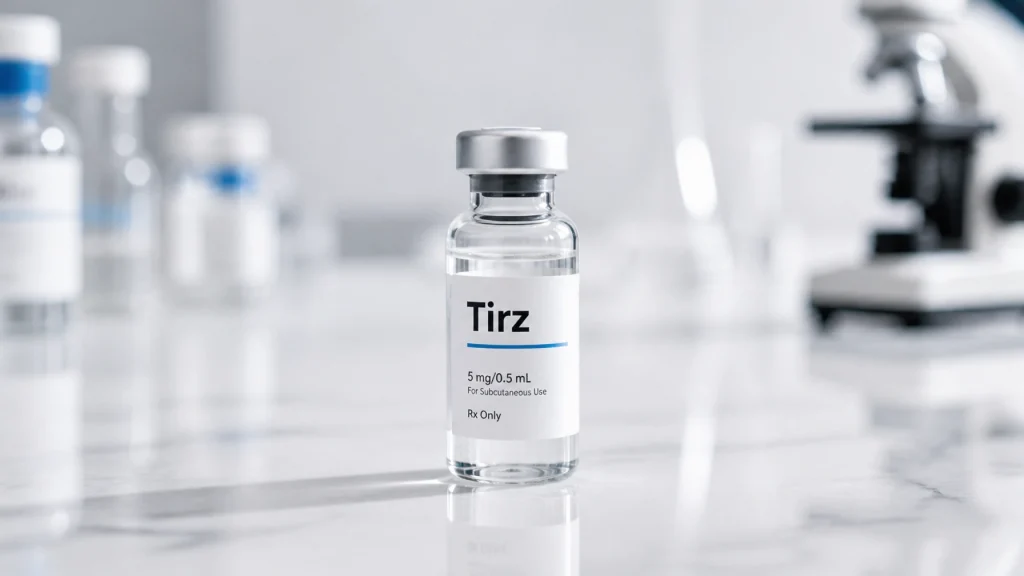
The Dual Agonist Advantage: Revolutionize Your Research
At its core, Tirz is a synthetic peptide that acts as a dual agonist. In human terms? It hits two major receptors simultaneously: the Glucose-Dependent Insulinotropic Polypeptide (GIP) and the Glucagon-Like Peptide-1 (GLP-1).
While older generations of research compounds only targeted one pathway, Tirz doubles down. This “twin-cretin” approach doesn’t just nudge metabolic function; it transforms it. By mimicking these natural hormones, Tirz research models show a massive improvement in insulin sensitivity, a significant reduction in caloric intake, and a stabilized glucose profile that is nothing short of clinical luxury.
Scientific Breakdown & Classification:
- Classification: Dual GIP/GLP-1 Receptor Agonist.
- Molecular Goal: Enhancing glucose-dependent insulin secretion and suppressing glucagon.
- Research Focus: Metabolic dysfunction, type 2 diabetes management, and adiposity reduction.

Why Research “Tirz” for Metabolic Health?
When we talk about metabolic health, we’re looking at more than just the numbers on a scale. We are talking about mitochondrial efficiency and the body’s ability to process energy without the “crash.”
In recent research trials, the data surrounding this dual-agonist has been staggering. Subjects in a research environment have shown:
- Massive Metabolic Shift: A significant pivot from glucose-burning to high-efficiency fat oxidation.
- HbA1c Stabilization: Precise control over long-term blood sugar markers.
- Appetite Regulation: A total silencing of the “food noise” that often hampers metabolic progress.
At WeightLossChems, we provide Tirz in a variety of strengths, 5mg, 10mg, 20mg, 30mg, and the heavy-hitting 50mg vials, ensuring that your research has the exact precision required for your specific protocols.
