
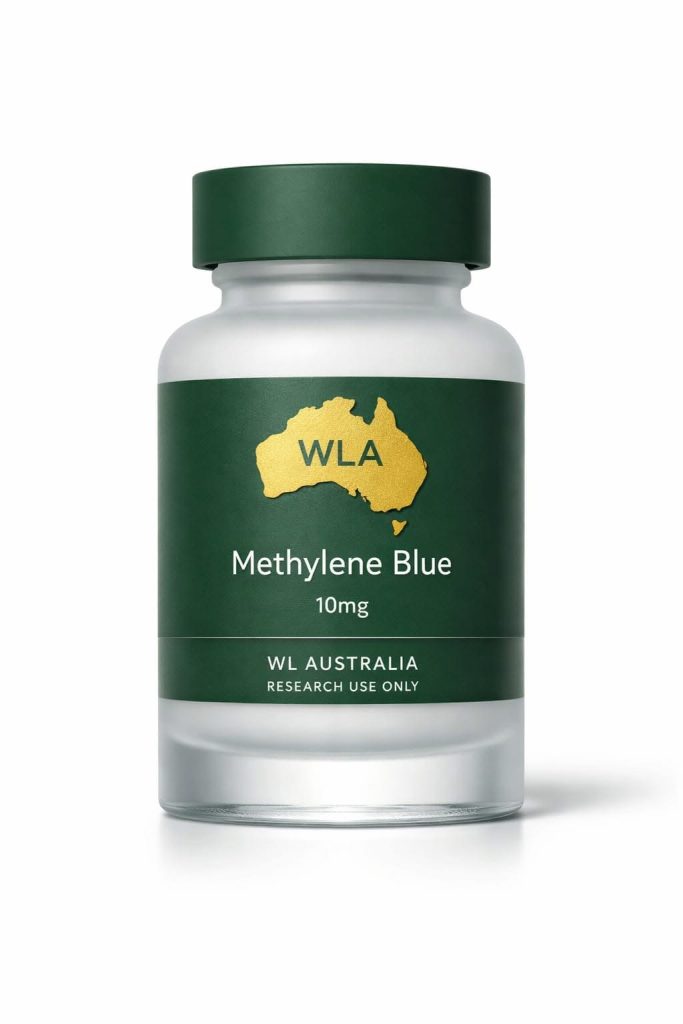
What is methylene blue?
Methylene blue is a synthetic compound that can shift between oxidised and reduced forms. In simple terms, it can accept and donate electrons : a little like a rechargeable courier moving energy between stations.
Your mitochondria are the energy-generating structures inside your cells. They convert nutrients and oxygen into adenosine triphosphate, or ATP, the main chemical energy currency used by your body.
The problem is that the mitochondrial “power grid” can become inefficient. When electrons escape from the normal pathway, they can contribute to the formation of reactive oxygen species, or ROS. A small amount of ROS is part of normal cell signalling, but excessive levels can damage proteins, membranes and DNA.
Research interest in methylene blue centres on whether it can help electrons move more efficiently through parts of the mitochondrial electron transport chain.
Short version: mitochondria are the power stations; methylene blue is being studied as an alternative electrical route.

Mitochondrial health: supporting the cellular power grid
The problem: low cellular energy
Your brain is particularly dependent on reliable energy production. Neurons constantly maintain electrical gradients, communicate across synapses and recycle chemical messengers. This is why poor sleep, illness, metabolic stress and ageing can all affect concentration and mental stamina.
Think of the brain as a city that never closes. Even while you sleep, its roads, communication lines and power systems remain active. If the power supply becomes less efficient, the city may still function : but traffic slows, communication becomes less reliable and maintenance falls behind.
The research solution: an alternative electron pathway
Methylene blue has been investigated as an alternative electron carrier. Research reviews describe its ability to receive electrons from NADH and transfer them towards cytochrome c, helping support complex IV activity in the electron transport chain.
A 2007 cell study reported that nanomolar concentrations of methylene blue increased mitochondrial complex IV activity, cellular oxygen consumption and heme synthesis in cultured human fibroblasts. These findings are scientifically interesting, but they were not a clinical trial showing that capsules improve energy or health in humans.
A broader review in Molecular Neurobiology also reported promising mitochondrial and neuroprotective findings across cell and animal models. The authors emphasised that more clinical research is needed before these mechanisms can be translated into routine treatment.
The practical lesson: improved mitochondrial activity in a laboratory model does not automatically equal better energy, focus or longevity in a person.
Video placeholder 1: Insert an educational video explaining mitochondria, ATP production and methylene blue’s proposed electron-shuttling mechanism.
