
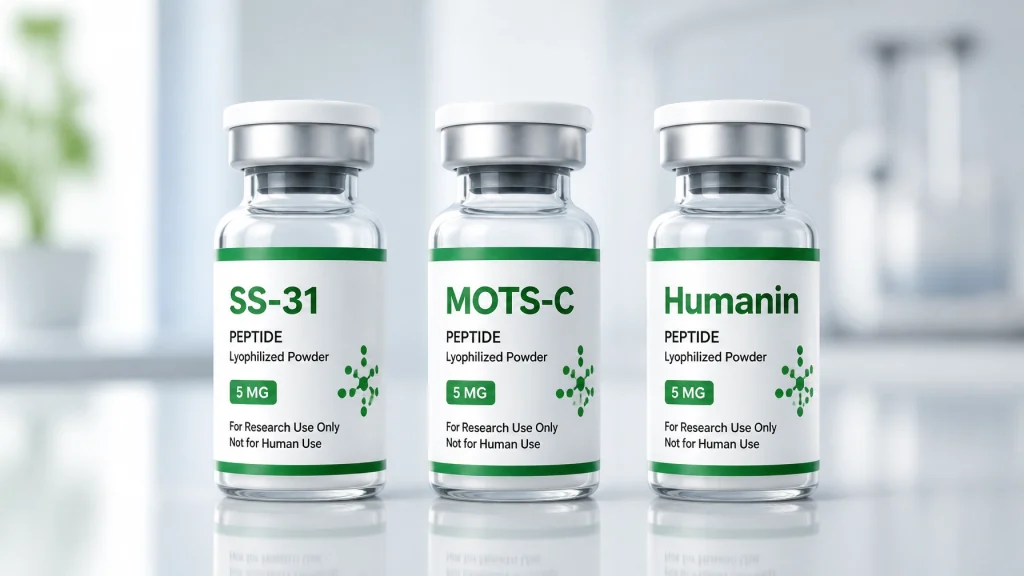
The Problem: Why Your Cellular “Engine” Is Losing Power
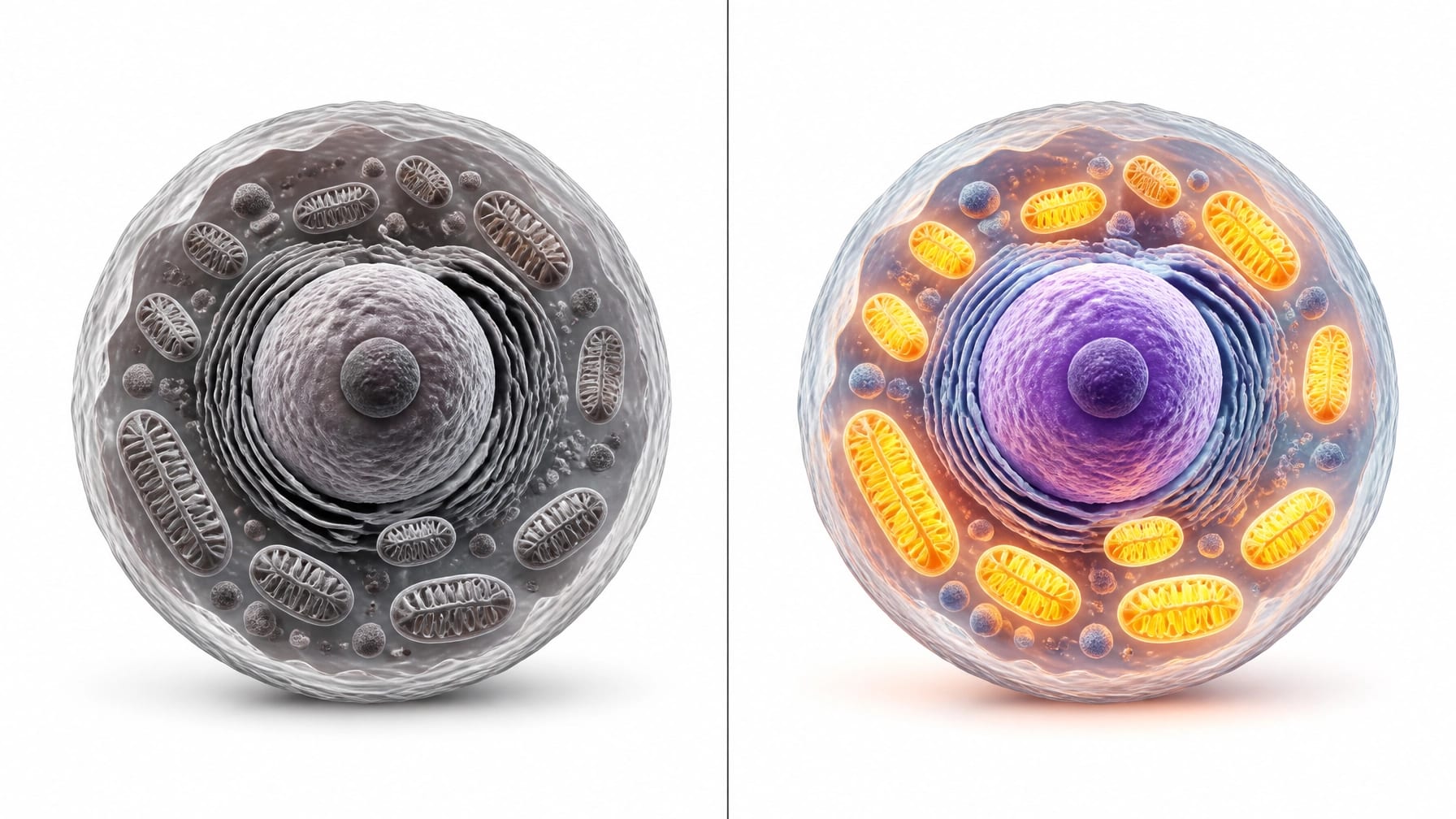
Imagine a car engine that hasn’t been serviced in twenty years. The seals are leaking, the spark plugs are fouled, and the internal combustion chamber is covered in soot.
In your body, this translates to:
- Frayed Wiring: The inner mitochondrial membrane: specifically a lipid called cardiolipin: becomes damaged. This leads to “leaky” mitochondria that produce more waste (ROS) than energy.
- Dimming Lights: Your body’s ability to sense energy needs (via the AMPK pathway) declines, meaning you can’t efficiently burn fat or glucose for fuel.
- Accumulated Junk: The natural “trash collection” process, known as autophagy, slows down. Damaged mitochondria stick around like rusted machinery, causing inflammation and further decay.
Phase 1: The Structural Specialist : SS-31
Before you can upgrade an engine, you must fix the leaks. This is where SS-31 (also known as Elamipretide) comes in. Focus on this as your foundational repair tool.
SS-31 is a small peptide that specifically targets cardiolipin, a unique molecule found only in the inner mitochondrial membrane. Think of cardiolipin as the “gasket” that holds the energy-producing machinery together. When cardiolipin is damaged by oxidative stress, the entire structure of the mitochondrion collapses.
How SS-31 restores the foundation:
- Membrane Repair: It binds to cardiolipin, pulling the “gasket” tight and restoring the integrity of the inner membrane.
- Efficiency Boost: By stabilizing the structure, it stops “electron leaks,” meaning your mitochondria can produce more ATP (energy) with less “exhaust” (Reactive Oxygen Species or ROS).
- Rescue Mission: Unlike other antioxidants that merely mop up waste, SS-31 goes to the source, fixing the broken machinery so it stops producing waste in the first place.
[VIDEO: Deep dive into the molecular mechanism of SS-31 and cardiolipin stabilization]
