
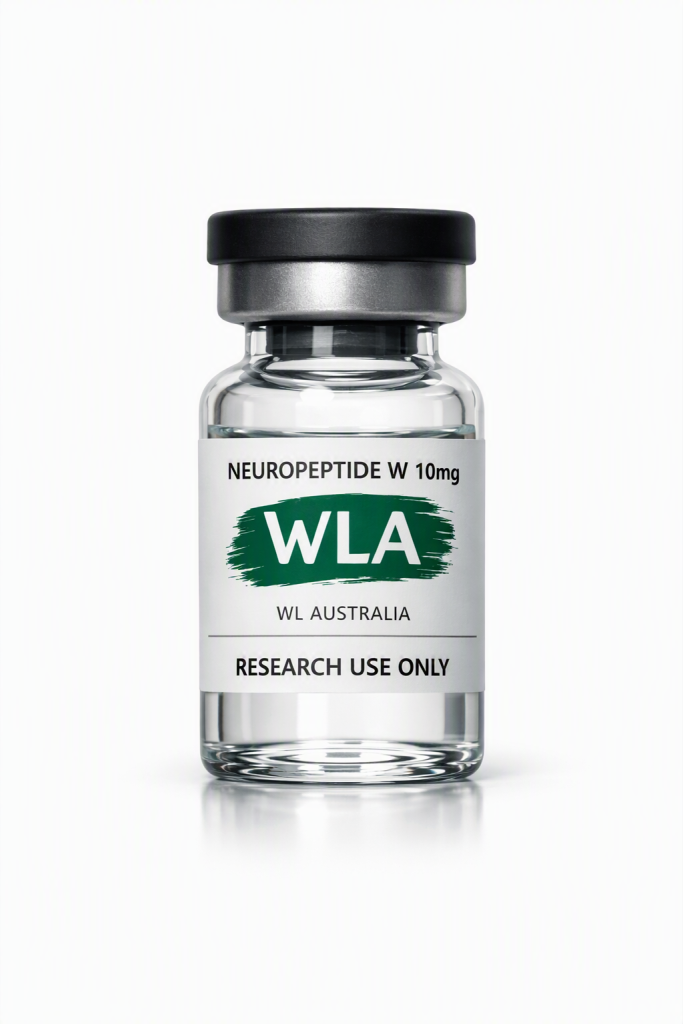
What is Neuropeptide W?
The problem: complex biology can make a simple peptide difficult to understand
NPW was identified in the early 2000s during research into previously “orphan” receptors. An orphan receptor is like an empty lock: scientists know the lock exists, but they have not yet identified the natural key that fits it.
Researchers isolated NPW as a natural ligand for two G protein-coupled receptors (GPCRs):
- GPR7, now commonly called NPBWR1 or NPBW1
- GPR8, now commonly called NPBWR2 or NPBW2
A ligand is simply a molecule that binds to a receptor and changes its activity. Think of NPW as a message delivered to a cellular switchboard.
NPW is part of the same broader peptide family as neuropeptide B (NPB). Two mature forms are commonly discussed:
- NPW-23
- NPW-30
The numbers refer to the approximate number of amino acids in each mature peptide form.
The solution: start with the receptor pair
The NPW receptor system is important because it connects a small molecule with several major biological circuits. These receptors are found in brain regions involved in:
- Feeding and appetite
- Arousal and emotional behaviour
- Stress responses
- Pain processing
- Autonomic regulation
- Hormone communication
Most receptor studies suggest that NPW signalling can influence cyclic adenosine monophosphate, or cAMP, inside cells. cAMP acts like an internal relay runner, carrying the message from the receptor deeper into the cell.
Short summary: NPW is not a single-purpose molecule. It is a research signal positioned at the intersection of metabolism, stress and neuroendocrine function.
NPW and feeding behaviour
The problem: appetite is not controlled by willpower alone
Your hunger system works more like a vehicle’s dashboard than a simple on/off switch. It receives signals about stored energy, stomach contents, temperature, stress and activity levels.
The hypothalamus acts as one of the main control centres. It monitors these signals and helps adjust food intake and energy expenditure.
In animal studies, centrally administered NPW has been associated with:
- Reduced food intake
- Lower body-weight gain
- Increased energy expenditure
- Increased heat production
- Changes in body temperature
- Reduced feeding during the active period of the day
This has led researchers to describe NPW as a potentially catabolic signal. Catabolic means that the body is encouraged to use stored energy rather than simply store more of it.
However, you should not translate a rodent feeding study directly into a human weight-loss claim. A laboratory finding is like a test drive on a closed track: it shows what may be possible under controlled conditions, but it does not prove how a vehicle will perform in every real-world environment.
NPW may influence feeding through interactions with other hypothalamic systems, including pathways involved in satiety, thermogenesis and autonomic output. The final effect may depend on dose, location, receptor distribution, species and the overall metabolic state of the subject.
The research takeaway: NPW is being investigated as part of the biological “energy budget,” not as a proven appetite-control therapy.

For comparison, Neuropeptide Y 10mg represents another research pathway involved in appetite, stress and energy regulation. The two peptides should not be treated as interchangeable. They act through different receptor families and may produce different biological outcomes.
