
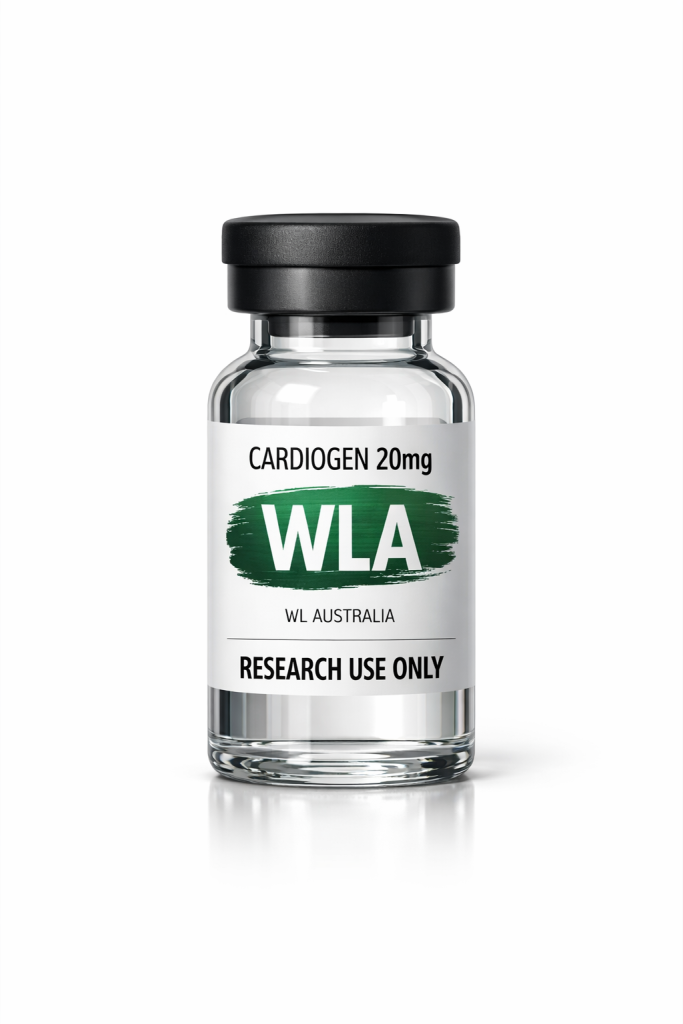
Why Heart Muscle Resilience Matters
A common frustration is feeling that cardiovascular endurance declines faster than expected. You may be able to train consistently, eat well, and maintain a healthy weight, yet still notice slower recovery or reduced capacity during demanding activity.
The underlying issue is not always the heart’s pumping strength alone. The heart muscle must also manage:
- Continuous mechanical workload
- Fluctuations in oxygen supply
- Metabolic demands during exercise
- Oxidative stress
- Cellular repair and maintenance
- Age-related changes in tissue structure
The heart’s muscle layer is called the myocardium. It is made up largely of specialised cells called cardiomyocytes, which contract repeatedly to circulate blood.
Think of cardiomyocytes as a team of industrial engines. Each cell must produce energy, respond to signals, and maintain its structure. If oxygen delivery drops, the engines have less fuel. If the stress continues, some cells may become damaged or enter apoptosis, a controlled form of cellular death.
The research problem: how can heart cells remain functional during stress?
The research strategy: investigate signals that may support cellular energy handling, repair, and survival.
What Is Cardiogen?
Cardiogen is a synthetic heart-focused peptide described in the supplied foundational chapter as Ala-Glu-Asp-Pro.
You may see Cardiogen described as a “synthetic tripeptide” in bioregulator materials. However, the listed sequence contains four amino-acid residues. For clarity, this article refers to it as a short synthetic peptide.
Amino acids are the small building blocks used to create peptides and proteins. Their sequence works like an address label and instruction code. Changing the order or identity of the amino acids can change how a peptide interacts with biological systems.
Cardiogen is being investigated because short peptides may act as cellular signalling molecules. Rather than functioning like a conventional stimulant, the research concept is closer to sending a targeted maintenance message to heart tissue.
Imagine a building-management system receiving an alert:
“Energy demand is rising. Oxygen availability may be reduced. Prioritise cellular stability and repair.”
That is the type of biological role researchers are exploring: not a guaranteed outcome and not an established treatment.
