
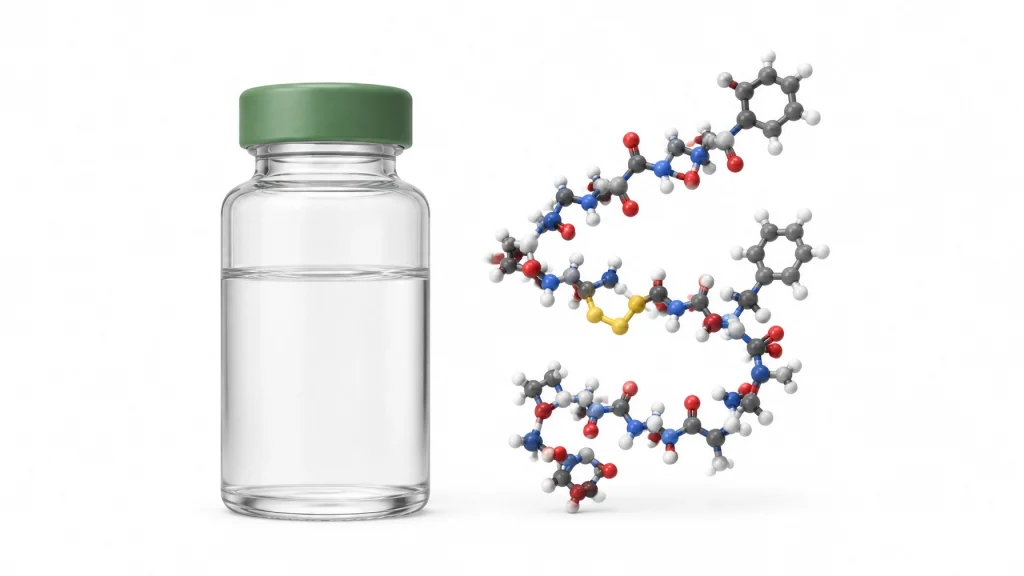
From hypothalamic extracts to a major neuropeptide research field
The problem: complex signalling is easy to oversimplify
Many biological messengers are described as if they perform one job. PACAP does not fit that model. It acts more like a large communications network than a single-purpose switch.
PACAP was identified during research on extracts from the hypothalamus, a brain region involved in temperature, appetite, stress, sleep and hormonal regulation. Researchers found that the peptide could stimulate the enzyme adenylate cyclase, which helps cells produce the messenger molecule cyclic adenosine monophosphate, or cAMP.
The research solution: map the network, not just the molecule
You can picture cAMP as an internal text message. When PACAP binds to a receptor on a cell, it can increase cAMP and activate downstream pathways involved in:
- Cellular communication
- Neuronal resilience
- Hormone secretion
- Smooth-muscle and vascular activity
- Stress responses
- Synaptic adaptation
The result is a peptide with activity across both the central nervous system and peripheral tissues.
Short summary: PACAP-27 is best understood as a signalling coordinator, not a single-outcome supplement.
PACAP-27 and PACAP-38: two related forms
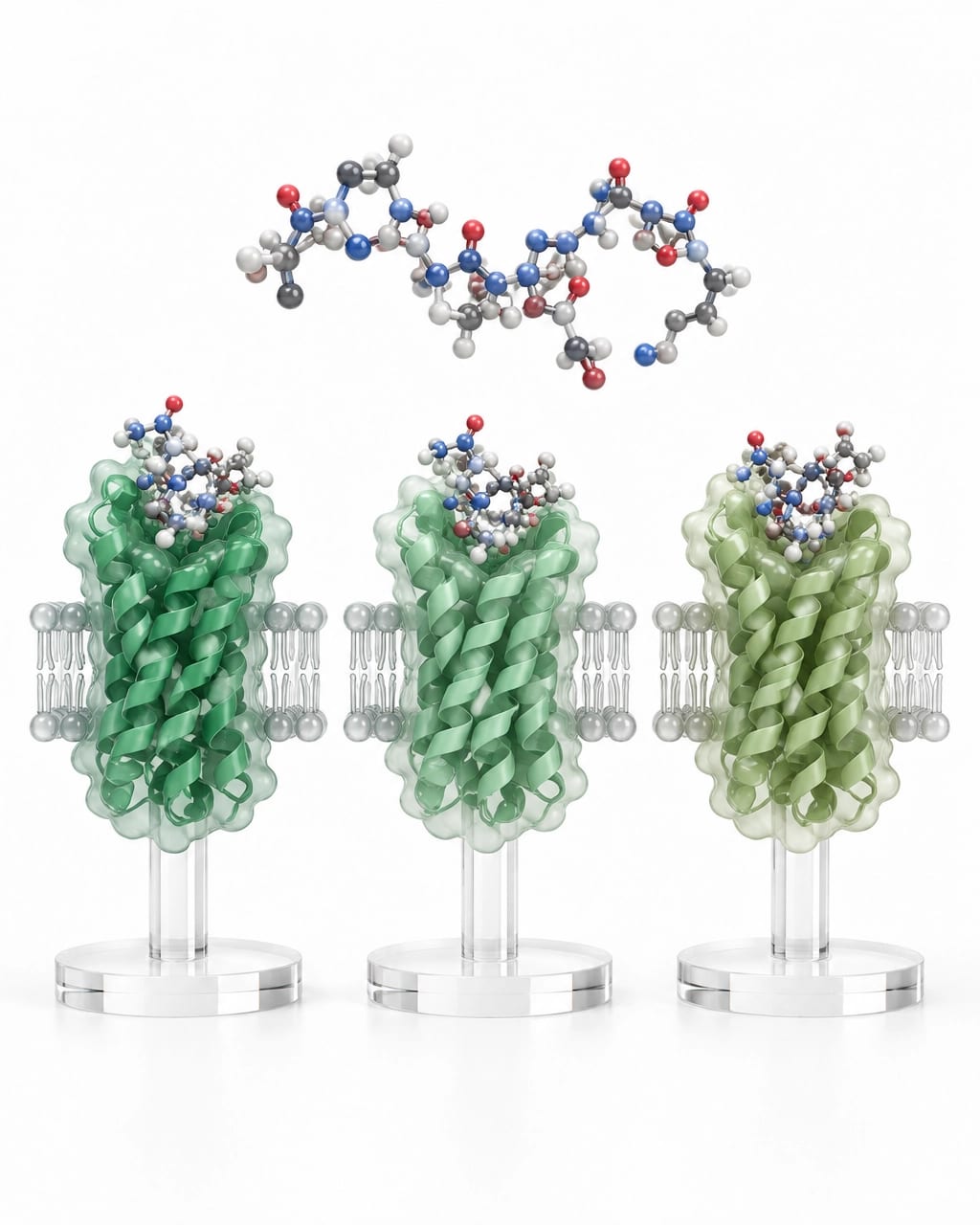
The problem: the two forms are often treated as interchangeable
PACAP mainly appears in two naturally occurring forms:
- PACAP-27: the shorter form containing 27 amino acids
- PACAP-38: the longer form containing 38 amino acids
Both forms can activate the same principal receptor families, but they are not identical in every experimental system. Their distribution, stability, tissue activity and receptor preferences can vary depending on the assay.
The research solution: compare sequence, receptor and context
PACAP-27 is commonly discussed as the shorter, strongly active form at VIP receptors. VIP means vasoactive intestinal peptide, another signalling peptide involved in blood vessels, gut function, immune activity and secretion.
In practical terms, PACAP-27 can be viewed as a shorter key that still fits several biological locks. PACAP-38 is the longer key, with its own behaviour in tissues and experimental models.
Researchers typically compare the forms by looking at:
| Research feature | PACAP-27 | PACAP-38 |
|---|---|---|
| Structure | 27 amino acids | 38 amino acids |
| Main receptor families | PAC1, VPAC1 and VPAC2 | PAC1, VPAC1 and VPAC2 |
| VIP-receptor activity | Strong activity reported in experimental systems | Also active, with context-dependent differences |
| Brain research | Neuronal survival, signalling and plasticity | Neuroprotection, migraine and stress research |
| Clinical interpretation | Preclinical or early-stage evidence | Preclinical or early-stage evidence |
| Approved self-treatment use | None | None |
The key point is simple: shorter does not mean safer, weaker or automatically better. Potency depends on the receptor, tissue, concentration, delivery method and experimental conditions.
