
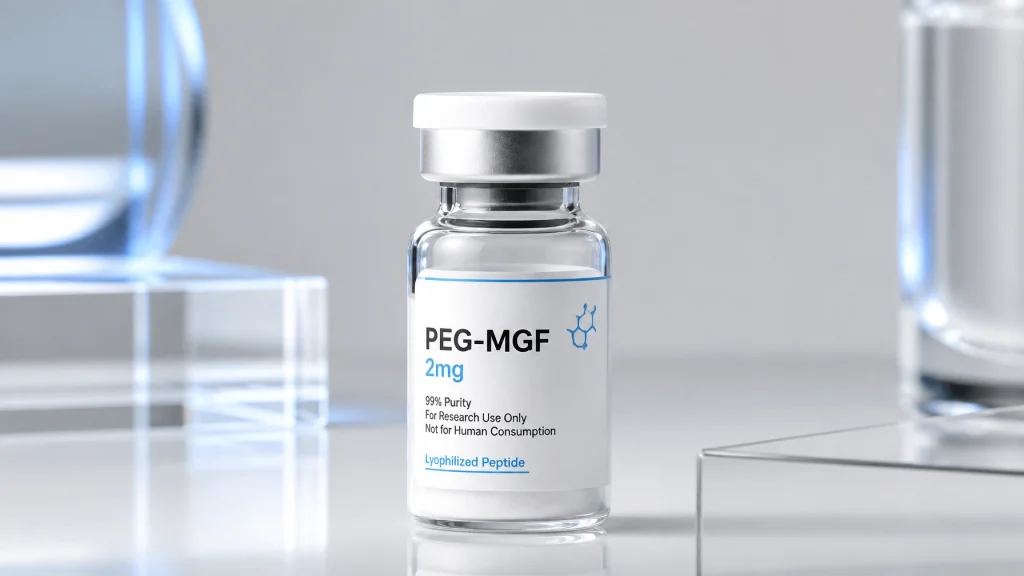
The Science of Cellular Restoration
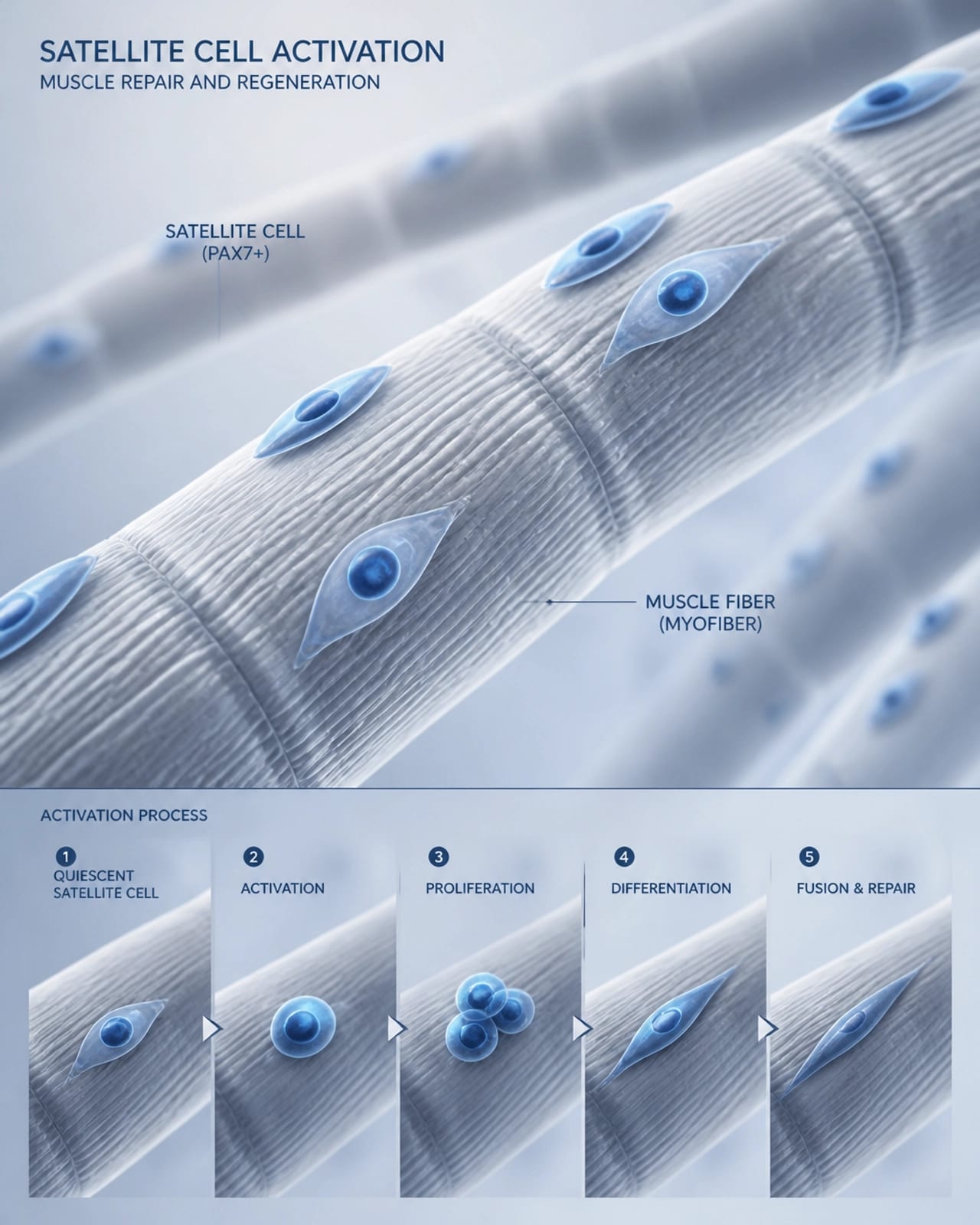
To understand the power of PEG-MGF, we first have to look at its progenitor: MGF. In a natural biological setting, MGF is a splice variant of the IGF-1 (Insulin-like Growth Factor-1) gene. It is produced locally within the muscle tissue in response to mechanical stress: think of it as the body’s “emergency response” signal after intense physical exertion or injury.
MGF’s primary role is to activate satellite cells. These are essentially the muscle’s own stem cells. When MGF signals these cells, they begin to proliferate, creating new muscle nuclei that fuse with existing fibers to repair damage and build new tissue. This process, known as hyperplasia, is the holy grail of muscle research because it involves the creation of new muscle cells, rather than just the enlargement of existing ones (hypertrophy).
The “PEG” Advantage: Revolutionizing Bioavailability
While natural MGF is incredibly potent, it has a significant limitation in a research context: its half-life. Standard MGF is extremely unstable and breaks down in the bloodstream within mere minutes. For researchers, this means that systemic application of standard MGF is often inefficient, as the peptide is destroyed before it can reach its target tissues.
This is where the Pegylation process changes the game.
By covalently attaching a Polyethylene Glycol (PEG) molecule to the MGF peptide, scientists have successfully shielded the compound from rapid enzymatic degradation. This “scientific armor” transforms the peptide’s pharmacokinetics:
- Standard MGF Half-life: ~5–7 minutes.
- PEG-MGF Half-life: ~48–72 hours.
This extended window allows the peptide to circulate through the system, reaching damaged tissues across the entire body and providing a sustained signal for repair. For any serious researcher looking to combat tissue breakdown, PEG-MGF is the high-tech solution to the fragility of natural growth factors.
