
The Problem: Multi-System Breakdown
Long COVID isn’t just one issue; it’s a “perfect storm” of persistent inflammation, vascular damage, and mitochondrial dysfunction. To fix it, we must address:
- Tissue and Vascular Damage: Rebuilding the “roads” (blood vessels).
- Systemic Inflammation: Putting out the “fire” in the gut and nervous system.
- Immune Dysregulation: Helping the “security team” distinguish between friends and foes.
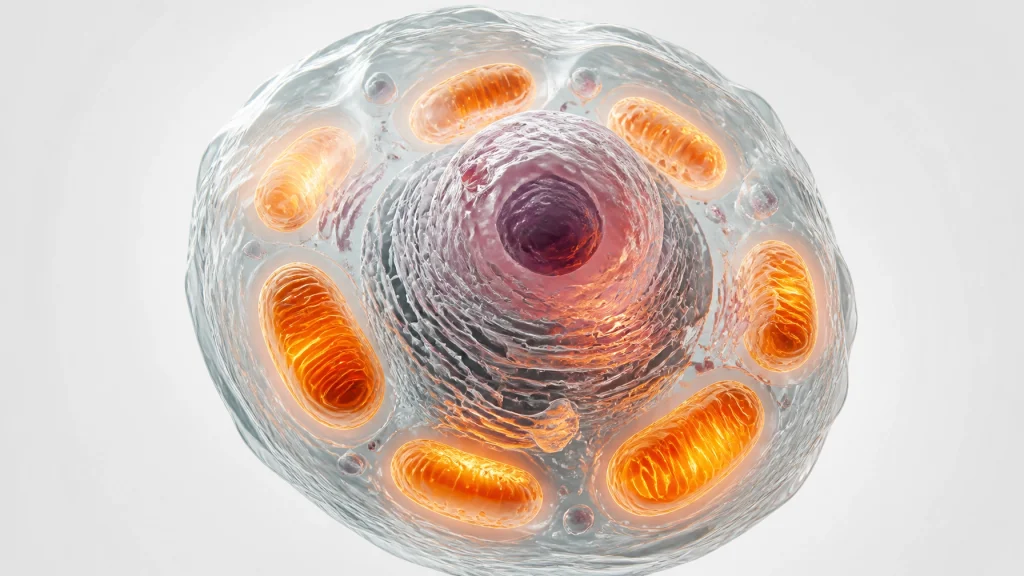
- Mitochondrial Exhaustion: Fixing the “power grid” of your cells.
1. BPC-157: The Infrastructure Repairman
Focus on BPC-157 (Body Protection Compound 157) as your primary repair agent. Think of it as a master contractor on a construction site. While your body is trying to patch up the damage left by the virus, BPC-157 provides the blueprints and materials to speed up the process.
Recent research has identified a specific pathway involving FBXO22 and BACH1. In simple terms, BPC-157 helps stabilize BACH1, which triggers angiogenesis: the formation of new blood vessels. If the virus damaged your micro-vasculature, BPC-157 acts like a crew laying down fresh asphalt on a ruined highway. It also plays a massive role in gut health, protecting the mucosal lining where a significant portion of your immune system resides.

(Note: Visualizing the restoration of blood flow and tissue integrity.)
