The Problem: The “Handcuffed” Security Guard
Every cell in your body contains p53, a protein so critical to cellular health that scientists call it the “Guardian of the Genome.” Its primary job is to monitor DNA damage. If the damage is fixable, p53 pauses the cell for repairs; if it is beyond saving, p53 triggers a controlled shutdown.
The frustration: In many compromised cellular environments, the body overproduces HDM2. Think of HDM2 as a piece of tape placed over the “security guard’s” mouth and hands. HDM2 binds to p53, marking it for destruction before it can do its job. This allows “rogue” cells: those that are damaged or behaving erratically: to stay on the “construction site,” consuming resources and creating structural instability.
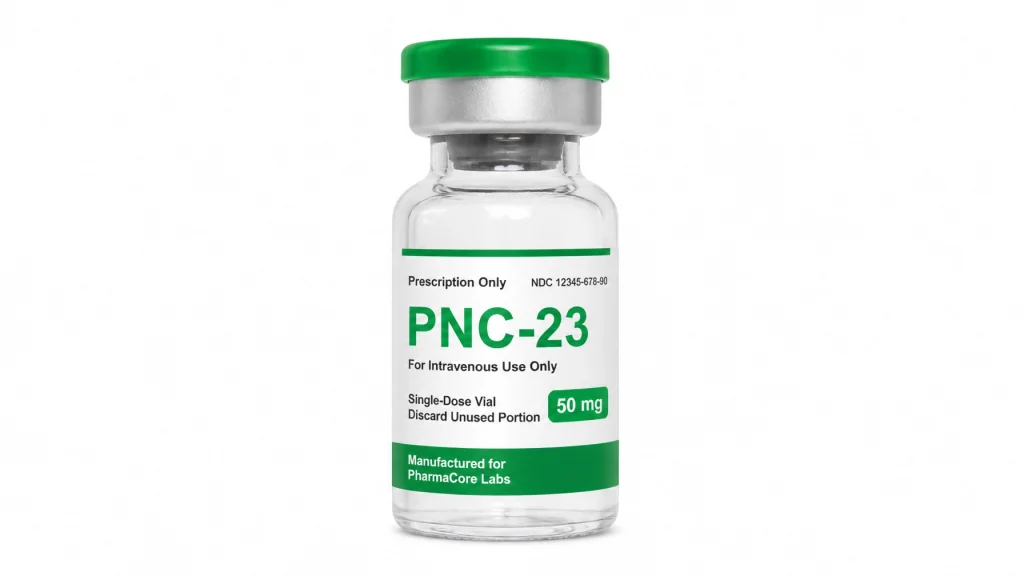
The Solution: PNC-23 is engineered specifically to target this HDM2/p53 interaction. By mimicking the specific part of p53 that HDM2 likes to grab, PNC-23 acts as a decoy. It occupies the HDM2 molecule, preventing it from binding to your natural p53 guards.
[PLACEHOLDER: VIDEO 1 – THE MECHANISM OF P53 AND HDM2 INTERACTION]
How PNC-23 Operates: The “Poptosis” Effect
While many supplements aim to boost general health, PNC-23 is highly surgical. It doesn’t just “support” cells; it helps the body identify which ones need to be retired. Unlike its predecessor, PNC-27, which is a longer chain, PNC-23 is a truncated, more streamlined version designed for high-efficiency binding.
The Membrane Target
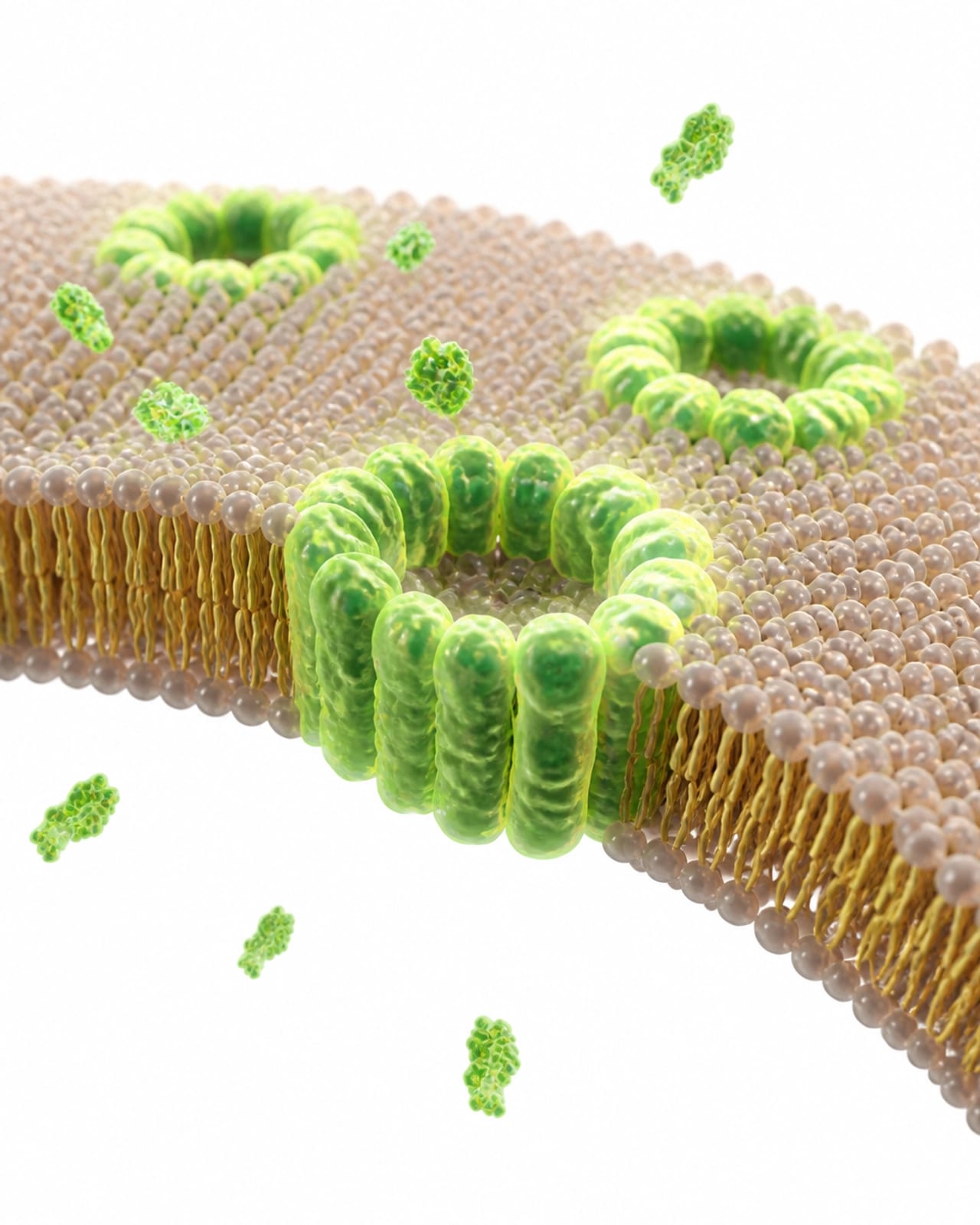
One of the most fascinating aspects of PNC-23 research is its selectivity. Research suggests that compromised or “rogue” cells often misplace their HDM2. Instead of keeping it inside the control center (the nucleus), they push it out to the cell’s outer wall (the plasma membrane).
- Target Acquisition: PNC-23 ignores healthy cells where HDM2 is tucked away safely inside.
- Binding: It seeks out the “misplaced” HDM2 on the surface of rogue cells.
- Pore Formation: Once it binds, it creates tiny punctures or “pores” in the cell wall.
- Rapid Clearance: This process, known as Poptosis (a unique form of pore-induced cell death), causes the rogue cell to lose pressure and dissolve quickly, leaving the surrounding healthy tissue untouched.