
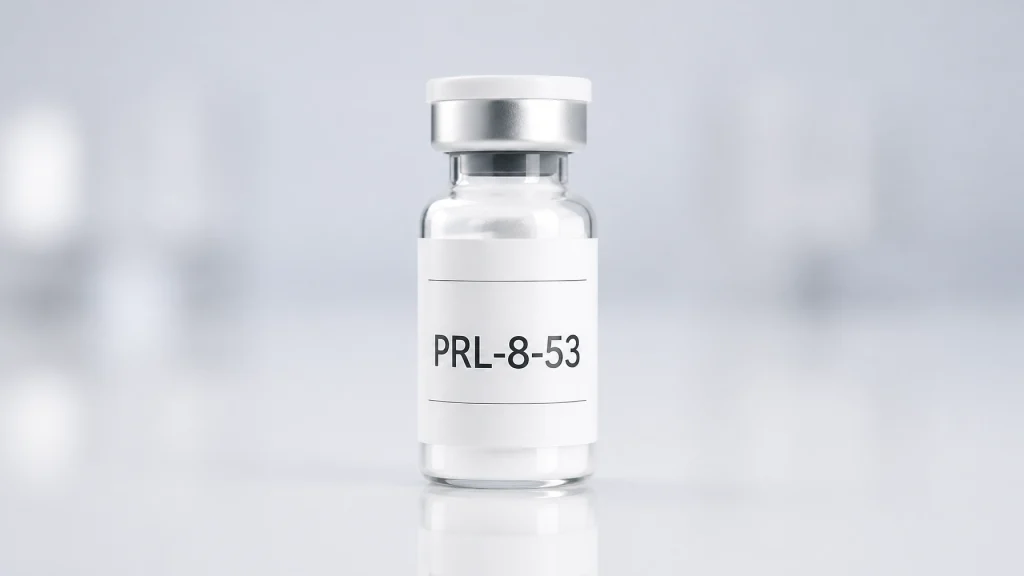
What is PRL-8-53? The Scientific Classification
PRL-8-53 is a synthetic benzoic acid derivative that first emerged from the labs of Dr. Nikolaus Hansl in the 1970s. Unlike many compounds that accidentally fall into the cognitive category, PRL-8-53 was intentionally developed as a psychotropic agent with a specific focus on enhancing memory.
In the lab, this compound is often described as a cholinergic modulator with secondary dopaminergic and serotonergic influences. It operates at the intersection of neurotransmitter balance, acting as a catalyst for what many researchers call “Hyper-Memory Retention.”
The “Scientific Luxury” of PRL-8-53
At Weight Loss Australia, we view PRL-8-53 as more than just a chemical; it’s a high-tech solution for biological limitations. By targeting specific metabolic pathways, this compound aims to Transform the way information is encoded and retrieved.

The Clinical Legacy: Hansl & Mead (1978)
When we talk about PRL-8-53, we have to talk about the 1978 study by Hansl and Mead. This remains the cornerstone of all PRL-8-53 research. In this double-blind, placebo-controlled human trial, subjects were tested on their ability to recall a series of words after a single low dose of the compound.
The results were nothing short of transformative:
- Verbal Memory Retention: Subjects showed a statistically significant improvement in their ability to recall word lists, especially those who had lower baseline scores initially.
- Acquisition Rate: While the speed of learning saw a “slight” uptick, the retention: the ability to keep that information locked in: was where the real magic happened.
- Reaction Time: Interestingly, the compound did not significantly impact motor control or visual reaction times, suggesting its effects are highly localized to the cognitive regions responsible for memory.
For researchers, this signals that PRL-8-53 is a “pure” cognitive enhancer, focusing its metabolic fire on memory pathways without the jittery side effects of traditional stimulants.
