
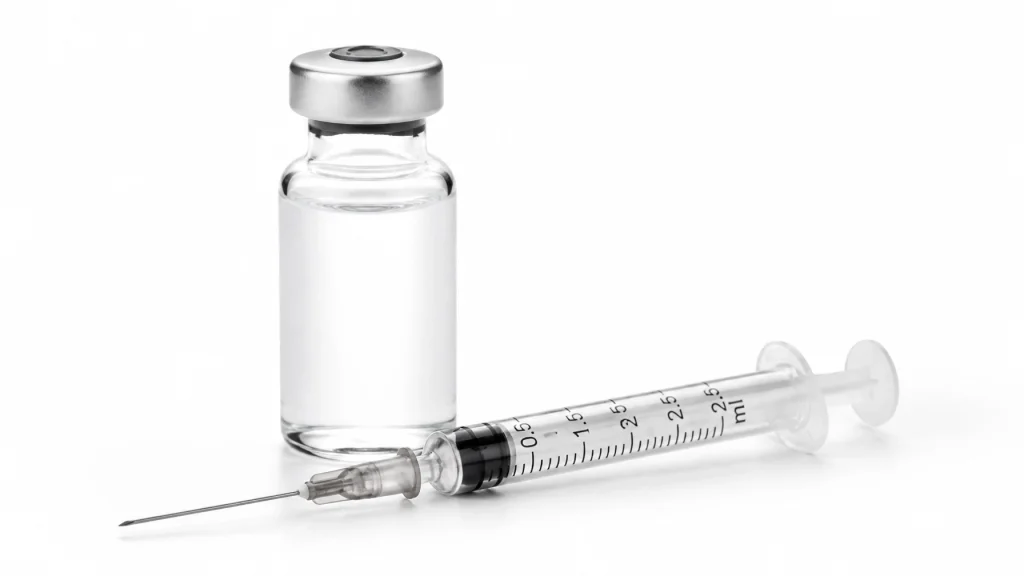
The Problem: The “Foggy Window” (Cloudy Solutions)
A perfectly reconstituted solution should be as clear as a window on a sunny day. If your solution looks like a foggy morning, you are dealing with aggregation or incomplete dissolution.
Why It Happens:
- The “Fast-Pour” Mistake: Imagine dumping a bucket of water onto a pile of dry flour. You get a sticky, clumpy mess. If you inject the diluent directly onto the powder with force, the exterior of the powder hydrates and creates a “shell,” trapping dry material inside.
- Temperature Shock: Peptides are delicate. If you take a cold vial from the fridge and hit it with room-temperature bacteriostatic water, the thermal stress can cause the proteins to “crash” out of the solution, creating a cloudy haze.
- pH Imbalance: Some research compounds are picky about their environment. If the acidity or alkalinity isn’t exactly right, the compound won’t stay dissolved.
The Solution: The “Rest and Swirl” Protocol
- Stop and Wait: Patience is your best tool. Allow the vial to sit undisturbed at room temperature for 15–30 minutes. Often, the “fog” is simply a slow-moving dissolution process.
- The Gentle Swirl: Do not shake. Think of the vial as a delicate glass ornament. Gently swirl the vial between your thumb and forefinger. This movement encourages the molecules to find their place in the solvent without breaking their bonds.
- Check the Diluent: Ensure you are using high-quality consumables. Old or improperly stored bacteriostatic water can lose its effectiveness, leading to stability issues.
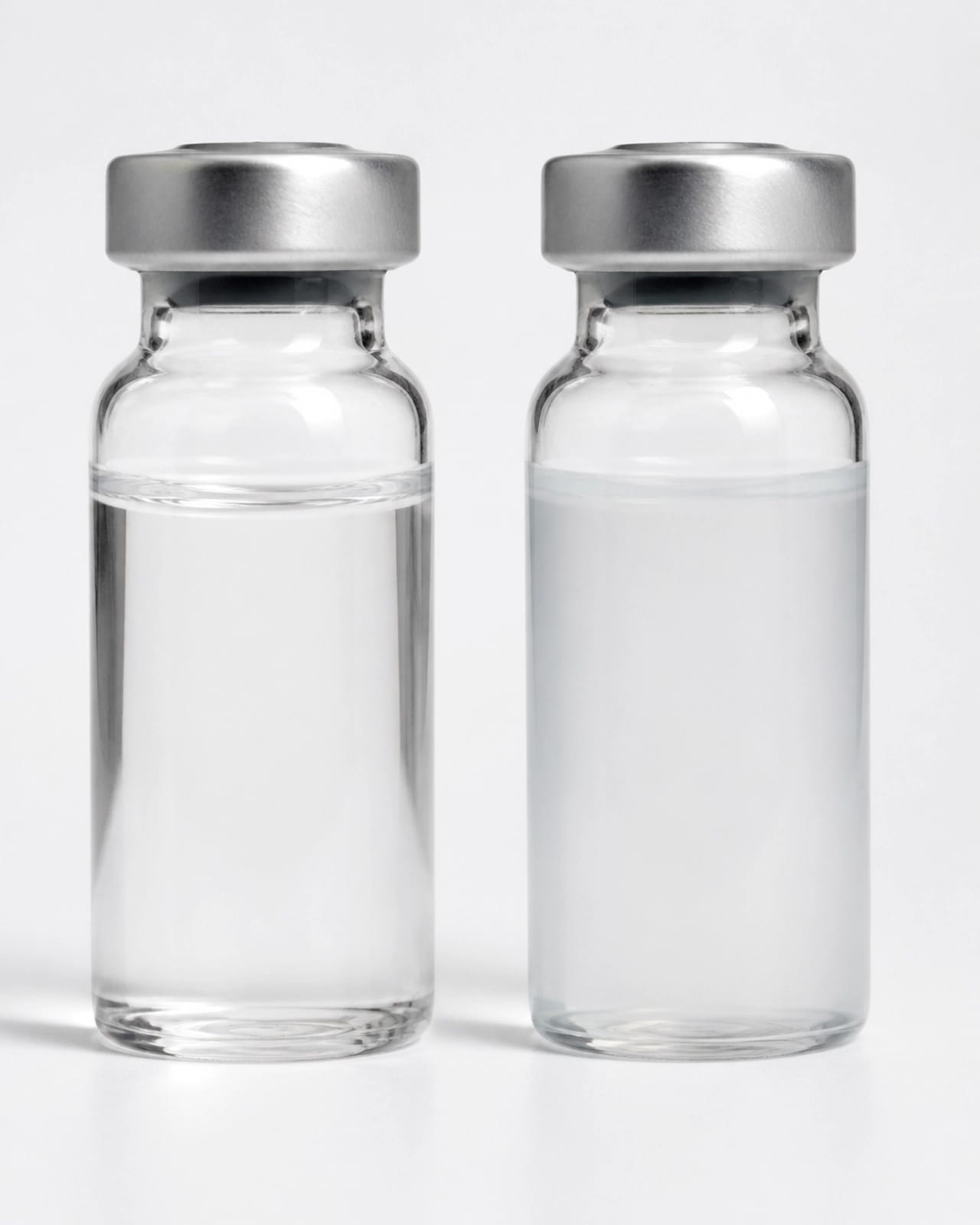
The Problem: The “Traffic Jam” (Clogs and Particles)
If you draw up your solution and find your syringe is fighting back, or if you see visible “floaters” in the vial, you have a mechanical clog. This is the biological equivalent of a traffic jam in a narrow tunnel.
Why It Happens:
Visible particles are usually “unzipped” proteins or large aggregates. These aren’t just an inconvenience; they can damage your pen kits and render the compound biologically inactive. If the “zipper” of the protein is broken, it can’t function in the “construction site” of your biology.
The Solution: Salvaging vs. Starting Over
- The “Sunlight Test”: Hold the vial up to a bright, direct light source. If the particles disappear after a gentle swirl and another 20 minutes of resting, they were likely just undissolved powder.
- The Dilution Strategy: Sometimes a solution is simply “over-saturated”: too much powder for the amount of liquid. Consider adding a small, measured amount of additional diluent. If the solution clears up, you have solved the saturation problem.
- When to Discard: If the particles look like stringy “threads” or “gel-like” clumps that do not dissipate, the compound has likely denatured (suffered mechanical damage). In this case, for the safety and integrity of your research, you must discard the vial.
