Why environmental exposure can affect lung function
The problem: damaged airways are less efficient
When you inhale smoke or polluted air, particles and chemicals can irritate the bronchial lining. The body responds with inflammation, much like a building site raising warning barriers after structural damage.
Inflammation can:
- Narrow the airways
- Increase coughing and chest discomfort
- Disrupt normal mucus production
- Reduce the efficiency of the cilia
- Place additional stress on the deeper lung tissue
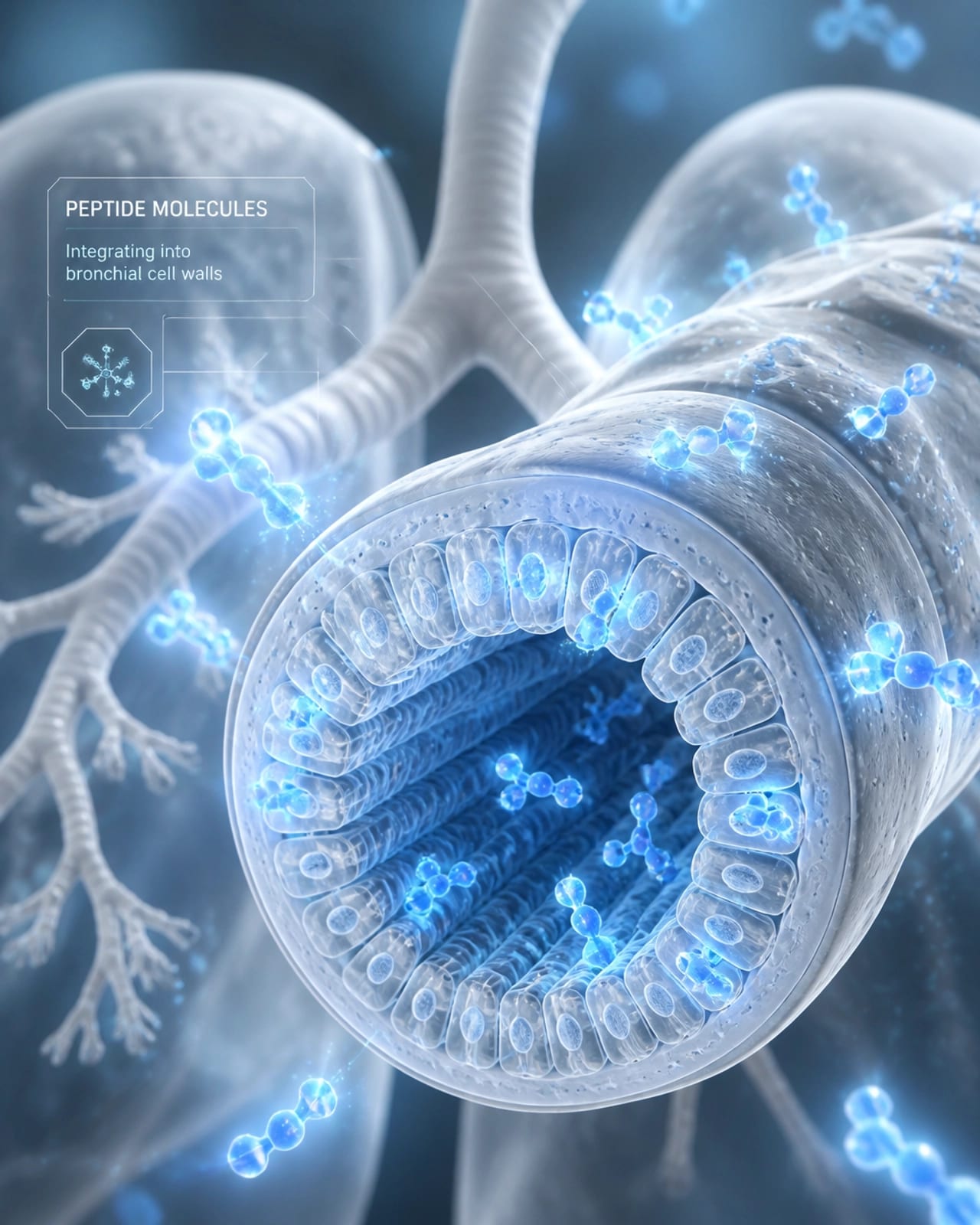
Cilia are microscopic, hair-like structures that line parts of the airways. They move in coordinated waves, sweeping mucus and trapped particles towards the throat so they can be cleared. Think of them as thousands of tiny conveyor belts working together.
Smoke exposure can slow or damage these conveyor belts. Pollution can also increase the amount of material they need to move. When the system becomes overloaded, mucus may become thick, excessive or difficult to clear.
The solution: remove the stress before adding support
A lung-repair strategy must begin with exposure control. No peptide protocol can compensate for continued smoking, heavy workplace exposure or poor indoor air quality.
Focus first on:
- Stopping smoking and avoiding second-hand smoke
- Using appropriate respiratory protection at work
- Monitoring air-quality alerts during bushfire or pollution events
- Addressing mould, dust and chemical exposure at home
- Speaking with a doctor if you have ongoing cough, wheezing or breathlessness
In Australia, smoking cessation support may include behavioural counselling and TGA-approved treatments such as nicotine replacement therapy. Ask your GP or pharmacist which options are appropriate for you.
Remove the irritant first. Then support recovery.
The three-part peptide framework
The foundational chapter presents three different roles. Each compound is positioned as addressing a separate part of the respiratory system.
| Research compound | Proposed primary focus | Role in the framework |
|---|---|---|
| Bronchogen | Bronchial lining and ciliated epithelium | Targeted epithelial and airway research |
| Chonluten | Respiratory mucous membranes | Mucus and protective-barrier research |
| Taxorest | Lung and bronchial tissue | Longer-term tissue-support research |
These roles are complementary rather than interchangeable. One is described as focusing on the airway “cleaning crew”, another on the protective mucus layer, and the third on the wider respiratory structure.
1. Bronchogen: supporting the airway cleaning system
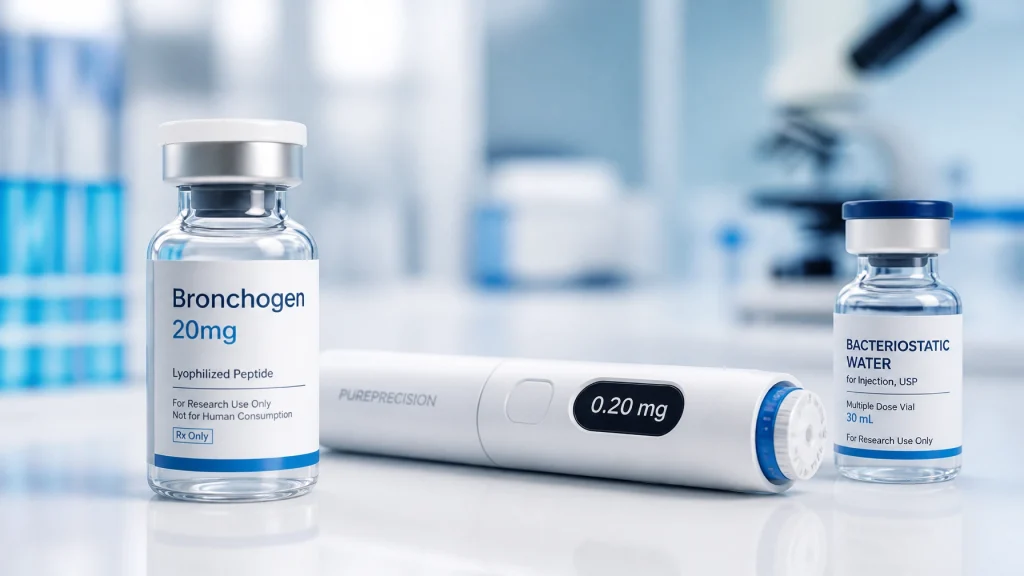
Bronchogen is a synthetic tetrapeptide, meaning it is a short chain of four amino acids. Its sequence is commonly described as Ala-Glu-Asp-Leu.
The foundational chapter describes Bronchogen as supporting the regeneration of ciliated epithelium. This is important because the cilia act like a coordinated brush system inside the bronchi.
The problem: damaged cilia allow irritants to linger
If cilia are impaired, mucus and particles may remain in the airways for longer. This can contribute to irritation, persistent coughing and a less effective natural clearance process.
The proposed solution: focus on epithelial repair
In research models, Bronchogen is investigated for its potential to signal bronchial cells and support the renewal of the airway lining. The intended concept is not to “scrub” the lungs clean, but to study whether healthier epithelial tissue can improve the respiratory system’s own maintenance process.