
Why blood pressure is also a vessel problem
The problem: pressure meets resistance
Blood pressure is the force of circulating blood against the walls of your arteries. It is recorded using two numbers:
- Systolic pressure: pressure as the heart contracts
- Diastolic pressure: pressure as the heart relaxes
- mmHg: millimetres of mercury, the unit used to record blood pressure
The heart is the pump, but the vessels are the delivery network. When arteries are flexible, they can expand and contract as blood moves through them. This helps absorb pressure and maintain a steady flow.
With age, inflammation, smoking, diabetes, metabolic stress and other factors, the vessels may gradually become less elastic. This is known as arterial stiffness. Smaller vessels can also become more constricted, increasing vascular resistance: the force that opposes blood flow.
The result is similar to squeezing a garden hose. The pump must work harder to move the same amount of water.
The solution: look at the whole circulatory system
Supporting blood pressure means considering more than the heart. A complete cardiovascular strategy also considers:
- Vessel flexibility
- Endothelial function
- Vascular resistance
- Blood flow through smaller vessels
- Lifestyle and metabolic factors
- Clinically prescribed treatment when required
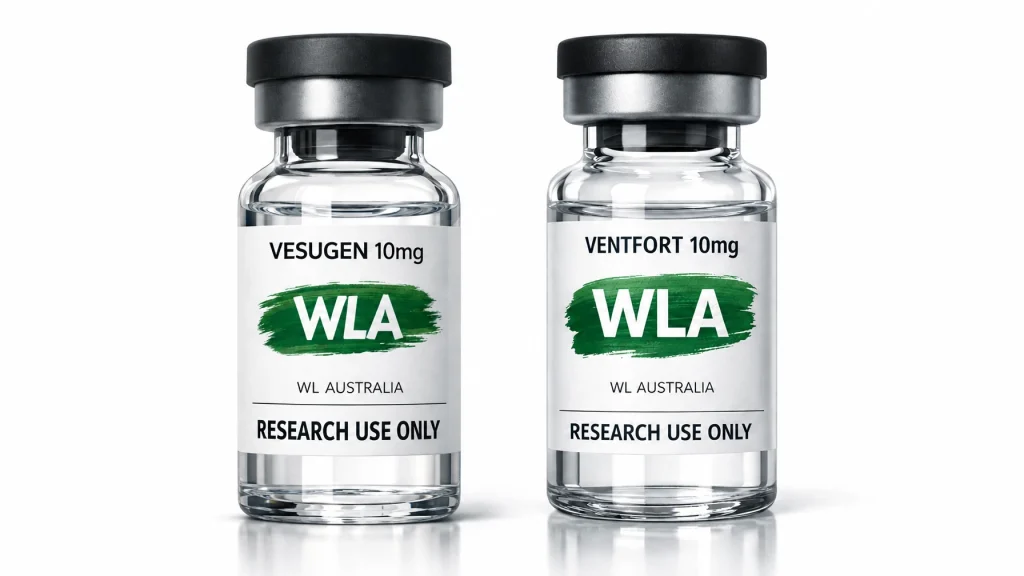
The foundational chapter behind this article presents Vesugen and Ventfort as research tools for exploring these connected areas of vascular biology.

Vesugen: focusing on the endothelium
The problem: a damaged inner lining
The endothelium is a thin layer of cells lining the inside of every blood vessel. It acts like the control panel of the vascular system.
Rather than being passive wallpaper, the endothelium helps regulate:
- Whether a vessel relaxes or tightens
- How easily blood flows
- Communication between blood and vessel-wall cells
- Local inflammation
- The vessel’s response to changing pressure
When the endothelium is under stress, vessels may become less responsive. They may not relax as effectively, and blood flow can face greater resistance.
This matters because even a small change in vessel diameter can significantly affect flow. A narrow road creates a traffic jam; a responsive vessel creates a smoother route for circulation.
The research solution: targeted endothelial support
Vesugen is a synthetic peptide commonly identified as Lys-Glu-Asp, or KED. In research discussions, it is described as a vascular bioregulator that may support endothelial cell renewal and vascular integrity.
The proposed role of Vesugen is to provide targeted signalling to vascular cells. In simple terms, it is being studied like a repair instruction sent to the inner lining.
Research interest includes whether Vesugen may support:
- Endothelial cell maintenance
- Vascular elasticity
- Cellular responses to oxidative stress
- Communication between endothelial and smooth-muscle cells
- More efficient blood-flow regulation
These mechanisms are scientifically interesting, but they should not be confused with established clinical treatment. The available evidence remains limited, and laboratory findings do not automatically prove that a product lowers blood pressure or prevents cardiovascular disease in people.
Read more about the product on the Vesugen 10mg research page.
🎥 Video placeholder: How the endothelium regulates blood flow : an educational animation explaining the vessel lining, relaxation and vascular resistance.
