
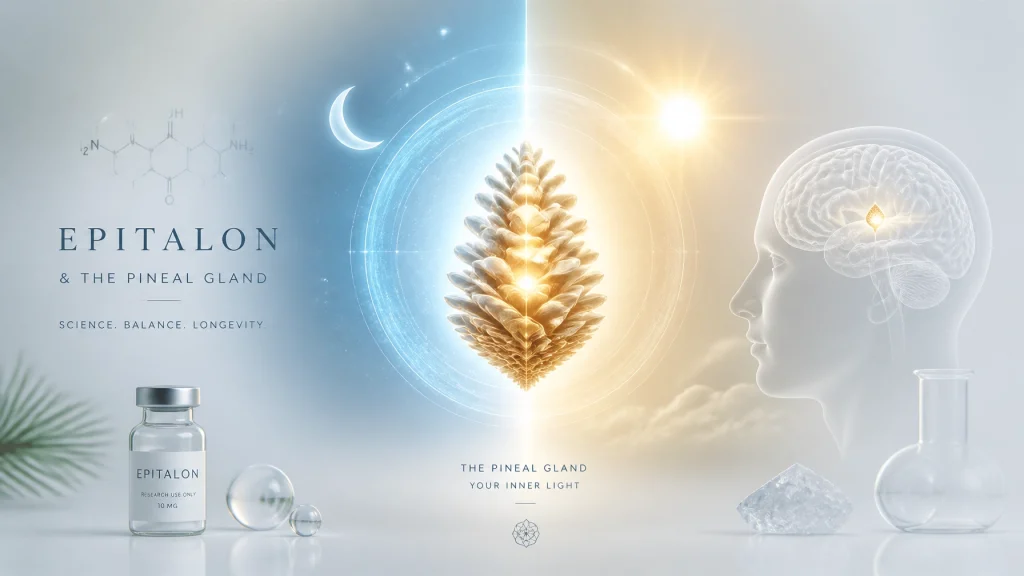
The Pineal Gland: The Body’s Master Clock
Before we talk about the solution, let’s look at the hardware. Deep in the center of your brain sits a tiny, pinecone-shaped structure called the pineal gland. Don’t let its size fool you: this is the “Master Clock” of your entire biological system.
The pineal gland’s primary job is to produce melatonin, the hormone that signals to every cell in your body that it’s time to rest, repair, and regenerate. But as we age (or as we subject ourselves to the modern “always-on” lifestyle), the pineal gland begins to calcify and its output drops. This doesn’t just mean “bad sleep.” It means your metabolic pathways, immune system, and even your DNA repair mechanisms lose their rhythm.
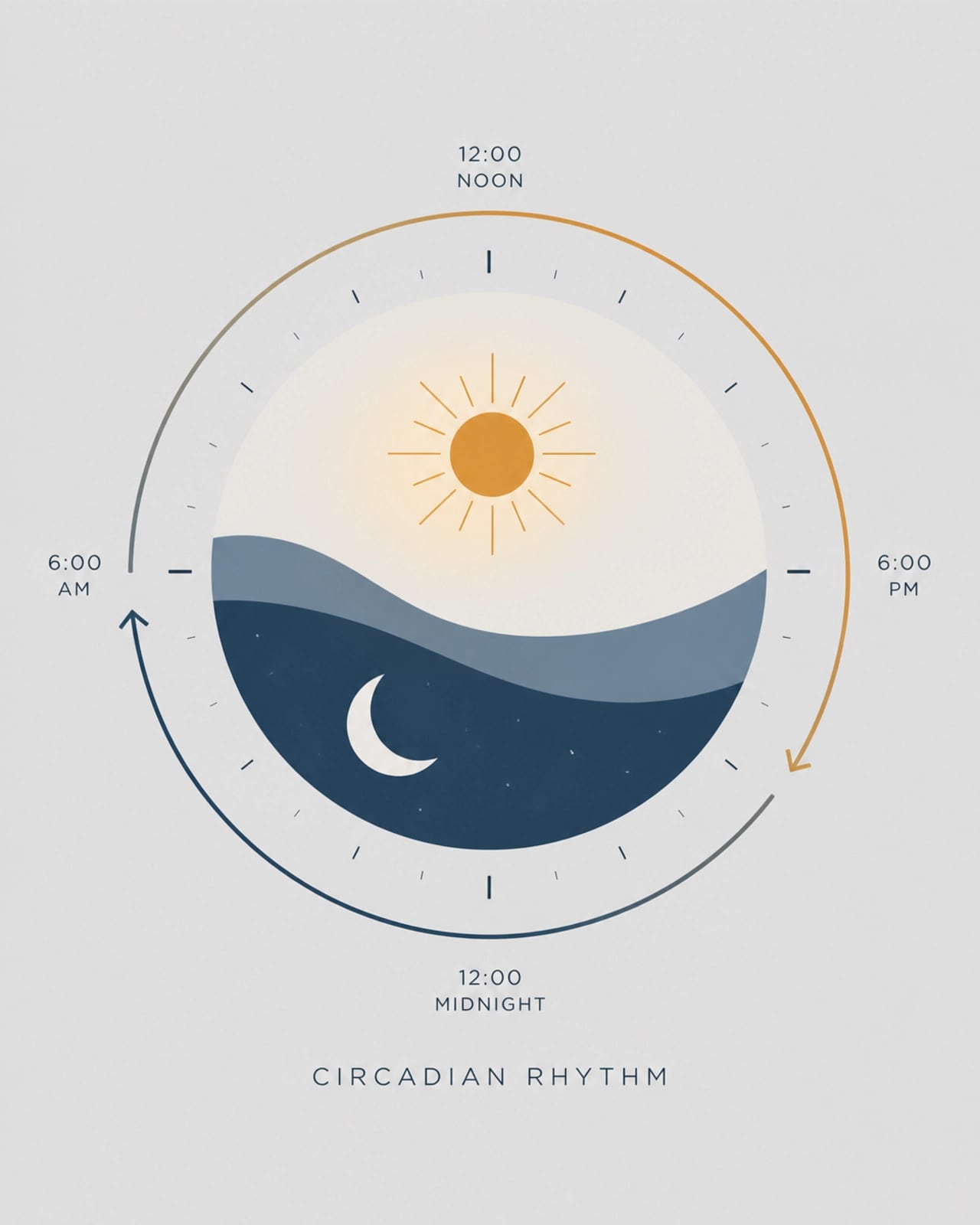
When the Master Clock is out of sync, everything else follows. This is where research into pineal bioregulators becomes absolutely critical for anyone serious about metabolic health and longevity.
Enter Epitalon: The Pineal Bioregulator Breakdown
So, what exactly is this stuff? Epitalon (sometimes spelled Epithalon) is a synthetic tetrapeptide: meaning it’s made of just four amino acids: Ala-Glu-Asp-Gly. It was originally developed by Professor Vladimir Khavinson at the St. Petersburg Institute of Bioregulation and Gerontology.
Unlike many supplements that just try to mask symptoms, Epitalon acts as a bioregulator. This means it works by interacting directly with your DNA to “unlock” genes that have been silenced by age or stress. Specifically, it targets the pineal gland, encouraging it to behave like a much younger version of itself.
In the world of “Scientific Luxury,” Epitalon is the ultimate restorative tool. It’s not a sedative; it’s a biological reset button.
Key Technical Specs:
- Classification: Pineal Gland Bioregulator
- Sequence: L-Alanyl-L-glutamyl-L-aspartyl-glycine
- Molecular Formula: C14H22N4O9
- Primary Action: Telomerase activation and pineal gland stimulation.
