

The Dual-Agonist Legacy: Understanding Tirz
For the past several years, Tirz has been the undisputed king of metabolic health. By acting as a dual agonist, it targets two primary pathways:
- GLP-1 (Glucagon-Like Peptide-1): The classic regulator of satiety and insulin secretion.
- GIP (Glucose-Dependent Insulinotropic Polypeptide): The “synergist” that enhances the effects of GLP-1 while potentially modulating fat storage.
This “dual” approach was a massive leap forward, offering significant weight loss results, often cited around 20-22% over 72 weeks in trials like SURMOUNT-1. For many, this remains the “Gold Standard” for stability and proven efficacy.
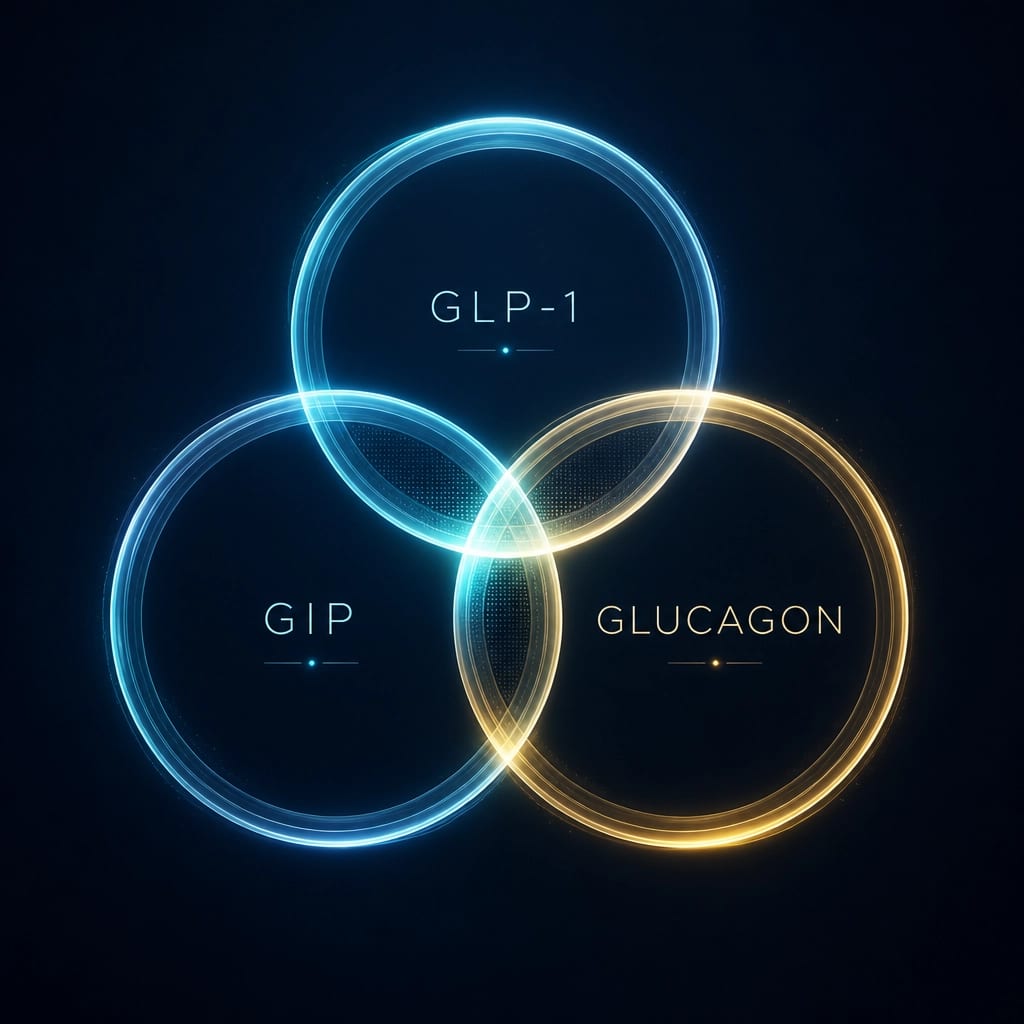
The Triple Threat: How Ret Revolutionizes Metabolism
Enter Retatrutide. While Tirz targets two receptors, Ret is a Triple Agonist. It retains the potent GLP-1 and GIP activation but adds a third, game-changing element: Glucagon receptor agonism.
This isn’t just an “extra step”; it’s a total reimagining of metabolic function. While GLP-1 and GIP primarily focus on insulin and appetite, Glucagon acts on the liver and adipose tissue to:
- Increase Energy Expenditure: It signals the body to burn more calories at rest.
- Enhance Lipolysis: It accelerates the breakdown of stored fats.
- Reduce Liver Fat: Data from 2024-2025 indicates Ret is exceptionally effective at clearing hepatic lipid deposits.
In the TRIUMPH-1 trials, the highest dosages of Ret (available in our 30mg and 50mg research strengths) achieved a staggering 24.2% mean weight loss in just 48 weeks, with some participants reaching 30% or more by the end of the Phase 3 cycle in 2026.
