
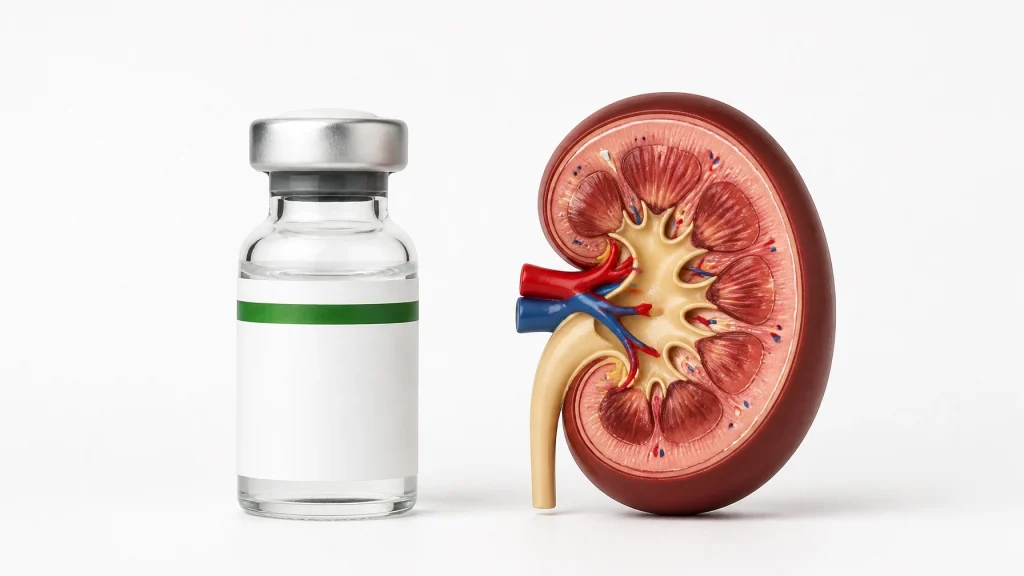
The kidneys: your body’s filtration and balancing plant
The problem: waste and fluid must be managed continuously
Every day, your body produces waste through normal metabolism. You also take in water, salt, medicines, nutrients and other compounds. The kidneys decide what should stay in circulation and what should leave through urine.
Think of the kidneys as a sophisticated water treatment plant. Blood enters the plant carrying useful materials and waste. The kidneys filter the blood, return valuable substances to the system and package unwanted material into urine.
Healthy kidneys help:
- Remove waste products such as urea and excess creatinine
- Eliminate extra water and salts
- Balance electrolytes, including sodium and potassium
- Support healthy blood pressure regulation
- Maintain acid–base balance, which keeps blood chemistry stable
- Contribute to hormone production and bone health
The kidneys filter a remarkably large volume of fluid each day, then return most of it to the bloodstream. Only a small portion becomes urine.
Short summary: filtration is not simply “cleansing.” It is precise sorting.
For a reliable overview of kidney function, see the National Institute of Diabetes and Digestive and Kidney Diseases guide to how the kidneys work.
Nephrons: the microscopic filters doing the work
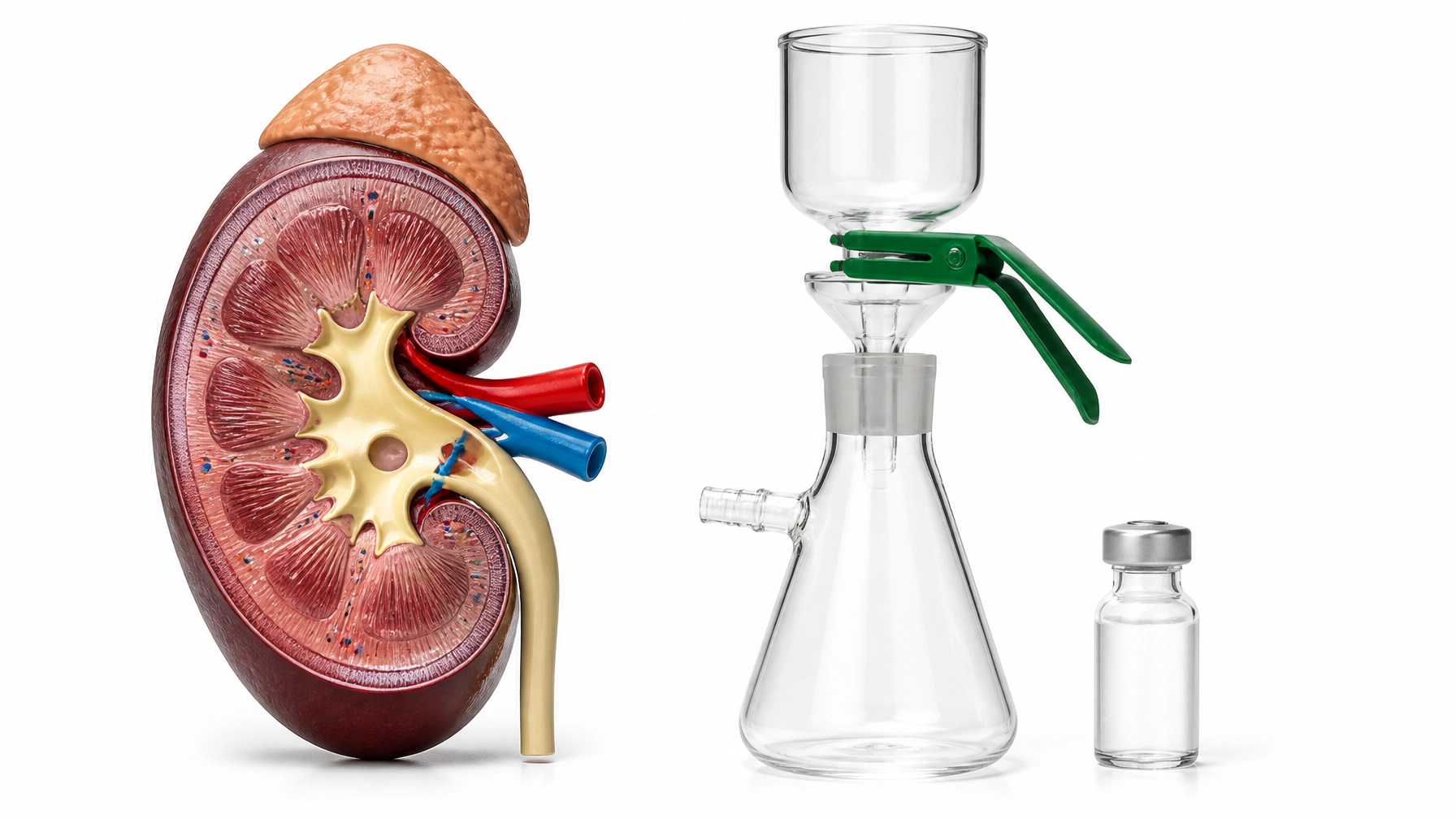
The problem: kidney function depends on millions of delicate units
Inside each kidney are approximately one million tiny functional units called nephrons. If the kidney is the treatment plant, each nephron is a miniature processing line.
A nephron contains a filtering structure called the glomerulus and a network of tubules. Together, these parts perform four key tasks:
- Filtration – water and small dissolved substances move out of the blood.
- Reabsorption – useful substances such as water, glucose and selected electrolytes return to the bloodstream.
- Secretion – additional waste, acids and certain compounds move into the forming urine.
- Excretion – the final urine leaves the body.
The glomerulus acts like a fine mesh or security gate. Small molecules can pass through, while blood cells and large proteins are normally retained in the bloodstream. The tubules then fine-tune the result, much like a quality-control team checking every item before it leaves the plant.
When nephrons become inflamed or damaged, filtration and fluid regulation can become less efficient. Waste may accumulate, electrolytes can shift and the body may retain more fluid than it should.
The solution: support the system without confusing support with treatment
The foundational chapter on Pielotax describes it as a natural extract derived from the kidney tissue of healthy young animals. It presents Pielotax as a peptide bioregulator intended to provide targeted signals associated with renal tissue.
The proposed research focus includes:
- Supporting kidney-cell function
- Encouraging healthy renal metabolism
- Supporting filtration processes
- Helping reduce inflammatory stress within nephrons
- Maintaining fluid-handling processes
You can view the Pielotax 10mg product page. The current product information describes Pielotax as a renal-focused research product and states that it is for research use only and not for human use.
That distinction is essential. A proposed biological mechanism is not the same as a proven medical outcome. Pielotax should not be presented as a treatment for chronic kidney disease, nephritis, kidney stones, kidney failure or any other diagnosed condition.
Pulse point: understand the target, check the evidence and involve a clinician.