
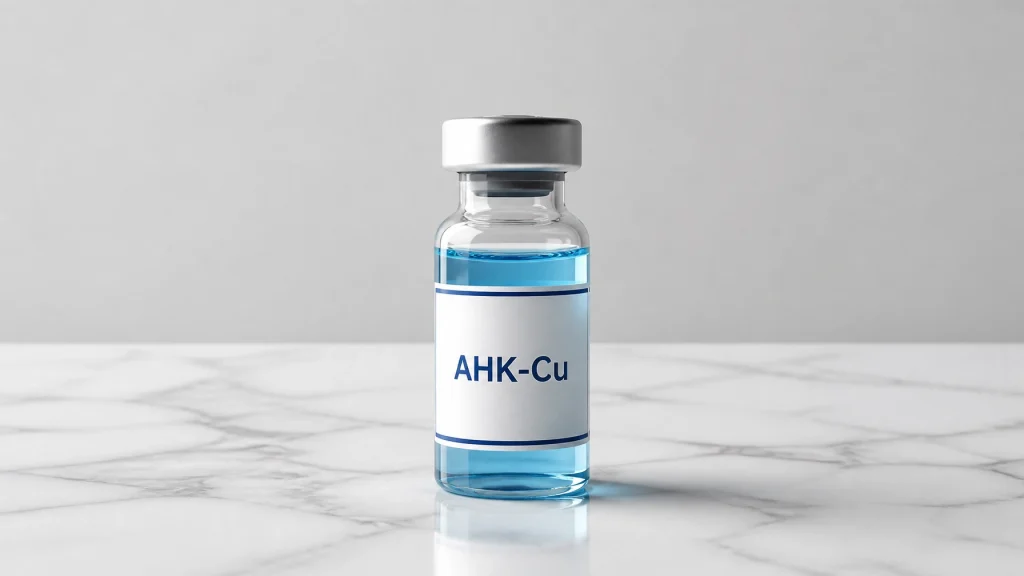
The Molecular Architecture: What is AHK-Cu?
Scientifically classified as a copper-binding tripeptide, AHK-Cu consists of the amino acids L-alanine, L-histidine, and L-lysine. While it shares a “copper peptide” heritage with the more famous GHK-Cu, AHK-Cu has a distinct affinity for specific metabolic pathways within the skin and hair follicles.
At WeightLossChems, we source our AHK-Cu to the highest clinical standards, ensuring that researchers are working with a compound capable of precise biological signaling. In a research setting, this blue-hued peptide acts as a catalytic agent for dermal remodeling.
Product Specifications:
- Molecular Formula: C15H24CuN6O4
- Classification: Copper Tripeptide-3
- Physical State: Lyophilized powder or aqueous solution
- Primary Function: Fibroblast activation and ECM synthesis
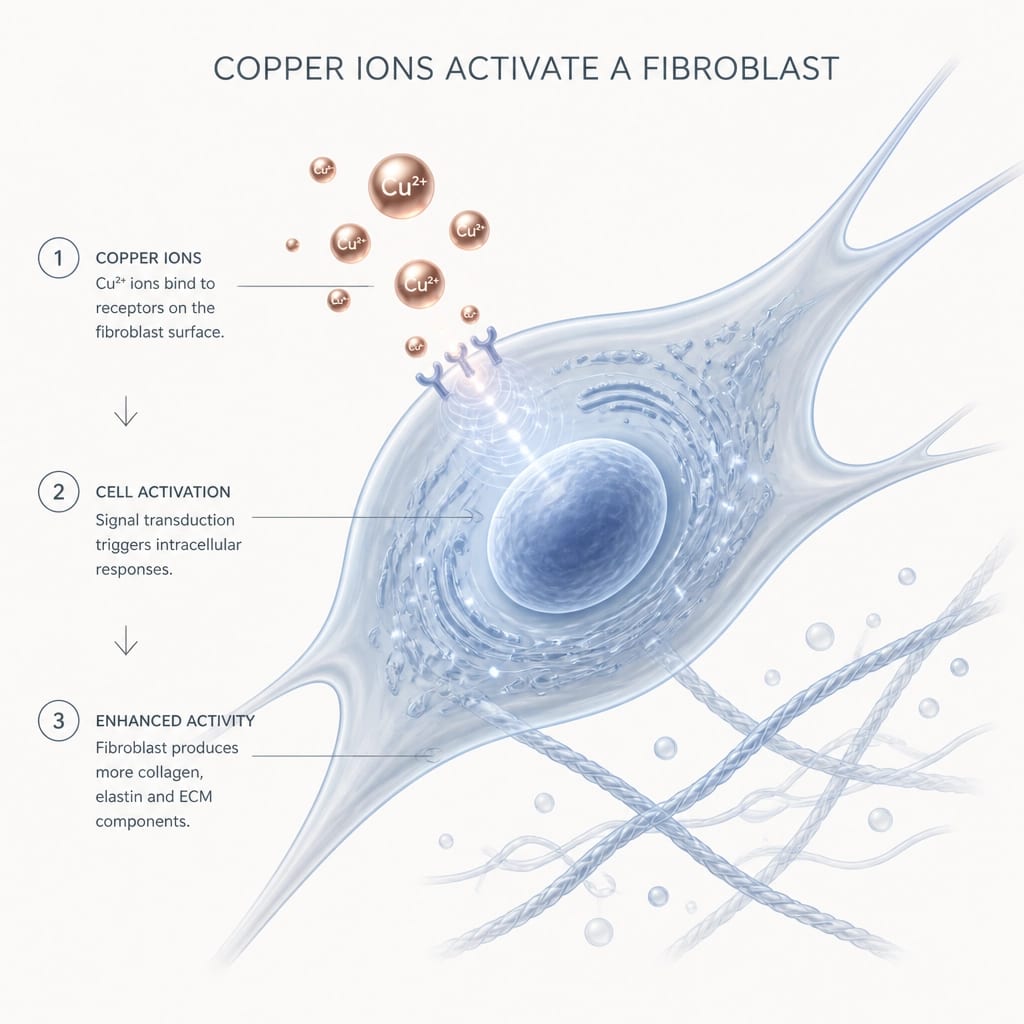
Fibroblast Activation: The Engine Room of Rejuvenation
The primary biological hurdle in skin aging is the progressive “sleepiness” of our fibroblasts. These are the cells responsible for manufacturing the structural proteins that keep skin looking tight and youthful. As we age, fibroblast activity drops, leading to a collapse in the skin’s internal scaffolding.
AHK-Cu serves as a high-octane wake-up call for these cells. Research indicates that AHK-Cu exposure can Revolutionize the dermal environment by:
- Increasing Fibroblast Proliferation: Effectively expanding the population of “worker cells” in the dermis.
- Upregulating Growth Factors: Specifically targeting TGF-β1 (Transforming Growth Factor beta 1) and VEGF, which are essential for cellular repair and vascularity.
By stimulating the growth and development of new fibroblasts, AHK-Cu addresses the root cause of dermal thinning and laxity rather than merely masking the surface.
