
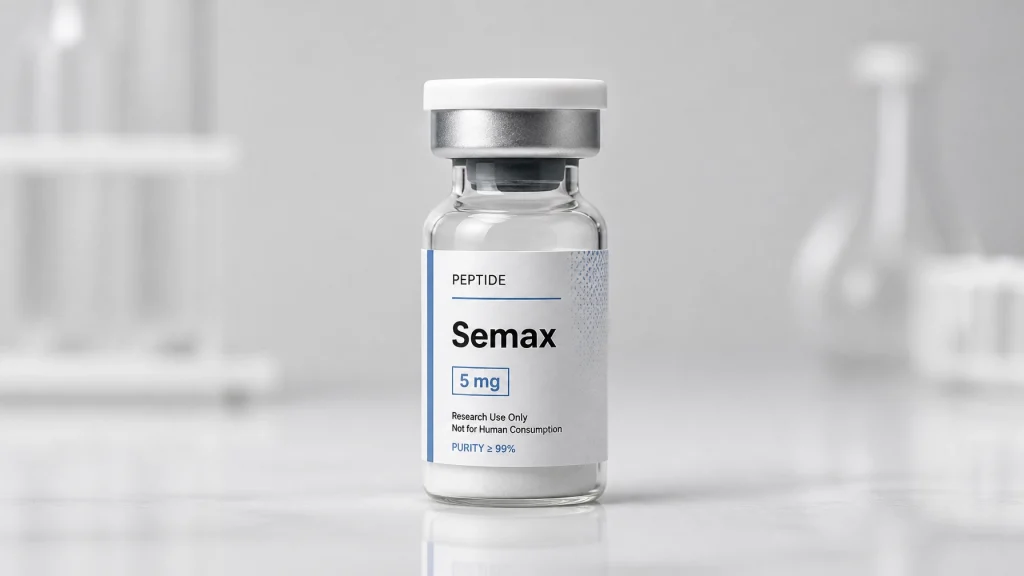
The Cold War Secret: A Brief History of Semax
Semax didn’t just appear out of thin air in a boutique biohacking lab. Its origins are far more “cloak and dagger.” Developed in the 1980s at the Institute of Molecular Genetics of the Russian Academy of Sciences, Semax was originally designed as a way to Combat the cognitive effects of extreme stress and brain trauma.
The researchers took a fragment of the Adrenocorticotropic hormone (specifically ACTH 4-7) and gave it a high-tech makeover. By adding a Pro-Gly-Pro tail, they created a stable heptapeptide that could survive the journey into the brain without the hormonal side effects of its parent molecule.

For decades, Russian clinicians have utilized Semax for everything from ischemic stroke recovery to treating optic nerve atrophy. While it remains a “research compound” in the West, the decades of data coming out of Eastern Europe highlight its role as a fundamental tool for brain health.
The Biological Fertilizer: BDNF and NGF
If your brain is a garden, then BDNF (Brain-Derived Neurotrophic Factor) and NGF (Nerve Growth Factor) are the high-grade, organic fertilizers that keep the flowers blooming and the weeds at bay.
This is where the “Scientific Luxury” of Semax really shines. Unlike traditional stimulants that just force your neurons to fire faster (and eventually burn out), Semax works by upregulating these critical neurotrophic factors.
- BDNF (The Repairman): BDNF is essential for “synaptic plasticity.” It helps your brain create new connections and repair old ones. Research shows that Semax can rapidly increase BDNF levels in the hippocampus: the part of the brain responsible for memory and learning.
- NGF (The Guardian): Nerve Growth Factor is crucial for the survival and maintenance of neurons. By boosting NGF, Semax helps ensure that your “cellular hardware” stays robust and functional, even under metabolic stress.
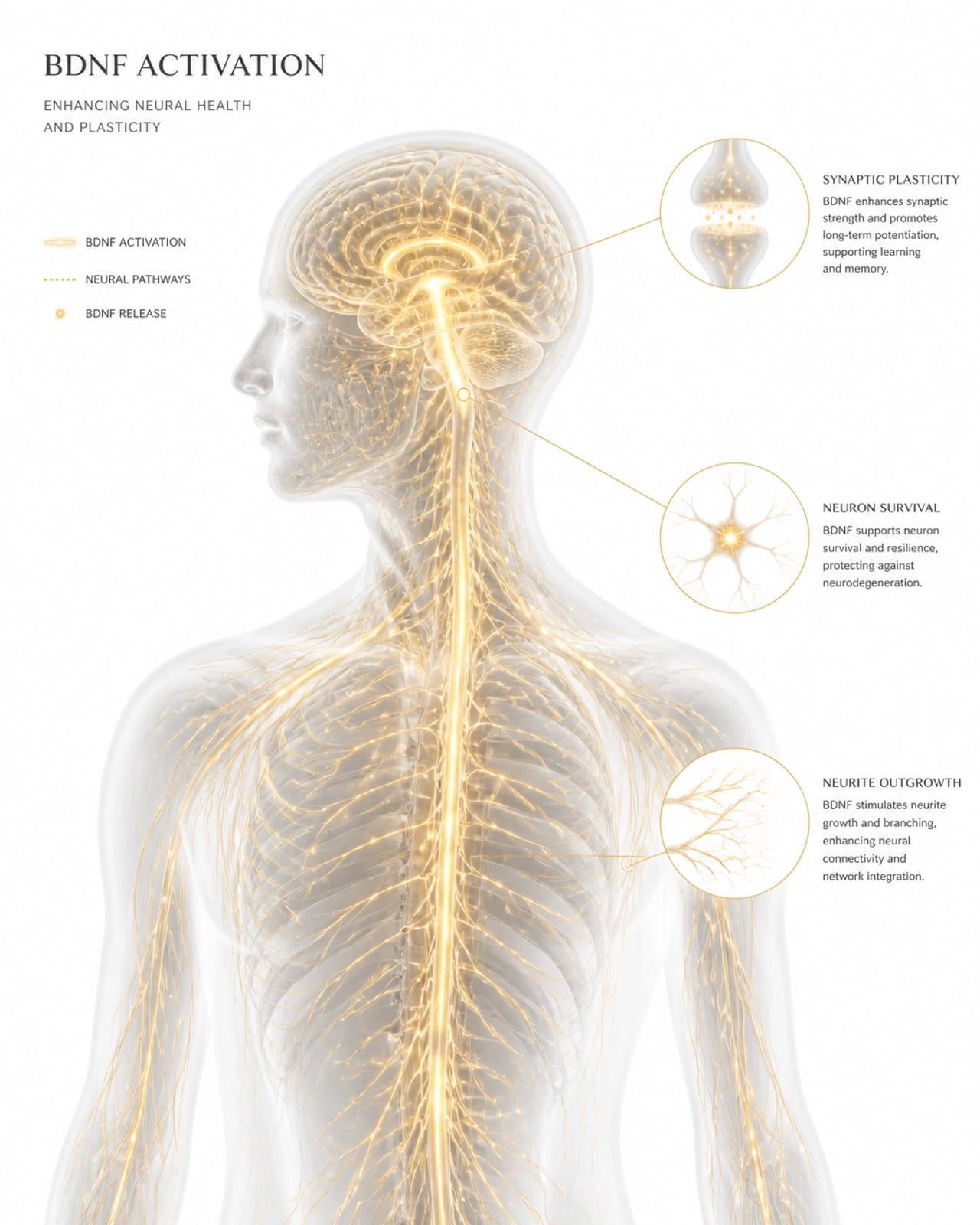
By increasing these factors, you aren’t just “overclocking” your brain; you are Transforming the very environment in which your neurons live. It’s about building a more resilient, high-performance biological machine.
