
What is Sermorelin? The Scientific Blueprint
Sermorelin (often referred to in research circles as GHRH 1-29) is a synthetic 29-amino acid peptide that represents the shortest fully functional fragment of the naturally occurring Growth Hormone Releasing Hormone.
While the full endogenous hormone is 44 amino acids long, the 1-29 sequence contains all the biological activity required to stimulate the pituitary gland. In a research setting, this compound is classified as a Growth Hormone Secretagogue (GHS) and a GHRH analog. Its primary function is simple yet profoundly effective: it binds to the GHRH receptors on the pituitary somatotrophs, triggering the synthesis and secretion of endogenous Growth Hormon3.
Physical Contents of a WLA Research Kit:
- Scientific Function: GHRH Receptor Agonist.
- Molecular Profile: 29-amino acid peptide chain.
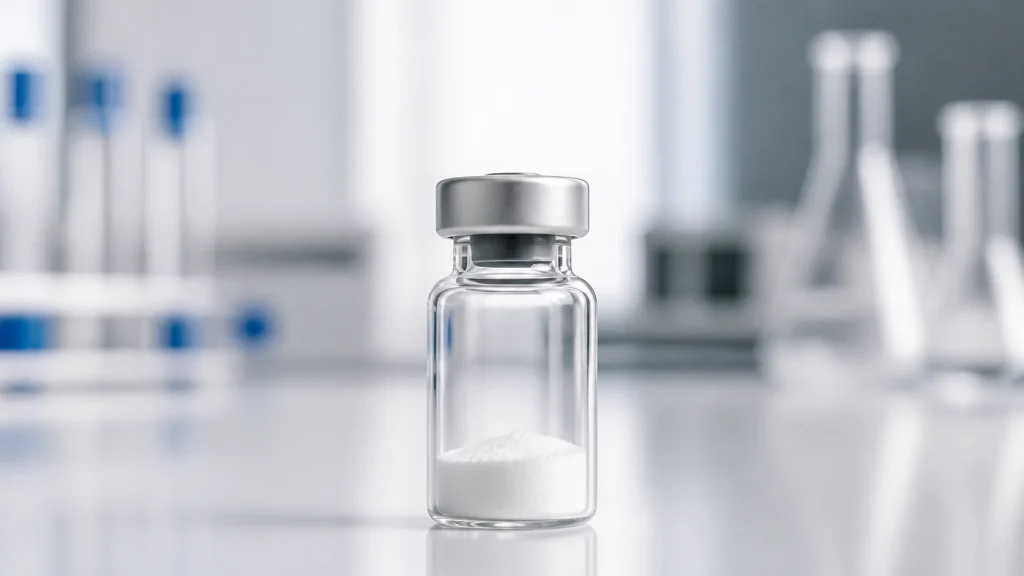
- Format: Lyophilized white powder (Requires reconstitution).
- Research Focus: Metabolic function, tissue regeneration, and H-G-H deficiency modeling.

The Pituitary Advantage: Pulsatile Release
One of the most transformative aspects of S_ermorelin research is its respect for human physiology. Unlike exogenous H-G-H, which provides a “square-wave” or constant level of hormone in the system, S_ermorelin induces a pulsatile release.
Why does this matter? The human body isn’t designed for a constant drip of G-H. Naturally, our pituitary releases the hormone in bursts, primarily during deep slow-wave sleep. By using a secretagogue, researchers can Transform the subjects’ endocrine profile while maintaining the body’s natural feedback loops.
Because the pituitary gland is still “in charge,” somatostatin (the hormone that inhibits G-H) can still act as a biological brake. This makes it virtually impossible to “overdose” the G-H levels in a way that leads to the side effects often seen with direct H-G-H administration. At WLA, we see this as the “smart” way to approach endocrine research.
