
The mental clarity problem: when your brain’s wiring feels overloaded
Your brain contains billions of neurons. These specialised cells communicate through electrical and chemical signals, forming networks that control memory, attention, mood, movement, and learning.
Think of your brain as a large communications network. Neurons are the devices, synapses are the connection points, and neurotransmitters are the messages moving between them. When the network is rested and well supported, information flows efficiently. When the system is affected by stress, poor sleep, ageing, or injury, messages may travel more slowly or become less reliable.
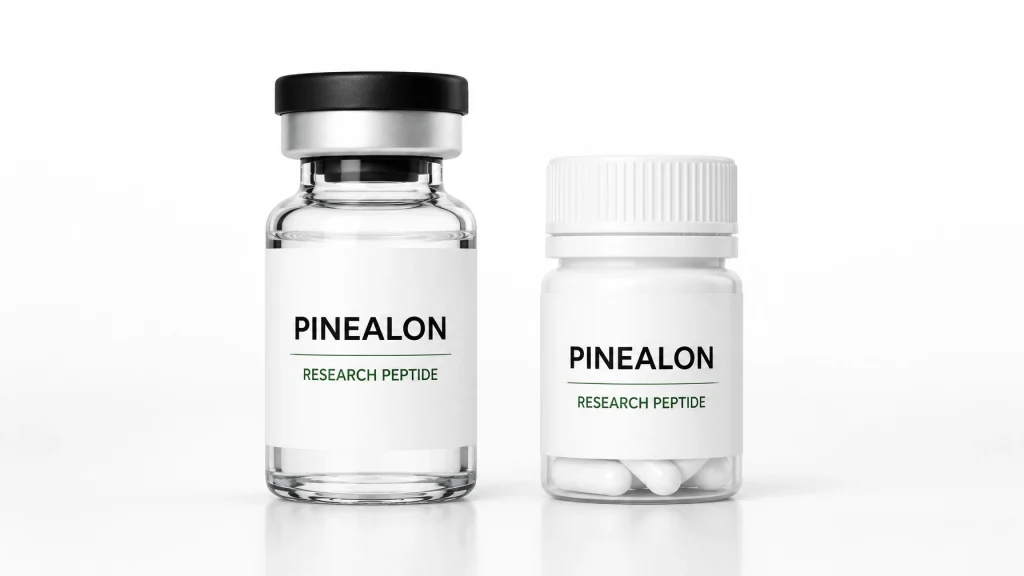
Pinealon is researched as a way to support neurons directly. According to the supplied foundational chapter, its small structure may allow it to cross the BBB and interact with neural tissue.
That does not mean Pinealon is a proven treatment for dementia, concussion, depression, or any other neurological condition. Human evidence remains limited, and neurological symptoms require proper medical assessment.
The practical takeaway: mental clarity begins with understanding the brain’s repair and communication systems: not chasing a quick stimulant effect.
Pinealon and the “brain fertilizer” connection
A central part of this discussion is BDNF, which stands for brain-derived neurotrophic factor. BDNF is a naturally occurring protein that supports the growth, survival, and maintenance of neurons.
You can think of BDNF as fertiliser for your brain’s garden. It does not create an entirely new garden overnight. Instead, it helps existing plants grow stronger roots and form healthier connections.
BDNF is closely linked with neuroplasticity, the brain’s ability to reorganise itself by strengthening existing pathways and creating new connections. Neuroplasticity is how you learn a new language, recover skills after an injury, or adapt to changing demands.
The foundational material describes Pinealon, Cerluten, and Cortagen as peptides that may stimulate BDNF-related activity. In practical terms, this research is focused on whether these compounds can help create a more supportive environment for neuronal maintenance and adaptation.
The proposed sequence looks like this:
- Peptide signalling provides a targeted biological message.
- Neuronal support pathways become more active.
- BDNF activity may help maintain neurons and synaptic connections.
- Neuroplasticity provides the brain with greater capacity to adapt.
This is a research model, not a guarantee of improved memory or concentration.
🎥 Video placeholder: How BDNF and neuroplasticity support learning, memory, and brain recovery.
