

What are mitochondrial-derived peptides?
The problem: mitochondria need a way to report cellular stress
A cell cannot run effectively if its energy systems operate in isolation. Think of a construction site. The generators produce power, but supervisors still need to know whether the building is stable, materials are running low, or a safety problem has developed.
Mitochondria perform a similar reporting function. They generate adenosine triphosphate (ATP), the main energy currency used by cells, while also sensing changes in:
- Energy availability
- Reactive oxygen species (ROS), which are chemically reactive molecules
- Oxidative stress
- Inflammation
- Mitochondrial membrane integrity
- Programmed cell death, also called apoptosis
MDPs are being studied as possible messengers between mitochondria and the rest of the cell. This type of communication is sometimes called retrograde signalling: the mitochondria send information back to the nucleus and other cellular systems.
The research solution: small peptides as biological messages
Humanin, MOTS-c, and SHLPs 1–6 are examples of MDPs discussed in current scientific literature. They are much smaller than conventional proteins, but their size does not necessarily mean their role is minor. A short peptide can function like a text message: compact, targeted, and capable of changing how a larger system responds.
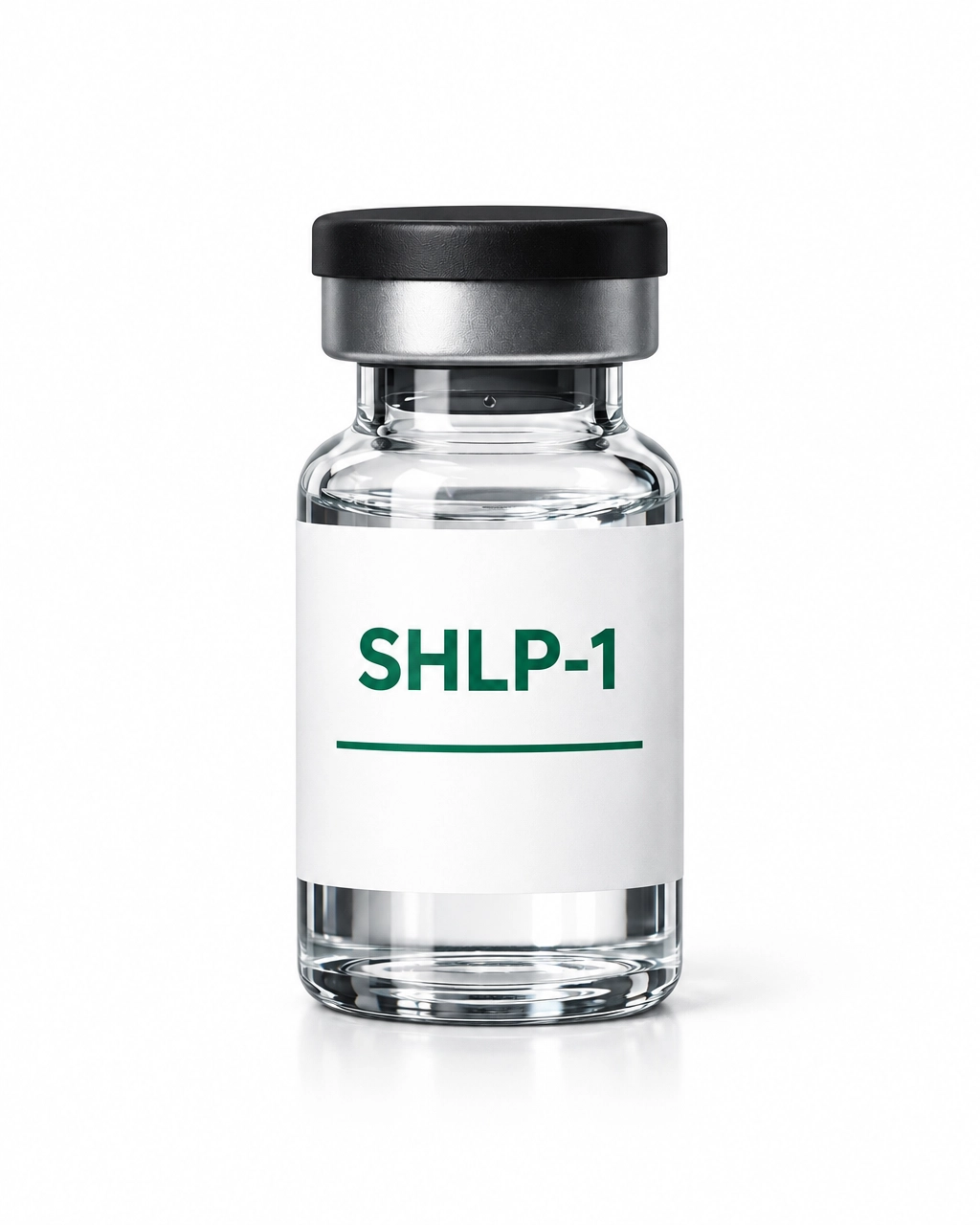
What is SHLP-1?
SHLP-1 is linked to the 16S ribosomal RNA (rRNA) region of mitochondrial DNA. This is the same general mitochondrial region associated with humanin. SHLP-1 belongs to a group of six small humanin-like peptides, labelled SHLP-1 through SHLP-6.
The product available from WLA Australia is SHLP-1 10mg, and the product page clearly identifies it as a research chemical only, not for human use.
Current research descriptions commonly identify SHLP-1 as a short peptide of approximately 24 amino acids. However, researchers should verify identity, purity, formulation, storage conditions, and batch documentation through the relevant certificate of analysis (CoA) rather than relying on a product name alone.
A crucial evidence distinction
The existence and mitochondrial origin of SHLP-1 are established research facts. Its precise biological effects are not.
Much of the stronger evidence in the MDP field concerns humanin, SHLP-2, SHLP-3, and SHLP-6. SHLP-1 is often included in family-level discussions, but it has not received the same level of direct functional characterisation.
That means you should treat claims about SHLP-1 as a research question, not a finished conclusion.