

What makes SHLP-6 different?
The problem: mitochondrial research is often reduced to “energy production”
Mitochondria are commonly described as the cell’s batteries. That analogy is useful, but incomplete. A better comparison is a power station with its own instruction manual and emergency alarm system.
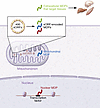
Mitochondria contain their own genetic material, called mitochondrial DNA (mtDNA). Unlike nuclear DNA, which is stored in the cell’s central nucleus, mtDNA sits inside the mitochondria. It contains instructions for several mitochondrial components and can also encode very small proteins and peptides.
These small proteins are sometimes called microproteins. The mitochondrial-derived peptides include:
- Humanin
- MOTS-c
- SHLP-1
- SHLP-2
- SHLP-3
- SHLP-4
- SHLP-5
- SHLP-6
Research reviews report that SHLP-1 through SHLP-6 are associated with the MT-RNR2 region, which encodes the mitochondrial 16S ribosomal RNA. In simple terms, researchers have found that an area once viewed mainly as part of the mitochondrial “protein-making machinery” may also contain small biological messages.
That changes the research question. Instead of viewing mitochondria as passive batteries, scientists are studying them as communications hubs.
SHLP-6 and the wider metabolic question
The problem: insulin resistance involves several systems at once
Insulin sensitivity describes how effectively cells respond to insulin. When sensitivity is reduced, the body may need to produce more insulin to move glucose from the blood into tissues.
Think of insulin as a keycard and the cell as a building. In insulin-sensitive tissue, the card opens the door efficiently and glucose enters the cell. In insulin resistance, the reader becomes less responsive. The key may still be present, but the door does not open as easily.
Mitochondria are involved because glucose and fatty acids must be processed through complex energy pathways. If those pathways become strained, the cell’s fuel-handling system may become less flexible.
Research on mitochondrial-derived peptides has therefore examined:
- Glucose uptake and utilisation
- Insulin signalling
- Fat metabolism
- Oxidative stress
- Mitochondrial biogenesis, meaning the creation of new mitochondria
- Inflammation and cellular stress responses
However, you should separate family-level research from SHLP-6-specific evidence.
The best-known metabolic evidence in the SHLP group relates to SHLP-2, not SHLP-6. Studies of SHLP-2 have reported insulin-sensitising and glucose-regulating effects in preclinical models. That does not mean the same findings can automatically be transferred to SHLP-6.
Short summary: SHLP-6 belongs to a metabolically interesting family, but it is not currently established as an insulin-sensitising peptide.
