At a glance: what is the main difference?
| Product | Primary biological focus | Product-page positioning | Evidence context |
|---|---|---|---|
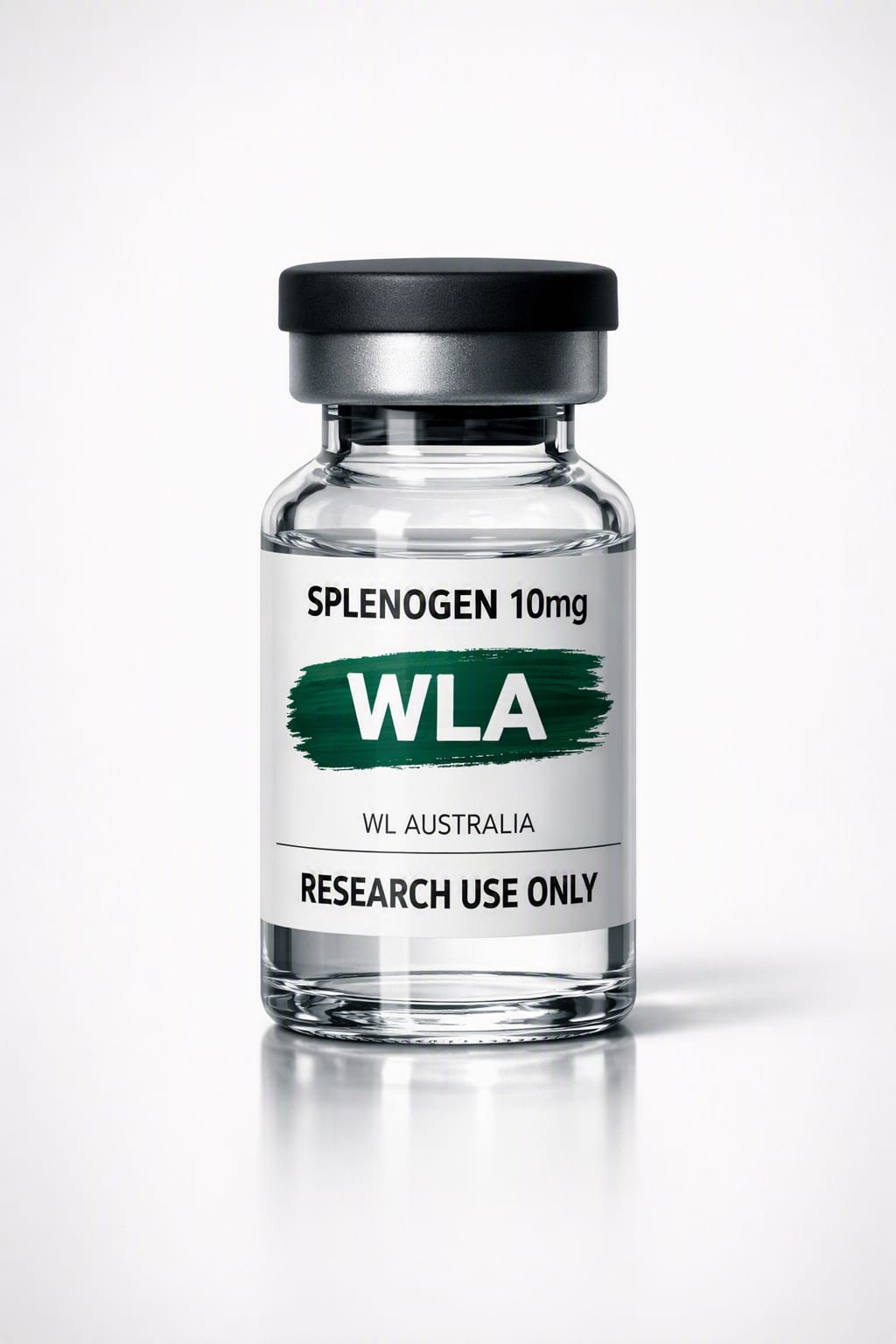
| Splenogen 10mg | Spleen tissue, immune activity and blood-cell formation | Organ-specific spleen peptide bioregulator | Limited product-specific independent evidence located |
| Thymalin 10mg | Thymus, T-cell activity and immune regulation | Calf-thymus peptide complex described as an immunocorrector | The strongest published evidence of the three, mainly from Russian research |
| Vladonix 10mg | Thymus tissue and immune-cell metabolism | Thymus-derived peptide bioregulator for immune support | Product-specific clinical evidence appears limited |
The short version is simple:
- Choose Splenogen as the spleen-focused research subject.
- Study Thymalin when your research question centres on thymic peptides and immune modulation.
- Examine Vladonix when you want to investigate an oral thymus-derived bioregulator formulation.
Different target. Different question. Different evidence.
1. Splenogen: the spleen-focused bioregulator
The problem: treating immunity as if it only happens in one organ
Many discussions about immune function focus almost entirely on the thymus. That is like studying a football team by looking only at its training ground. The training ground matters, but the team also needs a stadium, support staff and a system for handling damaged equipment.
The spleen performs several important biological roles. It helps filter blood, supports immune surveillance and participates in the management of blood cells. It is closely connected with lymphocytes, macrophages and other immune-cell populations.
The proposed solution: target spleen tissue directly
The WL Australia product page describes Splenogen as an organ-specific peptide bioregulator based on very short amino-acid chains. The page positions it around:
- Spleen tissue function
- Immune defence
- Hematopoiesis, meaning the production of blood cells
- Cellular renewal
- Blood-filtering tissue support
In plain English, Splenogen is presented as a set of biological “maintenance instructions” for the spleen. If the spleen is the body’s blood-quality-control centre, the proposed role of the product is to support the instructions used by that centre.
However, you should separate mechanistic claims from clinical proof. The product page describes a proposed biological mechanism, but that does not establish that Splenogen improves a particular disease, blood count or health outcome in humans.