The Problem: Why Traditional Weight Loss Often Fails
Many people struggle with weight loss not because of a lack of willpower, but because their biology is working against them. When you reduce calories, your body often enters a “starvation mode,” slowing down your metabolism and increasing hunger hormones like ghrelin. It is like trying to drive a car with the handbrake pulled up.
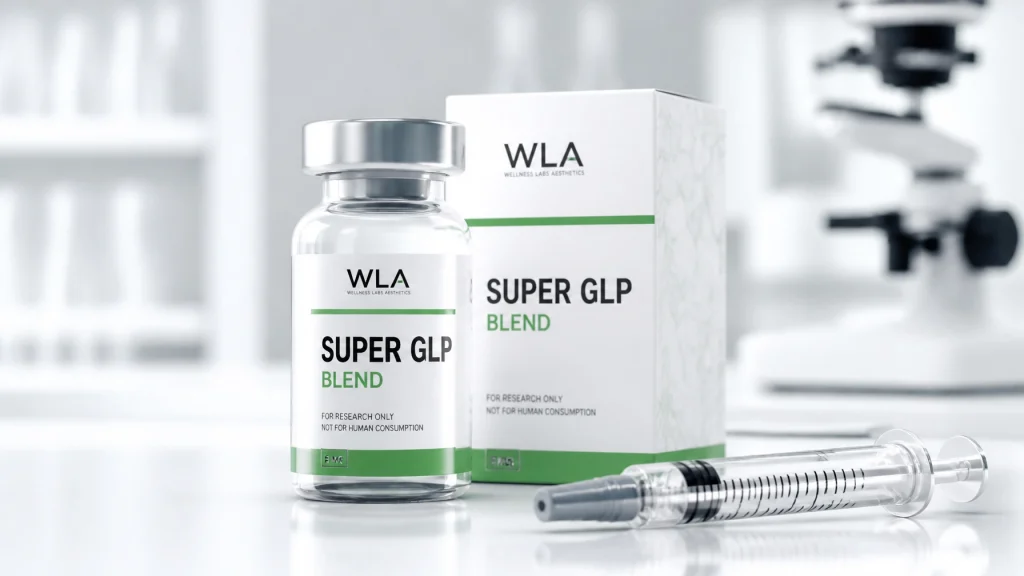
The Super GLP Blend is designed to release that handbrake. By utilizing a “multi-pathway” approach, it addresses the three main pillars of metabolic success: appetite suppression, insulin efficiency, and energy expenditure.
Foundational Concepts: Understanding the “Triple-Threat” Mechanism
To appreciate why the Super GLP Blend is so effective, you must first understand the three key hormones it mimics. Think of these hormones as the “management team” of your internal construction site.
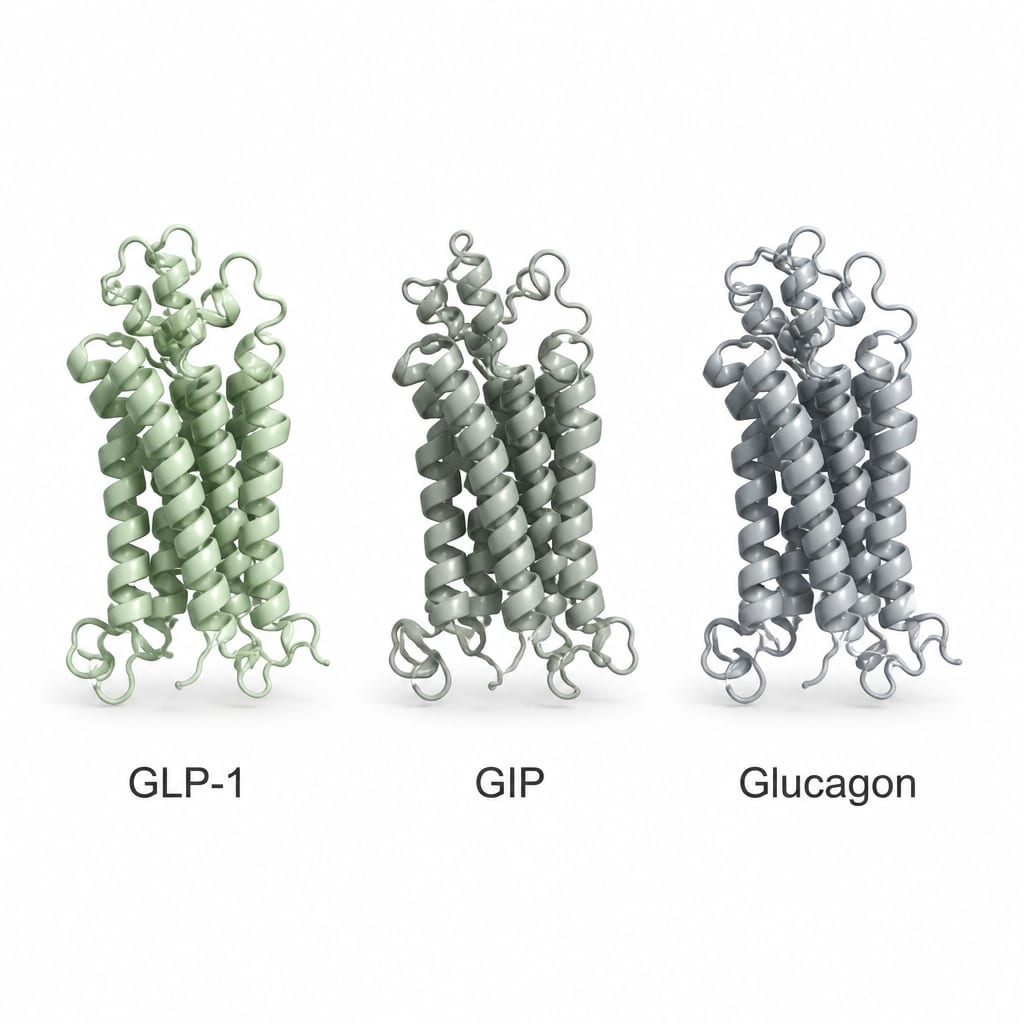
1. GLP-1 (Glucagon-Like Peptide-1)
The Foreman: GLP-1 is responsible for slowing down the work. It signals your brain that you are full and tells your stomach to slow down emptying. This keeps you satisfied for longer after a meal. Both Retatrutide and Tirzepatide are potent GLP-1 agonists (substances that activate receptors).
2. GIP (Glucose-Dependent Insulinotropic Polypeptide)
The Efficiency Expert: GIP works alongside GLP-1 to optimize how your body handles sugar. It helps your pancreas secrete the right amount of insulin and, crucially, may improve how your fat cells store and break down energy. This reduces the “noise” of constant food cravings.
3. Glucagon (GCG)
The Demolition Crew: This is the unique feature of Retatrutide. While GLP-1 and GIP focus on intake, Glucagon focuses on output. It signals the body to burn through stored waste (fat) and increases your resting energy expenditure. It is the “turbocharge” for your metabolic engine.