
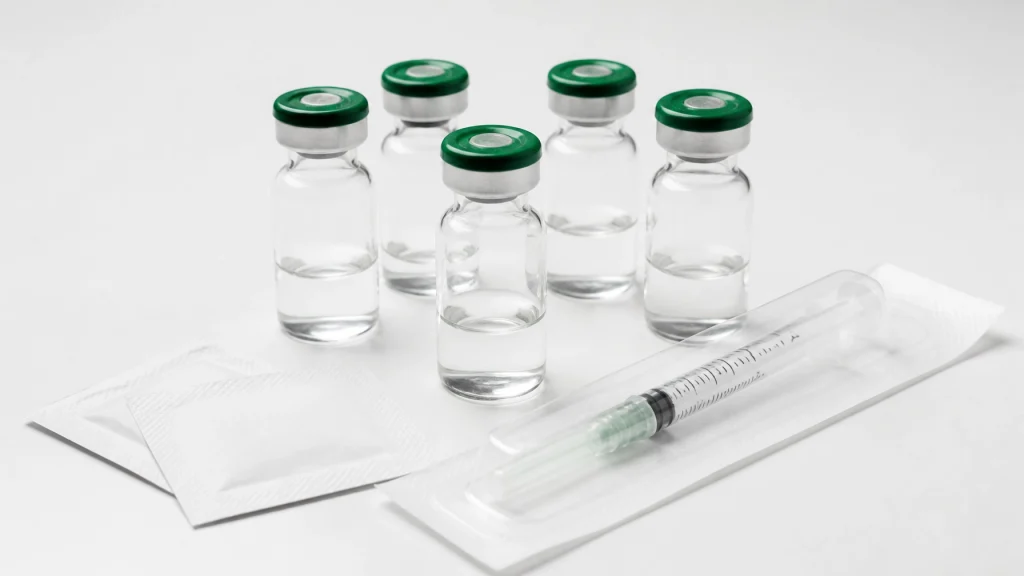
The Foundation: Sanitizing and Preparing Your Workspace
The biggest threat to your research isn’t a calculation error; it’s an invisible intruder. Bacteria are like opportunistic squatters in an abandoned building. If you leave a window open: or in this case, a vial top unsanitized: they will move in and compromise your entire project.
Problem: Contamination from airborne particles or surface bacteria can render your organic supplements or peptides inactive or, worse, dangerous.
Solution: The “Clean Room” Protocol
Before you even touch a vial, you must establish a “sterile field.” Imagine this as an invisible air-lock around your desk.
- Surface Scrub: Wipe down your work surface with 70% Isopropyl Alcohol. Don’t just spray it; scrub it. The friction helps break down the cellular walls of microbes.
- Airflow Control: Close windows and turn off fans. You want “dead air” to prevent dust and spores from drifting onto your equipment.
- Personal Hygiene: Wash your hands like a surgeon: up to the elbows: and consider using nitrile gloves from our consumables section for an extra layer of defense.
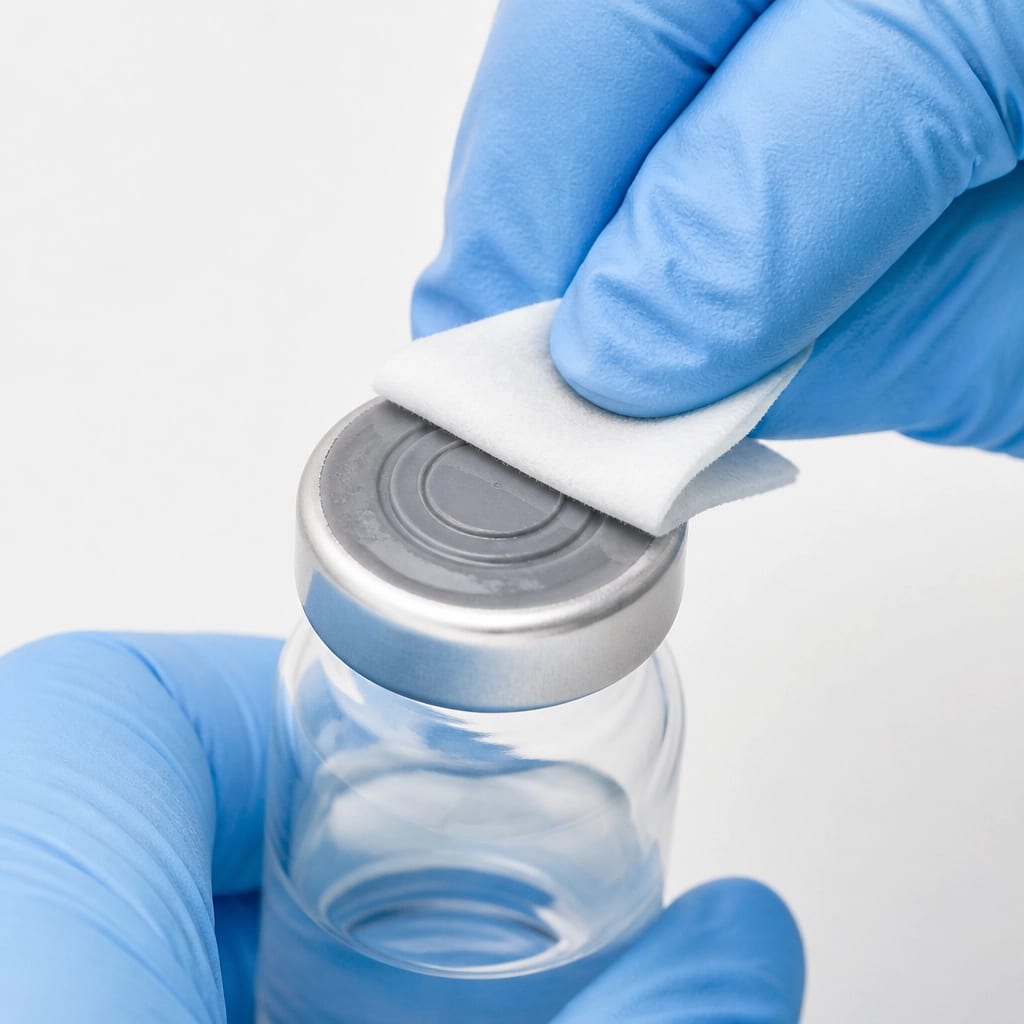
Organizing for Efficiency: The Blueprint of Your Bench
Efficiency isn’t just about speed; it’s about minimizing the “exposure window.” Every second a needle is exposed to the air is a second where gravity could pull a contaminant onto its tip.
Focus on your layout: Arrange your supplies in the order you will use them, moving from left to right (or right to left if you are left-handed). This “assembly line” approach prevents you from reaching over open vials, which is a common way to drop skin cells or dust into your work area.
| Supply | Purpose | Placement |
|---|---|---|
| Alcohol Swabs | Surface and stopper sterilization | Far left (Step 1) |
| Solvent Vial | Usually Bacteriostatic Water | Center-left (Step 2) |
| Sterile Syringe | The delivery vehicle | Center-right (Step 3) |
| Peptide Vial | The lyophilized (freeze-dried) powder | Far right (Step 4) |
By optimizing your workspace layout, you reduce the “clutter tax”: the mental energy spent looking for a tool mid-process: which drastically lowers the risk of calculation and measurement errors.
