The Generalist vs. The Specialist: AHK-Cu vs GHK-Cu
When you look at GHK-Cu and AHK-Cu side-by-side, they look almost identical. They both share that signature vibrant blue hue and a powerful affinity for copper ions. However, their molecular structure tells a different story of specialization.
GHK-Cu is the ultimate generalist. It’s found naturally in human plasma and has a massive range of effects, from wound healing and DNA repair to anti-inflammatory signaling. It’s a “master key” for the body.
AHK-Cu, on the other hand, is the surgical strike. By replacing the glycine in the GHK sequence with alanine, researchers have created a peptide that displays a significantly higher specificity for the dermal papilla cells (DPCs): the “brain” of the hair follicle.
While GHK-Cu is busy repairing skin and managing inflammation across the entire body, AHK-Cu is laser-focused on the scalp microenvironment. If your goal is broad-spectrum skin rejuvenation, GHK-Cu is your hero. But if you want to unlock maximum hair density and transform a thinning scalp, AHK-Cu is the undisputed specialist.

Unlocking the Scalp: How AHK-Cu Works
The biological reality of hair loss, particularly androgenetic alopecia, isn’t just about “falling out.” It’s about miniaturization. Your follicles aren’t disappearing; they are slowly shrinking, producing thinner and shorter hairs until they eventually stop producing anything visible at all.
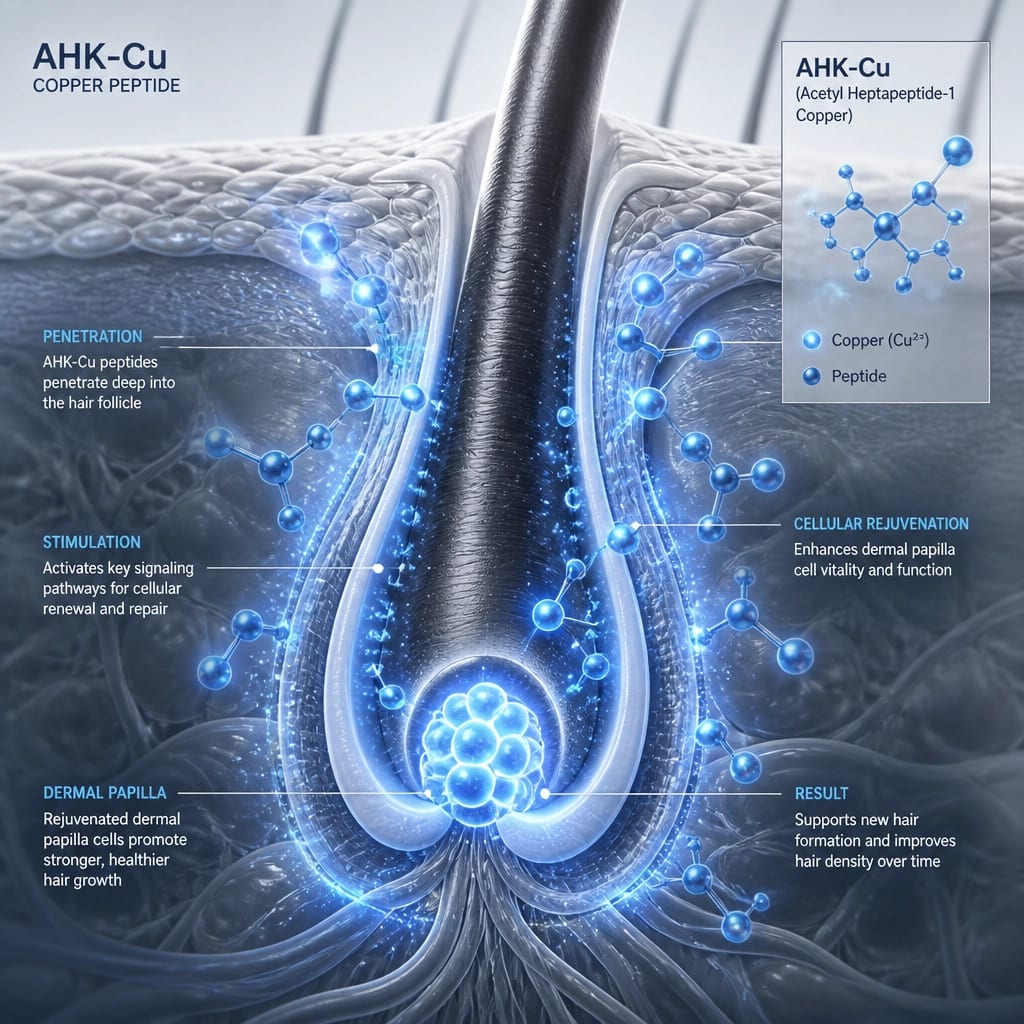
AHK-Cu targets this process through three primary pathways:
1. The Vascular Revolution (VEGF Activation)
One of the primary reasons hair follicles fail is a lack of blood flow. Without a constant supply of oxygen and nutrients, the follicle simply cannot maintain its high-energy growth phase (anagen). AHK-Cu is a potent stimulator of Vascular Endothelial Growth Factor (VEGF). By enhancing angiogenesis (the creation of new blood vessels) within the scalp, AHK-Cu ensures your follicles have the high-octane fuel they need to thrive.
2. Dermal Papilla Cell Proliferation
The dermal papilla cells at the base of the follicle are responsible for regulating hair growth and thickness. AHK-Cu has been shown in research to directly stimulate the proliferation of these cells. More healthy DPCs mean a stronger, more robust follicle capable of producing thicker hair strands.
3. Combatting Follicle Regression (TGF-beta Downregulation)
This is where the science gets truly “luxurious.” The primary culprit behind follicle miniaturization is a signaling molecule called TGF-beta (Transforming Growth Factor-beta). In the presence of DHT (dihydrotestosterone), TGF-beta is upregulated, sending a “suicide signal” to the hair follicle and forcing it into the regression phase (catagen).
AHK-Cu acts as a biological shield. It is researched for its ability to downregulate the expression of TGF-beta, effectively blocking the signal that tells your hair to stop growing. By neutralizing this regression trigger, AHK-Cu helps keep your follicles in the growth phase for longer, directly counteracting the effects of thinning.