
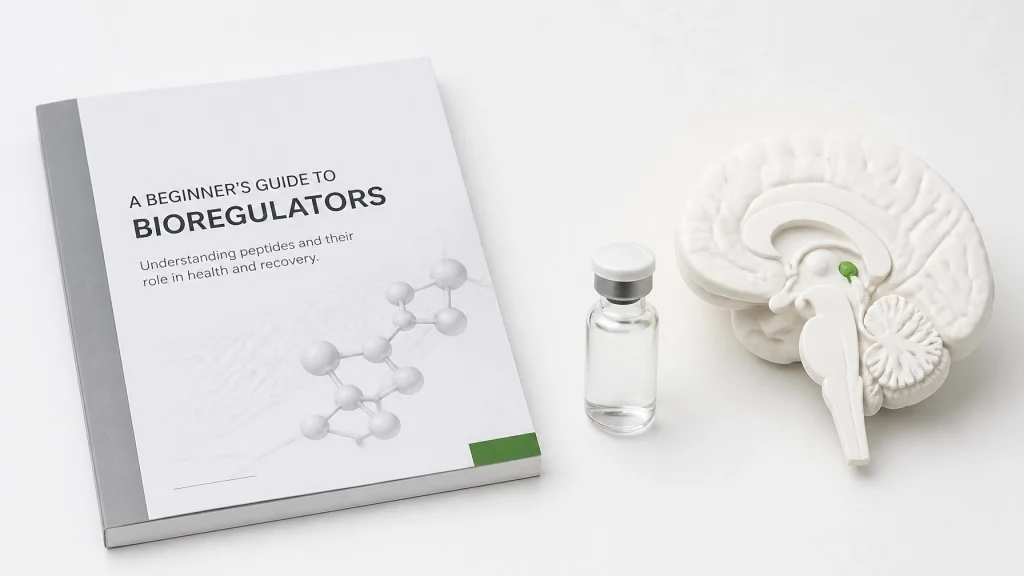
What is the pineal gland?
The pineal gland is a small, pine-cone-shaped structure located deep within the brain. Its best-known role is producing melatonin, a hormone involved in the timing of sleep and wakefulness.
Think of melatonin as your body’s evening signal. As darkness arrives, melatonin normally rises and helps tell your internal clock that night-time has begun. Light exposure, late-night screen use, irregular work hours and travel can interfere with that timing signal.
The pineal gland does not directly control every hormone in your body. The hypothalamus and pituitary gland are central regulators of many endocrine pathways. However, the pineal gland communicates with these systems through circadian, or 24-hour biological clock, signals.
That makes the pineal gland less like the orchestra’s entire conductor and more like the timekeeper who sets the tempo for the evening performance.
The problem: your biological timing becomes noisy
Modern life can create a constant stream of signals:
- Bright light at night
- Irregular sleep and waking times
- Shift work and jet lag
- Ongoing psychological stress
- Late meals and inconsistent exercise
- Excessive evening stimulation
When the timing signal becomes inconsistent, sleep quality, energy, mood and daily hormone rhythms may also feel less predictable.
The solution: establish the rhythm first
Before considering a peptide protocol, focus on the basic signals that support circadian health:
- Get outdoor light soon after waking.
- Keep your wake time as consistent as possible.
- Dim lights and reduce screen exposure before bed.
- Keep your bedroom cool, dark and quiet.
- Avoid treating persistent insomnia as a supplement problem alone.
Start with the clock. Then assess the machinery.

Why does the Khavinson Protocol begin with pineal support?
The foundational document Decoding the World of Organ-Specific Peptides presents the pineal gland as the starting point for broader endocrine regulation.
The reasoning is based on sequence and coordination:
- The pineal gland helps regulate night-time biology.
- Night-time biology influences sleep and recovery.
- Sleep and circadian timing affect the hypothalamic–pituitary system.
- The hypothalamic–pituitary system communicates with glands such as the thyroid, adrenals and reproductive organs.
- Once the overall rhythm is steadier, more targeted organ support can be considered.
A useful analogy is a building site. If the site manager arrives late, the lighting is poor and the teams are working from different schedules, adding more workers will not necessarily improve the project. First, you organise the site. Then you assign specialist teams.
That is the protocol’s central idea:
Coordination before stimulation. Timing before targeting.
This does not prove that pineal peptides will correct a hormonal disorder. It explains the internal logic of the protocol.
