
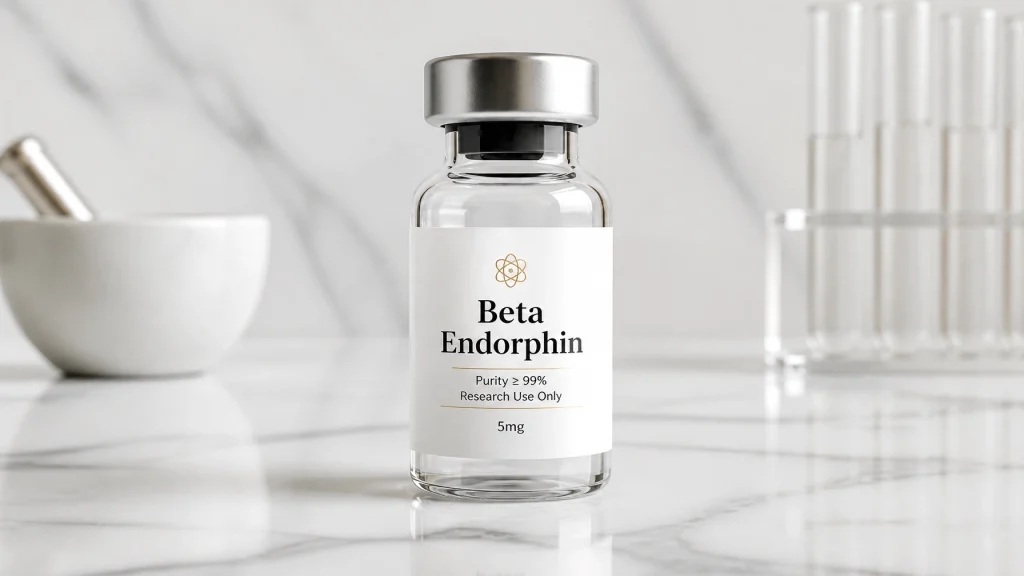
What is Beta Endorphin? The POMC Powerhouse
In the clinical landscape, Beta Endorphin is classified as an endogenous opioid neuropeptide. It is a 31-amino acid chain derived from the precursor protein pro-opiomelanocortin (POMC). While most people associate POMC with weight management and skin pigmentation (think Melanotan research), Beta Endorphin is the heavy hitter for the central nervous system.
Produced primarily in the pituitary gland and the hypothalamus, this peptide acts as a high-affinity agonist at the mu-opioid receptors (MOR). When we talk about “Scientific Luxury,” this is it: a naturally occurring ligand that is approximately 18 to 33 times more potent than morphine on a molar basis. It’s the body’s premier solution for managing high-stress environments and extreme physical thresholds.
The Product Profile
When you secure your research materials through the WLA Shop, you aren’t just getting a vial; you’re getting precision-engineered biotechnology.
- Classification: Endogenous Opioid Peptide / Mu-Opioid Receptor Agonist
- Sequence: 31-Amino Acid Fragment
- Physical Contents: High-purity lyophilized powder, ready for reconstitution with Bac water
- Research Focus: Analgesia, stress-response modulation, and the reward-processing system.
The Mechanism: How Beta Endorphin Research Combats Pain
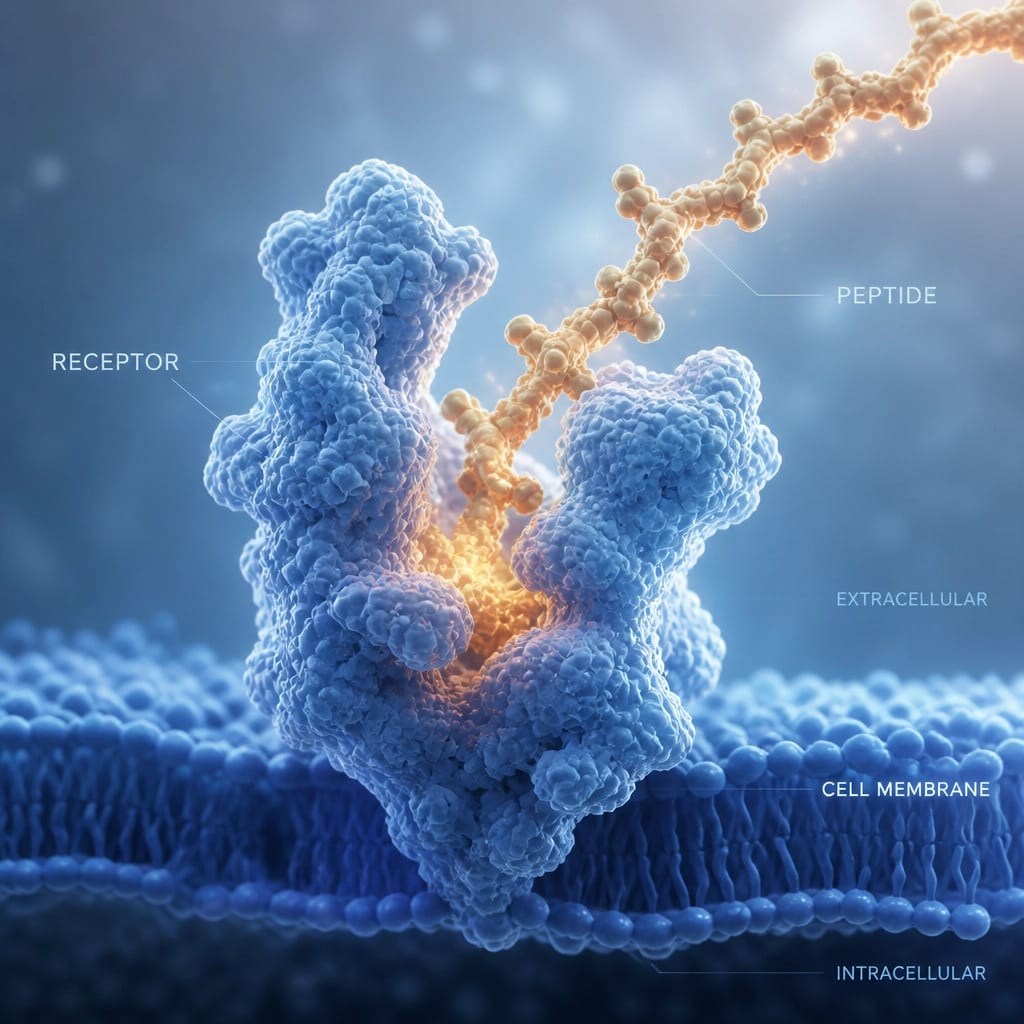
To understand the pain management potential of this peptide, we have to look at the cellular “lock and key” mechanism. When Beta Endorphin binds to the mu-opioid receptors, it initiates a Gi/o-coupled signaling cascade. This isn’t just a simple “off switch” for pain; it’s a sophisticated modulation of the entire nociceptive pathway.
- Inhibition of Adenylyl Cyclase: By decreasing cAMP levels, the peptide effectively lowers the “volume” of pain signals within the neuron.
- Hyperpolarization: It triggers the opening of potassium channels and the closing of calcium channels. This makes it significantly harder for the neuron to fire, essentially raising the threshold required for a “pain” signal to reach the brain.
- The Reward Circuitry: By inhibiting GABAergic neurons in the midbrain, Beta Endorphin research explores the “disinhibition” of dopamine release. This is where the “Euphoria” aspect comes in: transforming a state of distress into one of metabolic and mental resilience.
For researchers focused on longevity and high-performance recovery, understanding these pathways is crucial. Whether you are looking at Cerebrolysin for neuroprotection or Beta Endorphin for the opioid system, the goal remains the same: total physiological optimization.
