
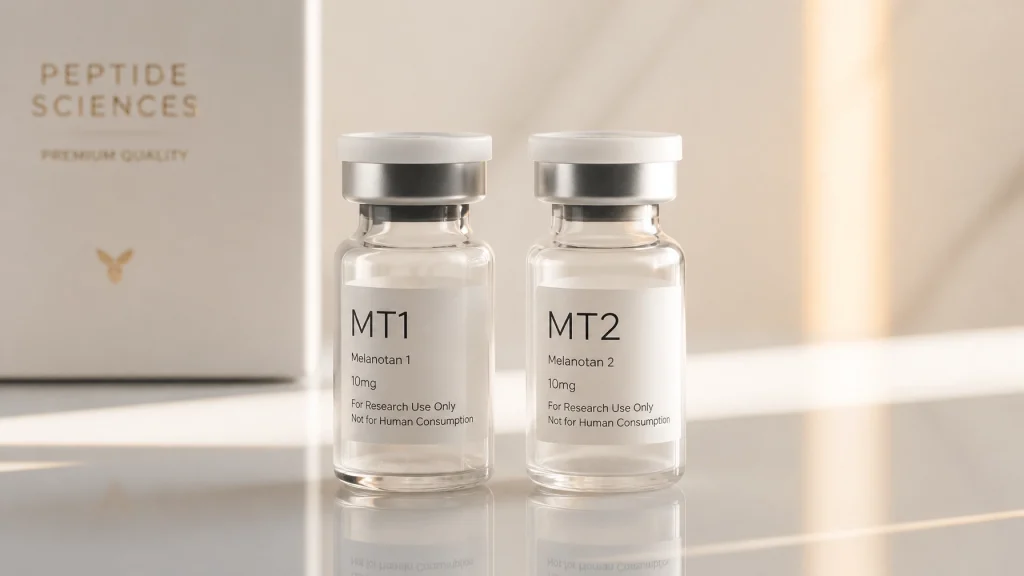
The Science of Melanocortins: How They Work
To understand these peptides, we have to look at alpha-melanocyte-stimulating hormone (α-MSH). In the human body, α-MSH binds to melanocortin receptors (MCRs) to signal the production of melanin: the pigment that gives your skin its color and provides a biological shield against UV radiation.
Both MT1 and MT2 are synthetic analogs of α-MSH, but they interact with these receptors in very different ways. This is where the choice between “gradual protection” and “rapid transformation” begins.
Melanotan 1 (Afamelanotide): The Photoprotection Specialist
Melanotan 1 is the refined, “gentleman” of the tanning world. If MT2 is a sprint, MT1 is a marathon. It was developed specifically for its photoprotection capabilities and has undergone extensive clinical scrutiny for conditions like Erythropoietic Protoporphyria (EPP).
The Scientific Function:
- Highly Selective: MT1 primarily targets the MC1R receptor located on melanocytes.
- Gradual Pigmentation: It promotes a natural-looking, even increase in eumelanin (the brown/black pigment).
- Physical Contents: Typically provided as a high-purity lyophilized powder in 10mg vials.
Because it is so selective, MT1 has a much lower side-effect profile. You aren’t going to see the same systemic “surprises” that come with its more aggressive sibling. For researchers focused on long-term skin health and skin pigmentation research, MT1 is often the preferred pathway.
