The Problem: The Biological “Hunger Wall”
The most significant frustration in any weight-loss journey is the biological pushback. Your body is designed for survival. When you reduce calories, your brain screams for food. This is often referred to as “food noise”: the constant, intrusive thoughts about your next meal.
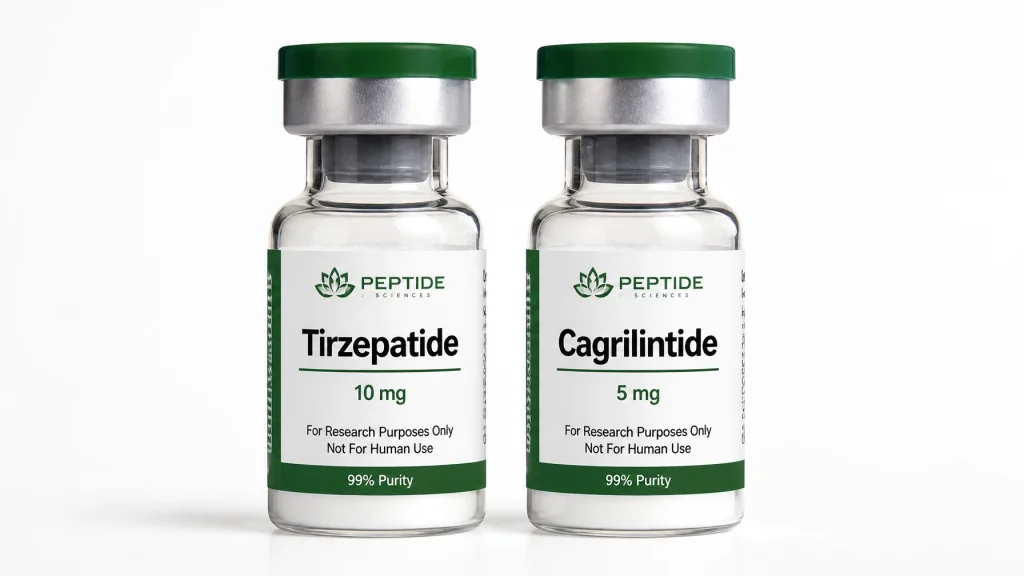
For many, a single-pathway solution isn’t enough to scale this “hunger wall.” You might find that while your blood sugar is stable, your stomach still feels empty, or your brain still seeks the reward of high-calorie treats. This is where the Tirzepatide and Cagrilintide stack steps in to provide a multi-angled solution.
Section 1: Understanding the Components
Before you combine these tools, you must understand what each one brings to the construction site of your new body.
Tirzepatide: The Dual Incretin Master
Tirzepatide is what scientists call a dual GLP-1 (Glucagon-Like Peptide-1) and GIP (Glucose-Dependent Insulinotropic Polypeptide) receptor agonist.
Think of Tirzepatide as a master foreman on a construction site. It manages two different crews at once:
- GLP-1 tells your brain you are full and slows down your stomach (gastric emptying).
- GIP improves how your body breaks down sugar and stores fat.
By activating both, Tirzepatide provides a more comprehensive metabolic cleanup than older, single-pathway options.
Cagrilintide: The Amylin Roadblock
Cagrilintide is a long-acting Amylin analog (a synthetic version of a natural hormone). While Tirzepatide manages the “crews,” Cagrilintide acts as a permanent “Road Closed” sign for hunger. It targets the area postrema, a specific part of the brainstem that handles satiety (the feeling of being full).
By mimicking amylin, Cagrilintide ensures that the “I’m full” signal is loud, clear, and persistent.