
The Master Switch: Understanding the HPT Axis
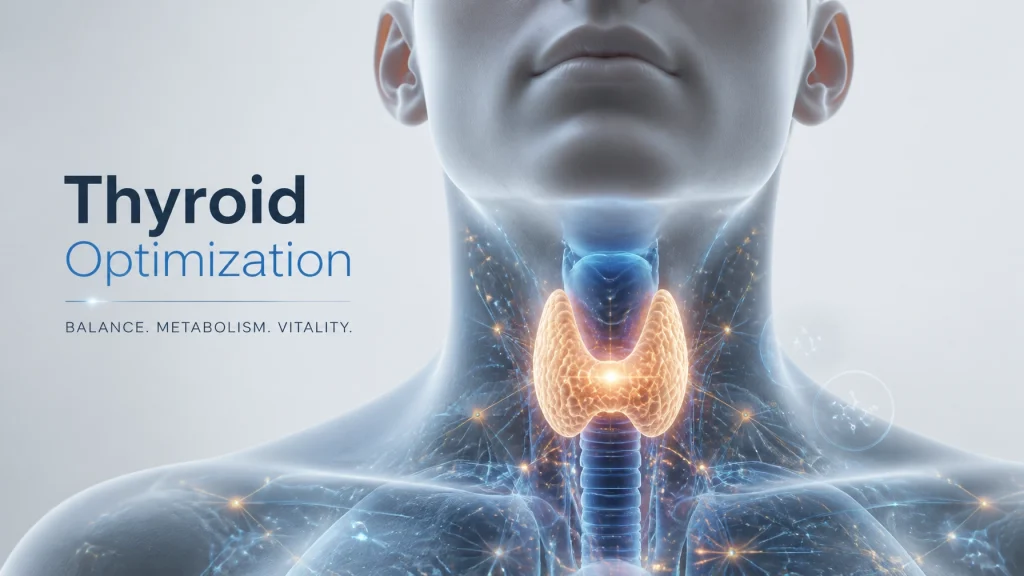
Before we get into the protocols, we need to talk about the chain of command. In the world of clinical luxury, we call this the Hypothalamic-Pituitary-Thyroid (HPT) Axis. It’s a sophisticated feedback loop that starts in the brain and ends at every single cell in your body.
- TRH (Thyrotropin-Releasing Hormone): The hypothalamus acts as the CEO, releasing TRH to signal that it’s time to ramp up energy production.
- TSH (Thyroid-Stimulating Hormone): The pituitary gland receives the TRH signal and acts as the middle manager, releasing TSH.
- T4 (Thyroxine): The thyroid gland produces T4, which is largely a storage or “pro-hormone.”
- T3 (Triiodothyronine): This is the active form. T4 is converted into T3 in the liver and peripheral tissues. T3 is the “active key” that enters the cells and tells them to burn oxygen and produce heat.

When this system is optimized, your basal metabolic rate (BMR) is humming. You feel warm, energetic, and fat loss becomes a byproduct of your internal efficiency. When it’s suppressed: often due to chronic calorie restriction or stress: everything slows down. This is what we call “starvation mode,” and it’s the number one enemy of high-performance research.
TRH: The Hypothalamic Unlock
While most people jump straight to direct hormone replacement, advanced researchers are looking at TRH (Thyrotropin-Releasing Hormone). TRH is a hypothalamic peptide that acts as the “Master Switch.” Instead of just adding more hormone to the system, TRH signals your body to increase its own natural production pathways.
The beauty of TRH in a research context is its ability to support the natural regulatory pathways. By gently nudging the pituitary to release more TSH, you encourage the thyroid to function at its peak. This is often viewed as a more “holistic” way to combat the metabolic slowdown seen during intensive “cutting” phases. If you’re currently researching Ret (Retatrutide) or Tirz (Tirzepatide), you know that these triple and dual agonists work best when the body’s baseline thermogenesis is already active.
