
The Problem: The “Slow Connection” in Neural Communication
Imagine your brain is a massive construction site. For a building to go up, the foreman (your intent) must send instructions to the workers (your neurons). If the walkie-talkies are staticky or the batteries are low, the instructions arrive late or incomplete. This results in “tip-of-the-tongue” syndrome and slow information processing.
The Solution: The AMPAkine Signal Booster
Unifiram solves this by acting as a signal booster for your AMPA receptors. These receptors are the primary “on-switches” for fast excitatory transmission in your central nervous system. By making these switches more sensitive, Unifiram ensures that the “instruction” from the foreman is heard loud and clear, every single time.
How Unifiram Works: The Synaptic Zipper
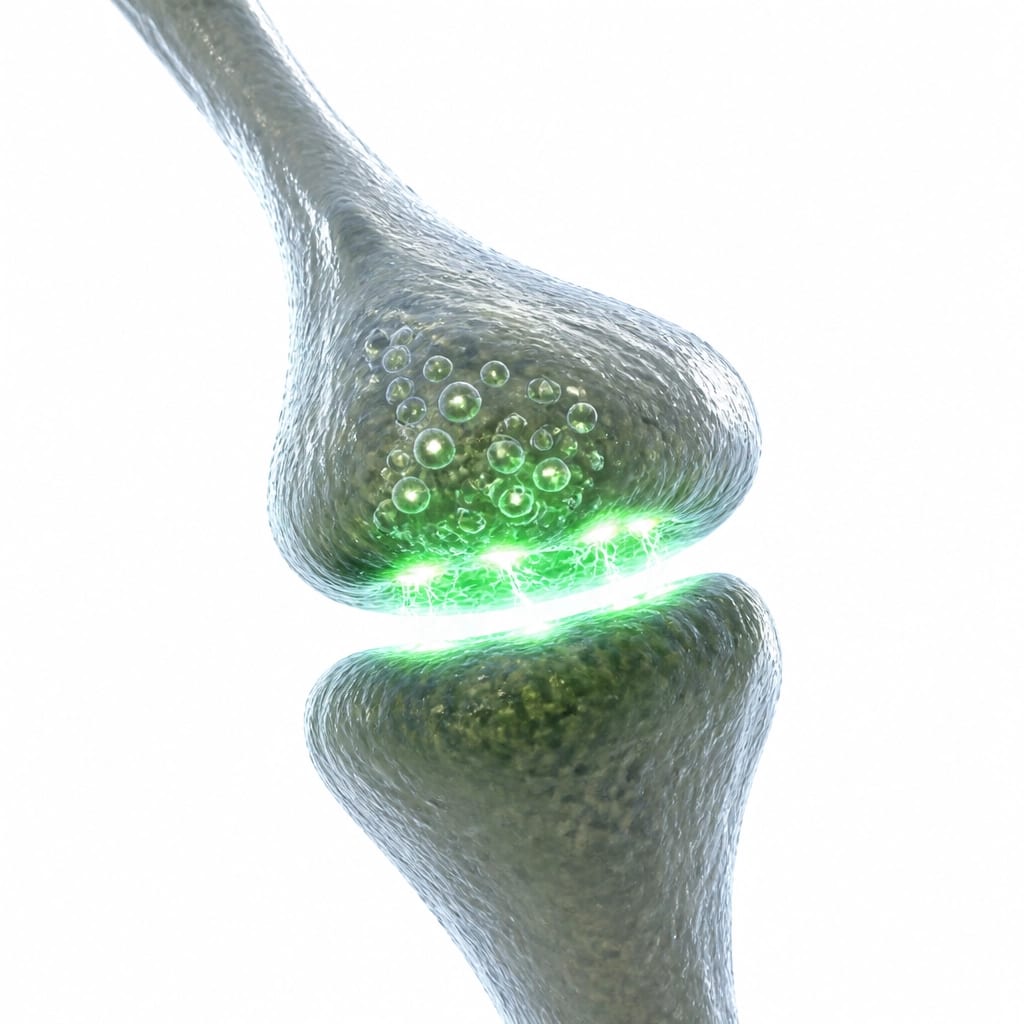
At a biological level, Unifiram functions through a process called positive allosteric modulation. Think of your neural synapse like a zipper. For a signal to pass, the zipper must be pulled up smoothly. When you are fatigued or aging, that zipper can become snagged.
Unifiram acts like a lubricant on those zipper teeth. It doesn’t force the zipper shut (which could cause over-excitation); instead, it ensures that when your brain naturally tries to close the connection, it happens with zero friction and maximum speed.
Key Terminology to Master:
- Glutamatergic System: The primary “excitatory” pathway in the brain, responsible for most cognitive functions.
- Long-Term Potentiation (LTP): The process by which connections between neurons become stronger the more they are used. This is the literal physical foundation of a “memory.”
- Acetylcholine (ACh): A neurotransmitter essential for focus and muscle movement. Unifiram has been shown in animal studies to increase the release of ACh in the cerebral cortex.
Memory and Learning: Unlocking the “Save” Button
When you learn a new skill: whether it’s a new coding language or a complex golf swing: your brain has to “save” that data into your long-term storage. This requires NMDA receptor activation. If AMPA receptors are the “spark,” NMDA receptors are the “fuel” that keeps the fire burning.
Research suggests Unifiram enhances NMDA-dependent signaling. It helps your brain enter a state of “neuroplasticity” more easily. Imagine your brain as a block of clay; Unifiram keeps the clay warm and moist, allowing you to mold new information into it before it sets and hardens.
Unifiram vs. Piracetam: A Comparison of Potency
You may have heard of Piracetam, the “grandfather” of nootropics. While effective, it is often compared to an old, reliable sedan. Unifiram, by comparison, is a turbocharged racing engine.
| Feature | Piracetam | Unifiram |
|---|---|---|
| Class | Racetam | AMPAkine-like |
| Potency | Standard (grams) | Ultra-High (milligrams) |
| Main Action | Membrane fluidity | AMPA/NMDA Modulation |
| Learning Speed | Incremental | Rapid / Acute |
Take Control: If you are transitioning from basic supplements to more advanced research compounds, Unifiram represents a significant step up in efficiency. You can explore our full range of advanced tools in our Shop All section.
