
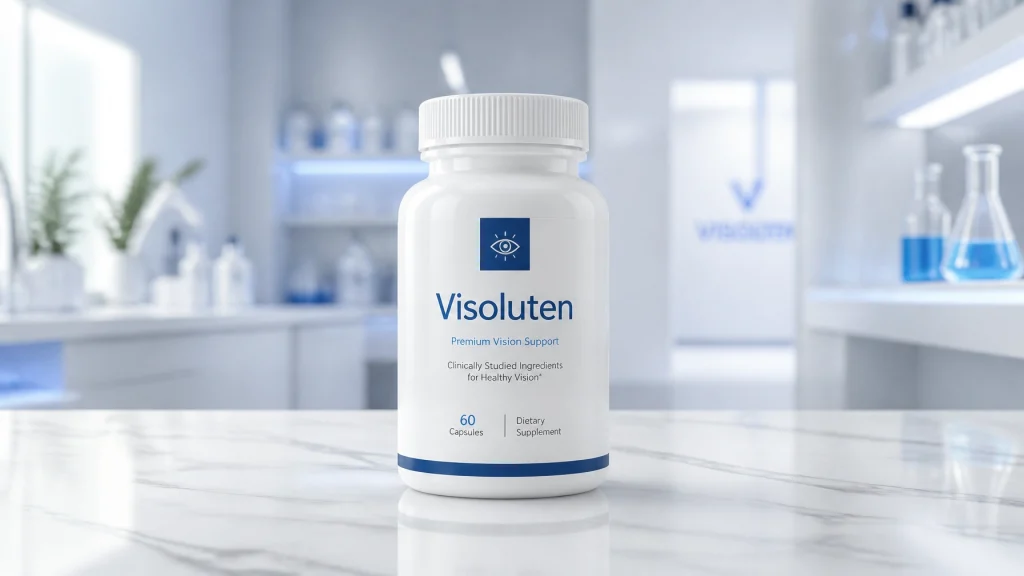
The Modern Eye Crisis: Why We Need Ocular Bioregulators
Our eyes weren’t designed for the 21st century. We evolved to track movement across a savannah, not to stare at high-refresh-rate pixels for 12 hours a day. This constant “overclocking” of our visual system leads to more than just eye strain; it causes metabolic fatigue in the retina.
The retina is one of the most metabolically active tissues in the human body. It consumes oxygen at a rate higher than almost any other organ. When the metabolism of these cells slows down: whether due to age, oxidative stress, or environmental factors: your vision starts to dim, literally and figuratively. This is where Visoluten steps in as the high-tech solution to a biological problem.
What Exactly is Visoluten?
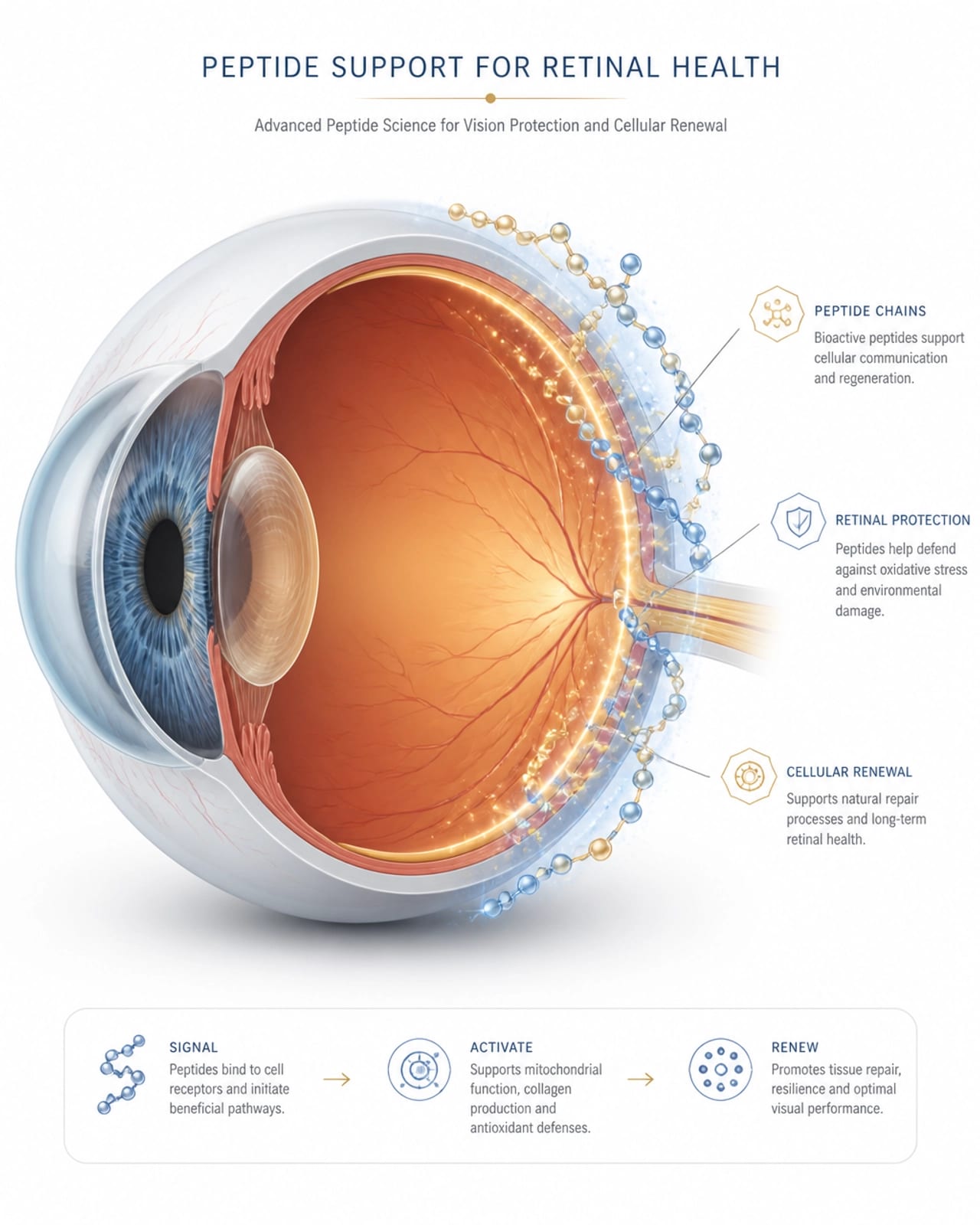
Visoluten is a short-chain peptide complex, often referred to by its research designation A-11. Unlike traditional vitamins or “eye health” supplements that provide raw materials like Lutein or Zeaxanthin, Visoluten functions as a signaling molecule.
Technically speaking, it is a synthetic bioregulator. It consists of specific amino acid sequences that are bio-identical to the peptides naturally produced in young, healthy retinal tissue. By introducing these sequences back into the system, we are essentially sending a “maintenance signal” to the DNA of your ocular cells.
The Khavinson Connection
Developed by Professor Vladimir Khavinson, these peptides were originally researched for the Soviet military to help personnel recover from extreme environmental stressors. Today, they represent the pinnacle of metabolic function research. Visoluten is specifically “tissue-specific,” meaning it doesn’t wander around your body aimlessly; it has a high affinity for the retinal cells, the photoreceptors, and the ciliary muscles.
