
The Problem: Why GLP-1s Stop Working
When you use a GLP-1 agonist, you are primarily targeting appetite and insulin sensitivity. However, the human body is a master of adaptation. As you lose weight, your Basal Metabolic Rate (BMR) often drops. Your body becomes “too efficient,” burning fewer calories to perform the same tasks. It’s like a construction site where the workers have decided to move slower because there’s less raw material arriving.
To break the plateau, we must shift the focus from input regulation (eating less) to output optimization (burning more).
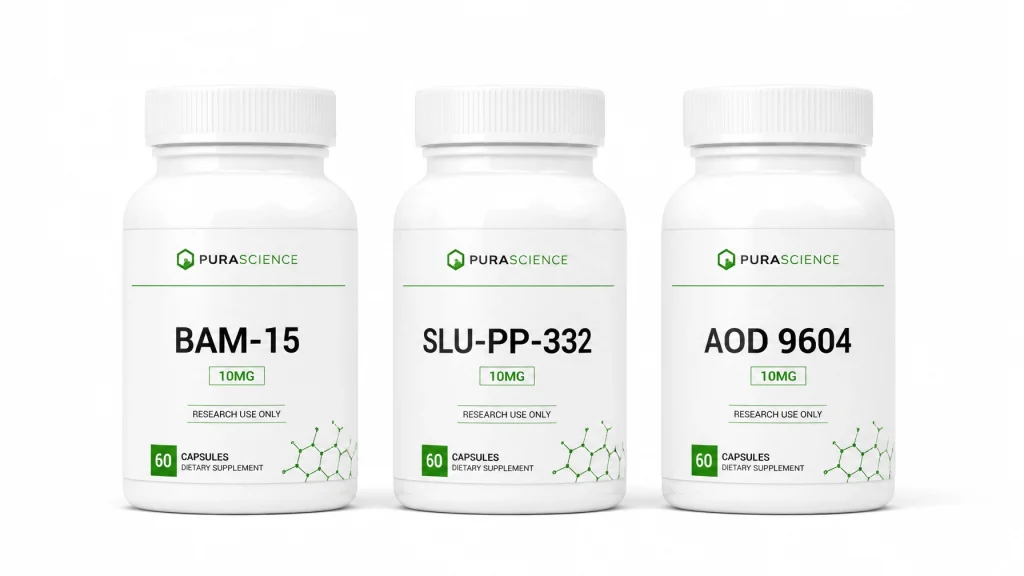
1. BAM-15: The Mitochondrial Engine Cooler
BAM-15 (20mg x 60) is what we call a mitochondrial uncoupler. To understand this, imagine your mitochondria as a hydroelectric dam. Normally, water (protons) flows through a turbine (ATP synthase) to create electricity (ATP/energy). This is a highly efficient “coupled” process.
BAM-15 essentially pokes tiny, controlled holes in that dam. The water still flows, but it bypasses the turbine. Because the “electricity” isn’t being generated efficiently, the cell panics and opens the floodgates, burning significantly more fuel (fat and glucose) just to keep the lights on.
Why it works for plateaus:
- Non-Stimulant Energy Expenditure: Unlike caffeine or ephedrine, BAM-15 doesn’t crank up your heart rate or make you jittery. It works at the cellular level.
- Mitochondrial Efficiency: It forces your body to be “wasteful” with energy, which is exactly what you want when your metabolism has slowed down.
- Liver Support: Research suggests BAM-15 may help reduce liver fat, a common hurdle in metabolic stalls.
Price: BAM-15 20mg x 60 – $180
