
What Exactly is a “Zombie Cell”?
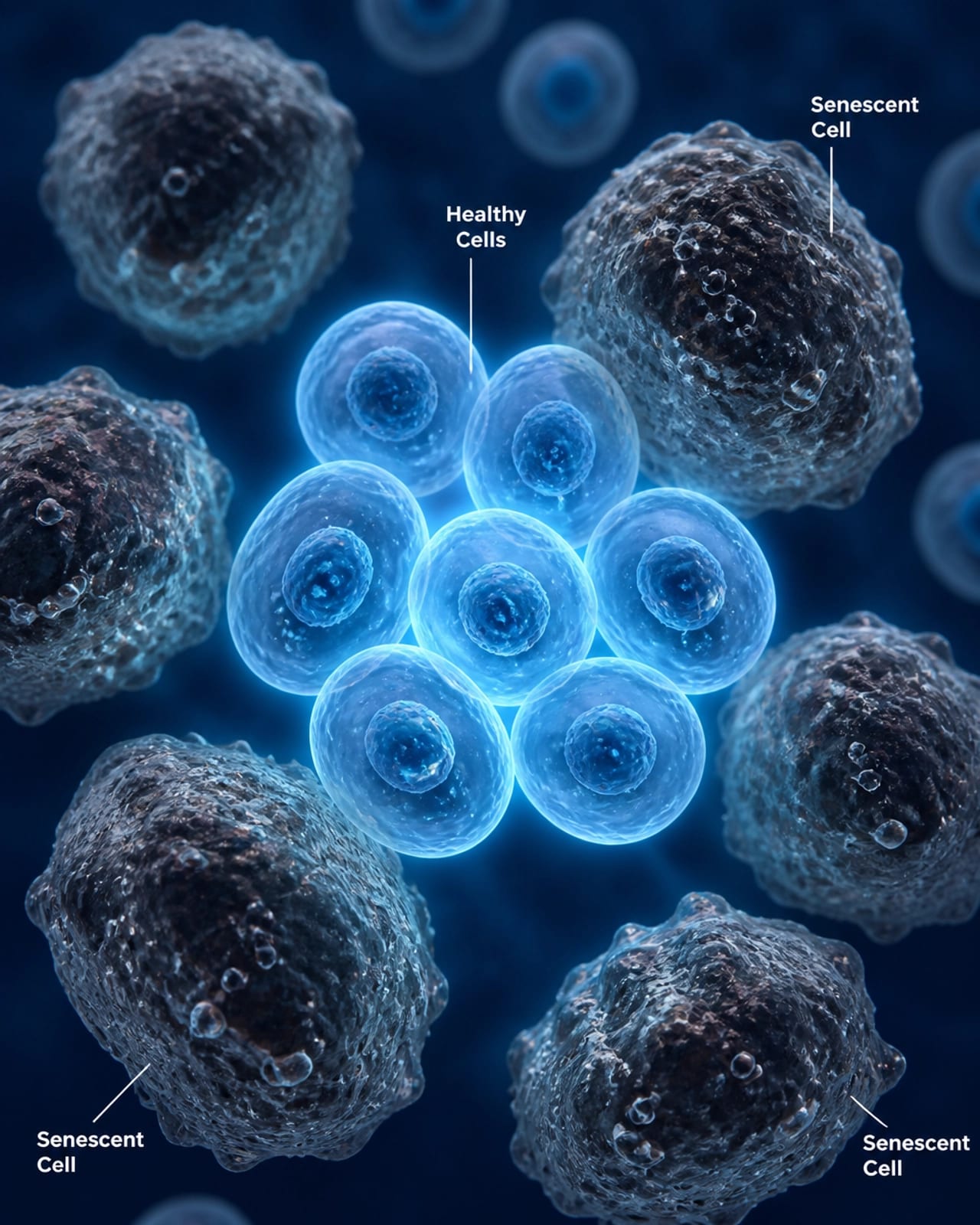
To understand the solution, you must first understand the problem. Every cell in your body has a built-in “kill switch” called apoptosis. If a cell becomes too damaged, mutated, or stressed, this switch flips, and the cell quietly dismantles itself so it can be replaced by a fresh, healthy one.
However, some cells find a way to jam that switch. They enter a state of permanent “limbo” where they can no longer divide or function, but they refuse to die.
The Toxic Neighborhood
Consider these zombie cells like a house on your street that has been abandoned. If the house just sat there empty, it wouldn’t be a huge issue. But what if that house started leaking toxic waste into the neighboring gardens? What if it started blasting loud, angry music at 3:00 AM, preventing everyone else from sleeping?
This is exactly what senescent cells do. They secrete a “toxic cocktail” of inflammatory proteins known as the SASP (Senescence-Associated Secretory Phenotype). This SASP “poisons” the surrounding healthy tissue, leading to:
- Chronic inflammation (the “rust” of the body)
- Stiffness in the joints
- Thinning and sagging of the skin
- Decreased energy and metabolic function
Why Do They Accumulate?
When you are young, your immune system acts like a highly efficient “cleanup crew.” It spots these zombie cells and hauls them away immediately. But as you age, the cleanup crew gets tired. At the same time, the rate of damage increases due to UV exposure, poor diet, stress, and environmental toxins.
By the time you reach your 40s and 50s, the zombies are piling up faster than your body can remove them. This accumulation is one of the primary drivers of what we call “aging.”
Focus on this: If you want to feel younger, you don’t just need to “build” more (growth); you need to “clean” more (clearance). This is where senolytics come into play.
